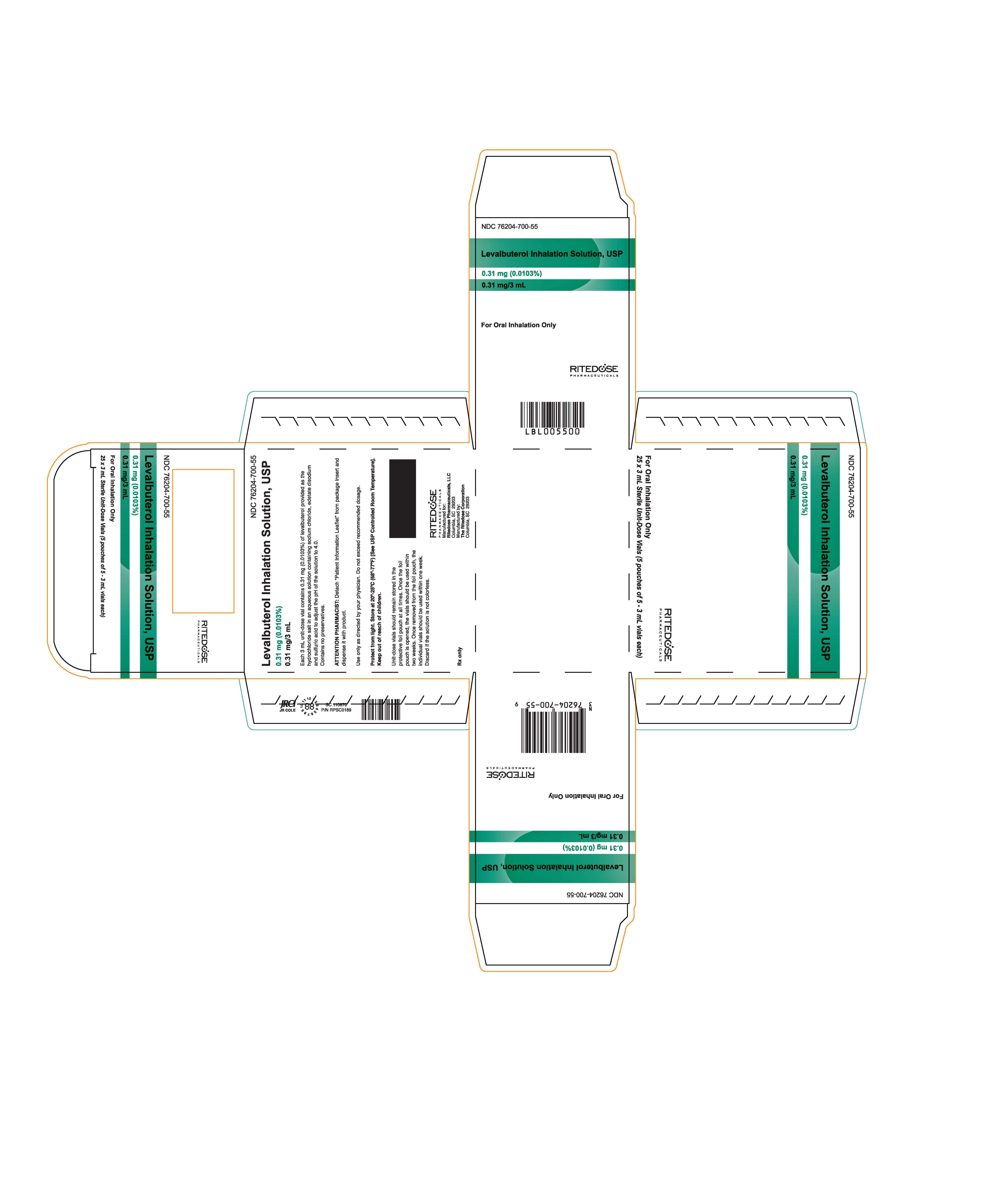
levalbuterol 0.21 MG/ML Inhalation Solution. INDICATIONS AND USAGE Levalbuterol inhalation solution (concentrate) is indicated for the treatment or prevention of bronchospasm in adults…
Boxed warning
For Oral Inhalation Only Levalbuterol Inhalation Solution is only for use with a nebulizer. Instructions for Using Levalbuterol Inhalation Solution
Levalbuterol has several documented drug interactions that may affect its efficacy and safety.
moderateother short-acting sympathomimetic aerosol bronchodilators and adrenergic drugs — May potentiate effect.
majorbeta-blockers — May block bronchodilatory effects of beta-agonists and produce severe bronchospasm.
unknowndiuretic — May worsen electrocardiographic changes or hypokalemia associated with diuretic.
moderatedigoxin — May decrease serum digoxin levels.
majormonoamine oxidase inhibitors (MAOs) or tricyclic antidepressants — May potentiate effect of albuterol on the cardiovascular system.
Real-world adverse events (FAERS)
Dyspnoea769Device Delivery System Issue563Drug Dose Omission By Device494No Adverse Event490Pneumonia428Asthma402Fatigue400Cough392
Indications
INDICATIONS AND USAGE Levalbuterol inhalation solution (concentrate) is indicated for the treatment or prevention of bronchospasm in adults, adolescents, and children 6 years of age and older with reversible obstructive airway disease. Levalbuterol inhalation solution (concentrate) is a beta 2 -adrenergic agonist indicated for: • Treatment or prevention of bronchospasm in adults, adolescents, and children 6 years of age and older with reversible obstructive airway disease. ( 1 )
Dosage
DOSAGE AND ADMINISTRATION Levalbuterol inhalation solution (concentrate) is for oral inhalation only. Dilute with sterile normal saline before administration. Administer by nebulization using with a standard jet nebulizer (with a face mask or mouthpiece) connected to an air compressor. Do not exceed recommended dose. For dosages less than 1.25 mg, the non-concentrate (i.e., levalbuterol inhalation solution, 3 mL) formulation must be used. Children 6 to 11 Years Old: The recommended dosage of levalbuterol inhalation solution for patients 6 to 11 years old is 0.31 mg administered three times a day, by nebulization. Routine dosing should not exceed 0.63 mg three times a day. Adults and Adolescents ≥ 12 Years Old: The recommended starting dosage of levalbuterol inhalation solution for patients 12 years of age and older is 0.63 mg administered three times a day, every 6 to 8 hours, by nebulization. Patients 12 years of age and older with more severe asthma or patients who do not respond adequately to a dose of 0.63 mg of levalbuterol inhalation solution may benefit from a dosage of 1.25 mg three times a day. Patients receiving the highest dose of levalbuterol inhalation solution should be monitored closely for adverse systemic effects, and the risks of such effects should be balanced against the potential for improved efficacy. The use of levalbuterol inhalation solution can be continued as medically indicated to help control recurring bouts of bronchospasm. During this time, most patients gain optimal benefit from regular use of the inhalation solution. If a previously effective dosage regimen fails to provide the usual response this may be a marker of destabilization of asthma and requires reevaluation of the patient and the treatment regimen, giving special consideration to the possible need for anti-inflammatory treatment, e.g., corticosteroids. The drug compatibility (physical and chemical), efficacy, and safety of levalbuterol inhalation solution when mixed with other drugs in a nebulizer have not been established. The safety and efficacy of levalbuterol inhalation solution have been established in clinical trials when administered using the PARI LC Jet™ and PARI LC Plus™ nebulizers, and the PARI Master ® Dura-Neb ® 2000 and Dura-Neb ® 3000 compressors. The safety and efficacy of levalbuterol inhalation solution when administered using other nebulizer systems have not been established. • FOR ORAL INHALATION ONLY ( 2 ) • Dilute levalbuterol inhalation solution (concentrate) with sterile normal saline before administration by nebulization. • Children 6 to 11 Years Old: 0.31 mg administered three times a day, by nebulization. Routine dosing should not exceed 0.63 mg three times a day. ( 2 ) • Adults and Adolescents ≥ 12 Years Old: 0.63 mg administered three times a day, every 6 to 8 hours, by nebulization. The maximum recommended dose is 1.25 mg three times a day. ( 2 ) • For use with a standard jet nebulizer (with a face mask or mouthpiece) connected to an air compressor. ( 2 )
Warnings
WARNINGS AND PRECAUTIONS • Life-threatening paradoxical bronchospasm may occur. Discontinue Levalbuterol Inhalation Solution, USP immediately and treat with alternative therapy. ( 5.1 ) • Need for more doses of Levalbuterol Inhalation Solution, USP than usual may be a sign of deterioration of asthma and requires reevaluation of treatment. ( 5.2 ) • Levalbuterol Inhalation Solution, USP is not a substitute for corticosteroids. ( 5.3 ) • Cardiovascular effects may occur. Consider discontinuation of Levalbuterol Inhalation Solution, USP if these effects occur. Use with caution in patients with underlying cardiovascular disorders. ( 5.4 ) • Excessive use may be fatal. Do not exceed recommended dose. ( 5.5 ) • Immediate hypersensitivity reactions may occur. Discontinue Levalbuterol Inhalation Solution, USP immediately. ( 5.6 ) • Hypokalemia and changes in blood glucose may occur. ( 5.7 , 5.8 ) 5.1 Paradoxical Bronchospasm Levalbuterol Inhalation Solution, USP can produce paradoxical bronchospasm, which may be life-threatening. If paradoxical bronchospasm occurs, Levalbuterol Inhalation Solution, USP should be discontinued immediately and alternative therapy instituted. It should be recognized that paradoxical bronchospasm, when associated with inhaled formulations, frequently occurs with the first use of a new vial. 5.2 Deterioration of Asthma Asthma may deteriorate acutely over a period of hours or chronically over several days or longer. If the patient needs more doses of Levalbuterol Inhalation Solution, USP than usual, this may be a marker of destabilization of asthma and requires reevaluation of the patient and treatment regimen, giving special consideration to the possible need for anti-inflammatory treatment, e.g., corticosteroids. 5.3 Use of Anti-Inflammatory Agents Levalbuterol Inhalation Solution, USP is not a substitute for corticosteroids. The use of beta-adrenergic agonist alone may not be adequate to control asthma in many patients. Early consideration should be given to adding anti-inflammatory agents, e.g., corticosteroids, to the therapeutic regimen. 5.4 Cardiovascular Effects Levalbuterol Inhalation Solution, USP, like other beta-adrenergic agonists, can produce clinically significant cardiovascular effects in some patients, as measured by heart rate, blood pressure, and symptoms. Although such effects are uncommon after administration of Levalbuterol Inhalation Solution, USP at recommended doses, if they occur, the drug may need to be discontinued. In addition, beta-agonists have been reported to produce electrocardiogram (ECG) changes, such as flattening of the t-wave, prolongation of the QTc interval, and ST segment depression. The clinical significance of these findings is unknown. Therefore, Levalbuterol Inhalation Solution, USP, like all sympathomimetic amines, should be used with caution in patients with cardiovascular disorders, especially coronary insufficiency, cardiac arrhythmias, and hypertension. 5.5 Do Not Exceed Recommended Dose Do not exceed the recommended dose. Fatalities have been reported in association with excessive use of inhaled sympathomimetic drugs in patients with asthma. The exact cause of death is unknown, but cardiac arrest following an unexpected development of a severe acute asthmatic crisis and subsequent hypoxia is suspected. 5.6 Immediate Hypersensitivity Reactions Immediate hypersensitivity reactions may occur after administration of levalbuterol or racemic albuterol. Reactions have included urticaria, angioedema, rash, bronchospasm, anaphylaxis, and oropharyngeal edema. The potential for hypersensitivity must be considered in the clinical evaluation of patients who experience immediate hypersensitivity reactions while receiving Levalbuterol Inhalation Solution, USP. 5.7 Coexisting Conditions Levalbuterol Inhalation Solution, USP, like all sympathomimetic amines, should be used with caution in patients with cardiovascular disorders, especially coronary insufficiency, hypertension, and cardiac arrhythmias; in patients with convulsive disorders, hyperthyroidism, or diabetes mellitus; and in patients who are unusually responsive to sympathomimetic amines. Clinically significant changes in systolic and diastolic blood pressure have been seen in individual patients and could be expected to occur in some patients after the use of any beta-adrenergic bronchodilator. Changes in blood glucose may occur. Large doses of intravenous racemic albuterol have been reported to aggravate preexisting diabetes mellitus and ketoacidosis. 5.8 Hypokalemia As with other beta-adrenergic agonist medications, Levalbuterol Inhalation Solution, USP may produce significant hypokalemia in some patients, possibly through intracellular shunting, which has the potential to produce adverse cardiovascular effects. The decrease is usually transient, not requiring supplementation.
Contraindications
CONTRAINDICATIONS Levalbuterol tartrate HFA inhalation aerosol is contraindicated in patients with a history of hypersensitivity to levalbuterol, racemic albuterol, or any other component of Levalbuterol tartrate HFA inhalation aerosol. Reactions have included urticaria, angioedema, rash, bronchospasm, anaphylaxis, and oropharyngeal edema. Hypersensitivity to levalbuterol, racemic albuterol or any other component of Levalbuterol tartrate HFA inhalation aerosol. ( 4 )
Mechanism of action
Clinical Pharmacology 12.1 Mechanism of Action Activation of beta 2 -adrenergic receptors on airway smooth muscle leads to the activation of adenylate cyclase and to an increase in the intracellular concentration of cyclic-3′, 5′-adenosine monophosphate (cyclic AMP). The increase in cyclic AMP is associated with the activation of protein kinase A, which in turn inhibits the phosphorylation of myosin and lowers intracellular ionic calcium concentrations, resulting in muscle relaxation. Levalbuterol relaxes the smooth muscles of all airways, from the trachea to the terminal bronchioles. Increased cyclic AMP concentrations are also associated with the inhibition of release of mediators from mast cells in the airway. Levalbuterol acts as a functional antagonist to relax the airway irrespective of the spasmogen involved, thus protecting against all bronchoconstrictor challenges. While it is recognized that beta 2 -adrenergic receptors are the predominant receptors on bronchial smooth muscle, data indicate that there are beta-receptors in the human heart, 10% to 50% of which are beta 2 -adrenergic receptors. The precise function of these receptors has not been established [see Warnings and Precautions (5.4) ]. However, all beta-adrenergic agonist drugs can produce a significant cardiovascular effect in some patients, as measured by pulse rate, blood pressure, symptoms, and/or electrocardiographic changes. 12.2 Pharmacodynamics Adults and Adolescents ≥ 12 Years Old In a randomized, double-blind, placebo-controlled, cross-over study, 20 adults with mild-to-moderate asthma received single doses of Levalbuterol Inhalation Solution, USP (0.31 mg, 0.63 mg, and 1.25 mg) and racemic albuterol sulfate inhalation solution (2.5 mg). All doses of active treatment produced a significantly greater degree of bronchodilation (as measured by percent change from pre-dose mean FEV 1 ) than placebo, and there were no significant differences between any of the active treatment arms. The bronchodilator responses to 1.25 mg of Levalbuterol Inhalation Solution, USP and 2.5 mg of racemic albuterol sulfate inhalation solution were clinically comparable over the 6-hour evaluation period, except for a slightly longer duration of action (> 15% increase in FEV 1 from baseline) after administration of 1.25 mg of Levalbuterol Inhalation Solution, USP. Systemic beta-adrenergic adverse effects were observed with all active doses and were generally dose-related for (R)-albuterol. Levalbuterol Inhalation Solution, USP at a dose of 1.25 mg produced a slightly higher rate of systemic beta-adrenergic adverse effects than the 2.5 mg dose of racemic albuterol sulfate inhalation solution. In a randomized, double-blind, placebo-controlled, cross-over study, 12 adults with mild-to-moderate asthma were challenged with inhaled methacholine chloride 20 and 180 minutes following administration of a single dose of 2.5 mg of racemic albuterol sulfate, 1.25 mg of Levalbuterol Inhalation Solution, USP, 1.25 mg of (S)-albuterol, or placebo using a Pari LC Jet™ nebulizer. Racemic albuterol sulfate, Levalbuterol Inhalation Solution, USP, and (S)-albuterol had a protective effect against methacholine-induced bronchoconstriction 20 minutes after administration, although the effect of (S)-albuterol was minimal. At 180 minutes after administration, the bronchoprotective effect of 1.25 mg of Levalbuterol Inhalation Solution, USP was comparable to that of 2.5 mg of racemic albuterol sulfate. At 180 minutes after administration, 1.25 mg of (S)-albuterol had no bronchoprotective effect. In a clinical study in adults with mild-to-moderate asthma, comparable efficacy (as measured by change from baseline FEV 1 ) and safety (as measured by heart rate, blood pressure, ECG, serum potassium, and tremor) were demonstrated after a cumulative dose of 5 mg of Levalbuterol Inhalation Solution, USP (four consecutive doses of 1.25 mg administered every 30 minutes) and 10 mg of racemic albuterol sulfate inhalation solution (four consecutive doses of 2.5 mg administered every 30 minutes). 12.3 Pharmacokinetics Adults and Adolescents ≥ 12 Years Old The inhalation pharmacokinetics of Levalbuterol Inhalation Solution, USP were investigated in a randomized cross-over study in 30 healthy adults following administration of a single dose of 1.25 mg and a cumulative dose of 5 mg of Levalbuterol Inhalation Solution, USP and a single dose of 2.5 mg and a cumulative dose of 10 mg of racemic albuterol sulfate inhalation solution by nebulization using a PARI LC Jet™ nebulizer with a Dura-Neb ® 2000 compressor. Following administration of a single 1.25 mg dose of Levalbuterol Inhalation Solution, USP, exposure to (R)-albuterol (AUC of 3.3 ng•hr/mL) was approximately 2-fold higher than following administration of a single 2.5 mg dose of racemic albuterol inhalation solution (AUC of 1.7 ng•hr/mL) (see Table 6). Following administration of a cumulative 5 mg dose of Levalbuterol Inhalation Solution, USP (1.25 mg given every 30 minutes for a total of four doses) or a cumulative 10 mg dose of racemic albuterol inhalation solution (2.5 mg given every 30 minutes for a total of four doses), C max and AUC of (R)-albuterol were comparable (see Table 6). Table 6 - Mean (SD) Values for Pharmacokinetic Parameters in Healthy Adults Single Dose Cumulative Dose Levalbuterol Inhalation Solution, USP 1.25 mg Racemic albuterol sulfate 2.5 mg Levalbuterol Inhalation Solution, USP 5 mg Racemic albuterol sulfate 10 mg C max (ng/mL) (R)-albuterol 1.1 (0.45) 0.8 (0.41)** 4.5 (2.20) 4.2 (1.51)** T max (h) γ (R)-albuterol 0.2 (0.17, 0.37) 0.2 (0.17, 1.50) 0.2 (-0.18*, 1.25) 0.2 (-0.28*, 1.00) AUC (ng•h/mL) (R)-albuterol 3.3 (1.58) 1.7 (0.99)** 17.4 (8.56) 16.0 (7.12)** T½ (h) (R)-albuterol 3.3 (2.48) 1.5 (0.61) 4.0 (1.05) 4.1 (0.97) γ Median (Min, Max) reported for T max . *A negative T max indicates C max occurred between first and last nebulizations. **Values reflect only (R)-albuterol and do not include (S)-albuterol. Children 6-11 Years Old The pharmacokinetic parameters of (R)-and (S)-albuterol in children with asthma were obtained using population pharmacokinetic analysis. These data are presented in Table 7. For comparison, adult data obtained by conventional pharmacokinetic analysis from a different study also are presented in Table 7. In children, AUC and C max of (R)-albuterol following administration of 0.63 mg Levalbuterol Inhalation Solution, USP were comparable to those following administration of 1.25 mg racemic albuterol sulfate inhalation solution. When the same dose of 0.63 mg of Levalbuterol Inhalation Solution, USP was given to children and adults, the predicted C max of (R)-albuterol in children was similar to that in adults (0.52 vs. 0.56 ng/mL), while predicted AUC in children (2.55 ng•hr/mL) was about 1.5-fold higher than that in adults (1.65 ng•hr/mL). These data support lower doses for children 6-11 years old compared with the adult doses [see Dosage and Administration ( 2 ) ]. Table 7 - (R)-Albuterol Exposure in Adults and Pediatric Subjects (6-11 years) Children 6- 11 years Adults ≥ 12 years Treatment Levalbuterol Inhalation Solution, USP 0.31 mg Levalbuterol Inhalation Solution, USP 0.63 mg Racemic albuterol 1.25 mg Racemic albuterol 2.5 mg Levalbuterol Inhalation Solution, USP 0.63 mg Levalbuterol Inhalation Solution,USP 1.25 mg AUC0-∞ (ng•hr/mL) c 1.36 2.55 2.65 5.02 1.65 a 3.3 b C max (ng/mL) d 0.303 0.521 0.553 1.08 0.56 a 1.1 b a The values are predicted by assuming linear pharmacokinetics b The data obtained from Table 6 c Area under the plasma concentration curve from time 0 to infinity d Maximum plasma concentration Metabolism and Elimination Information available in the published literature suggests that the primary enzyme responsible for the metabolism of albuterol enantiomers in humans is SULT1A3 (sulfotransferase). When racemic albuterol was administered either intravenously or via inhalation after oral charcoal administration, the
A drug lookup is just the start. Eleplan keeps the whole care plan in one place.
Medications, diagnoses, documents, appointments, and the whole care team — organized and always in sync, with Ellie, your AI care assistant, on top of it. Free to start.