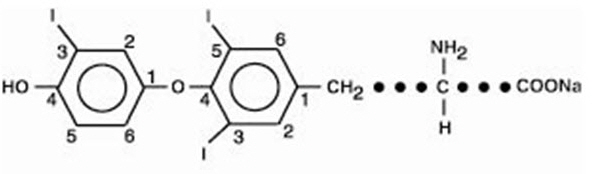
liothyronine sodium 0.05 MG Oral Tablet — Thyroid hormones. INDICATIONS AND USAGE Liothyronine sodium is an L-triiodothyronine (T3) indicated for: Hypothyroidism: As replacement in primary (thyroidal)…
Boxed warning
WARNING: NOT FOR TREATMENT OF OBESITY OR FOR WEIGHT LOSS Thyroid hormones, including liothyronine sodium tablets, either alone or with other therapeutic agents, should not be used for the treatment of obesity or for weight loss. In euthyroid patients, doses within the range of daily hormonal requirements are ineffective for weight reduction. Larger doses may produce serious or even life-threatening manifestations of toxicity, particularly when given in association with sympathomimetic amines such as those used for their anorectic effects [see Adverse Reactions (6) , Drug Interactions (7.7) , and Overdosage (10) ] . WARNING: NOT FOR TREATMENT OF OBESITY OR FOR WEIGHT LOSS See full prescribing information for complete boxed warning. Thyroid hormones, including liothyronine sodium tablets, should not be used for the treatment of obesity or for weight loss. Doses beyond the range of daily hormonal requirements may produce serious or even life-threatening manifestations of toxicity ( 6 , 7.7 , 10 ).
Liothyronine sodium tablets have several drug interactions that may affect thyroid hormone levels and the efficacy of other medications.
majorBile Acid Sequestrants — may reduce the efficacy of liothyronine sodium tablets by binding and delaying or preventing absorption, potentially resulting in hypothyroidism
moderateClofibrate — may increase serum thyroxine-binding globulin (TBG) concentration
moderate5-Fluorouracil — may increase serum thyroxine-binding globulin (TBG) concentration
moderateMitotane — may increase serum thyroxine-binding globulin (TBG) concentration
moderateTamoxifen — may increase serum thyroxine-binding globulin (TBG) concentration
moderateAndrogens / Anabolic Steroids — may decrease serum TBG concentration
moderateAsparaginase — may decrease serum TBG concentration
moderateGlucocorticoids — may decrease serum TBG concentration
moderateSlow-Release Nicotinic Acid — may decrease serum TBG concentration
moderateSalicylates (>2 g/day) — inhibit binding of T4 and T3 to TBG and transthyretin
unknownCarbamazepine — may cause protein binding site displacement
moderateFurosemide (>80 mg IV) — inhibits the protein binding of T4 to TBG and albumin, causing an increased free-T4 fraction in serum
unknownHeparin — may cause protein binding site displacement
unknownHydantoins — may cause protein binding site displacement
unknownNon-Steroidal Anti-inflammatory Drugs - Fenamates — may cause protein binding site displacement
moderatePhenobarbital — reduces the response to thyroxine
moderateRifampin — accelerates the metabolism of thyroid hormones
moderateBeta-adrenergic antagonists (e.g., Propranolol >160 mg/day) — may decrease serum T3 concentrations
moderateGlucocorticoids (e.g., Dexamethasone ≥4 mg/day) — may decrease serum T3 concentrations
moderateAmiodarone — inhibits peripheral conversion of levothyroxine (T4) to triiodothyronine (T3)
moderateAntidiabetic agents — may worsen glycemic control and result in increased antidiabetic agent or insulin requirements
majorOral anticoagulants — increases the response to oral anticoagulant therapy
moderateDigitalis glycosides — may reduce the therapeutic effects of digitalis glycosides
majorTricyclic antidepressants (e.g., amitriptyline) — may increase the therapeutic and toxic effects of both drugs
majorTetracyclic antidepressants (e.g., maprotiline) — may increase the therapeutic and toxic effects of both drugs
Real-world adverse events (FAERS)
Drug Ineffective952Headache875Fatigue837Nausea578Dyspnoea555Pain479Hypertension464Malaise439
Indications
INDICATIONS AND USAGE Liothyronine sodium is an L-triiodothyronine (T3) indicated for: Hypothyroidism: As replacement in primary (thyroidal), secondary (pituitary), and tertiary (hypothalamic) congenital or acquired hypothyroidism ( 1.1 ) Pituitary Thyrotropin (Thyroid-Stimulating Hormone, TSH) Suppression: As an adjunct to surgery and radioiodine therapy in the management of well-differentiated thyroid cancer ( 1.2 ) Thyroid Suppression Test: As a diagnostic agent in suppression tests to differentiate suspected mild hyperthyroidism or thyroid gland autonomy ( 1.3 ) Limitations of Use: - Not indicated for suppression of benign thyroid nodules and nontoxic diffuse goiter in iodine-sufficient patients. ( 1 ) - Not indicated for treatment of hypothyroidism during the recovery phase of subacute thyroiditis. ( 1 ) 1.1 Hypothyroidism Liothyronine Sodium Tablets, USP are indicated as a replacement therapy in primary (thyroidal), secondary (pituitary), and tertiary (hypothalamic) congenital or acquired hypothyroidism. 1.2 Pituitary Thyrotropin (Thyroid-Stimulating Hormone, TSH) Suppression Liothyronine Sodium Tablets, USP are indicated as an adjunct to surgery and radioiodine therapy in the management of well-differentiated thyroid cancer. 1.3 Thyroid Suppression Test Liothyronine Sodium Tablets, USP are indicated as a diagnostic agent in suppression tests to differentiate suspected mild hyperthyroidism or thyroid gland autonomy. Limitations of Use Liothyronine Sodium Tablets, USP are not indicated for suppression of benign thyroid nodules and nontoxic diffuse goiter in iodine-sufficient patients as there are no clinical benefits and overtreatment with Liothyronine Sodium Tablets, USP may induce hyperthyroidism [see Warnings and Precautions (5.4) ]. Liothyronine Sodium Tablets, USP are not indicated for treatment of hypothyroidism during the recovery phase of subacute thyroiditis.
Dosage
DOSAGE AND ADMINISTRATION Administer Liothyronine Sodium Tablets, USP orally once daily and individual dosage according to patient response and laboratory findings ( 2.1 ) See full prescribing information for recommended dosage for hypothyroidism ( 2.2 ) TSH suppression in well-differentiated thyroid cancer ( 2.3 ) and for thyroid suppression test ( 2.4 ) When switching a patient to Liothyronine Sodium Tablets, USP discontinue levothyroxine therapy and initiate Liothyronine Sodium Tablets, USP at a low dosage. Gradually increase the dose according to the patient's response ( 2.5 ) Adequacy of therapy determined with periodic monitoring of TSH and T3 levels as well as clinical status ( 2.6 ) 2.1 General Principles of Dosing The dose of Liothyronine Sodium Tablets, USP for hypothyroidism or pituitary Thyroid-Stimulating Hormone (TSH) suppression depends on a variety of factors including: the patient's age, body weight, cardiovascular status, concomitant medical conditions (including pregnancy), concomitant medications, co-administered food and the specific nature of the condition being treated [see Dosage and Administration (2.2 , 2.3 , 2.4 ), Warnings and Precautions (5) , and Drug Interactions (7) ] . Dosing must be individualized to account for these factors and dose adjustments made based on periodic assessment of the patient's clinical response and laboratory parameters [see Dosage and Administration (2.4) ]. Administer Liothyronine Sodium Tablets, USP orally once daily. 2.2 Recommended Dosage for Hypothyroidism Adults The recommended starting dosage is 25 mcg orally once daily. Increase the dose by 25 mcg daily every 1 or 2 weeks, if needed. The usual maintenance dose is 25 mcg to 75 mcg once daily. For elderly patients or patients with underlying cardiac disease, start with Liothyronine Sodium Tablets, USP 5 mcg once daily and increase by 5 mcg increments at the recommended intervals. Serum TSH is not a reliable measure of liothyronine sodium dose adequacy in patients with secondary or tertiary hypothyroidism and should not be used to monitor therapy. Use the serum T3 level to monitor adequacy of therapy in this patient population. Pediatric Patients The recommended starting dosage is 5 mcg once daily, with a 5 mcg increase every 3 to 4 days until the desired response is achieved. Infants a few months old may require 20 mcg once daily for maintenance. At 1 year of age, 50 mcg once daily may be required. Above 3 years of age, the full adult dosage may be necessary [see Use in Specific Populations (8.4) ]. Newborns (0 to 3 months) at Risk for Cardiac Failure: Consider a lower starting dose in infants at risk for cardiac failure. Increase the dose as needed based on clinical and laboratory response. Pediatric Patients at Risk for Hyperactivity: To minimize the risk of hyperactivity in pediatric patients, start at one-fourth the recommended full replacement dose, and increase on a weekly basis by one-fourth the full recommended replacement dose until the full recommended replacement dose is reached. Pregnancy Pre-existing Hypothyroidism: Thyroid hormone dose requirements may increase during pregnancy. Measure serum TSH and free-T4 as soon as pregnancy is confirmed and, at minimum, during each trimester of pregnancy. In patients with primary hypothyroidism, maintain serum TSH in the trimester-specific reference range. For patients with serum TSH above the normal trimester-specific range, increase the dose of thyroid hormone and measure TSH every 4 weeks until a stable dose is reached and serum TSH is within the normal trimester-specific range. Reduce thyroid hormone dosage to pre-pregnancy levels immediately after delivery and measure serum TSH levels 4 to 8 weeks postpartum to ensure thyroid hormone dose is appropriate. 2.3 Recommended Dosage for TSH Suppression in Well-Differentiated Thyroid Cancer The dose of Liothyronine Sodium Tablets, USP should target TSH levels within the desired therapeutic range. This may require higher doses, depending on the target level for TSH suppression. 2.4 Recommended Dosage for Thyroid Suppression Test The recommended dose is 75 mcg to 100 mcg daily for 7 days, with radioactive iodine uptake being determined before and after the 7 day administration of Liothyronine Sodium Tablets, USP. If thyroid function is normal, the radioiodine uptake will drop significantly after treatment. A 50% or greater suppression of uptake indicates a normal thyroid-pituitary axis. 2.5 Switching from Levothyroxine to Liothyronine Sodium Tablets, USP Liothyronine sodium has a rapid onset of action and residual effects of the other thyroid preparation may persist for the first several weeks after initiating liothyronine sodium therapy. When switching a patient to Liothyronine Sodium Tablets, USP, discontinue levothyroxine therapy and initiate Liothyronine Sodium Tablets, USP at a low dosage. Gradually increase the liothyronine sodium dose according to the patient's response. 2.6 Monitoring TSH and Triiodothyronine (T3) Levels Assess the adequacy of therapy by periodic assessment of laboratory tests and clinical evaluation. Persistent clinical and laboratory evidence of hypothyroidism despite an apparent adequate replacement dose of Liothyronine Sodium Tablets, USP may be evidence of inadequate absorption, poor compliance, drug interactions, or a combination of these factors. Adults In adult patients with primary hypothyroidism, monitor serum TSH periodically after initiation of the therapy or any change in dose. To check the immediate response to therapy before the TSH has had a chance to respond or if your patient's status needs to be assessed prior to that point, measurement of total T3 would be most appropriate. In patients on a stable and appropriate replacement dose, evaluate clinical and biochemical response every 6 to 12 months and whenever there is a change in the patient's clinical status. Pediatrics In pediatric patients with hypothyroidism, assess the adequacy of replacement therapy by measuring serum TSH and T3 levels. For pediatric patients three years of age and older, the recommended monitoring is every 3 to 12 months thereafter, following dose stabilization until growth and puberty are completed. Poor compliance or abnormal values may necessitate more frequent monitoring. Perform routine clinical examination, including assessment of development, mental and physical growth, and bone maturation, at regular intervals. While the general aim of therapy is to normalize the serum TSH level, TSH may not normalize in some patients due to in utero hypothyroidism causing a resetting of pituitary-thyroid feedback. Failure of the serum TSH to decrease below 20 IU per liter after initiation of liothyronine sodium therapy may indicate the child is not receiving adequate therapy. Assess compliance, dose of medication administered, and method of administration prior to increasing the dose of Liothyronine Sodium Tablets, USP [see Warnings and Precautions (5.1) and Use in Specific Populations (8.4)] . Secondary and Tertiary Hypothyroidism Monitor serum T3 levels and maintain in the normal range.
Warnings
WARNINGS AND PRECAUTIONS Cardiac adverse reactions in the elderly and in patients with underlying cardiovascular disease: Initiate liothyronine sodium tablets at less than the full replacement dose because of the increased risk of cardiac adverse reactions, including atrial fibrillation ( 2.3 , 5.1 , 8.5 ) Myxedema coma: Do not use oral thyroid hormone drug products to treat myxedema coma. ( 5.2 ) Acute adrenal crisis in patients with concomitant adrenal insufficiency: Treat with replacement glucocorticoids prior to initiation of liothyronine sodium tablets treatment ( 5.3 ) Prevention of hyperthyroidism or incomplete treatment of hypothyroidism: Proper dose titration and careful monitoring is critical to prevent the persistence of hypothyroidism or the development of hyperthyroidism. (5.4 ) Worsening of diabetic control: Therapy in patients with diabetes mellitus may worsen glycemic control and result in increased antidiabetic agent or insulin requirements. Carefully monitor glycemic control after starting, changing, or discontinuing thyroid hormone therapy ( 5.5 ) Decreased bone mineral density associated with thyroid hormone over-replacement: Over-replacement can increase bone resorption and decrease bone mineral density. Give the lowest effective dose ( 5.6 ) 5.1 Cardiac Adverse Reactions in the Elderly and in Patients with Underlying Cardiovascular Disease Overtreatment with thyroid hormone may cause an increase in heart rate, cardiac wall thickness, and cardiac contractility and may precipitate angina or arrhythmias, particularly in patients with cardiovascular disease and in elderly patients. Initiate liothyronine sodium tablets therapy in this population at lower doses than those recommended in younger individuals or in patients without cardiac disease [see Dosage and Administration (2.3) and Use in Specific Populations (8.5)] . Monitor for cardiac arrhythmias during surgical procedures in patients with coronary artery disease receiving suppressive liothyronine sodium tablets therapy. Monitor patients receiving concomitant liothyronine sodium tablets and sympathomimetic agents for signs and symptoms of coronary insufficiency. If cardiovascular symptoms develop or worsen, reduce or withhold the liothyronine sodium tablets dose for one week and restart at a lower dose. 5.2 Myxedema Coma Myxedema coma is a life-threatening emergency characterized by poor circulation and hypometabolism, and may result in unpredictable absorption of thyroid hormone from the gastrointestinal tract. Use of oral thyroid hormone drug products is not recommended to treat myxedema coma. Administer thyroid hormone products formulated for intravenous administration to treat myxedema coma. 5.3 Acute Adrenal Crisis in Patients with Concomitant Adrenal Insufficiency Thyroid hormone increases metabolic clearance of glucocorticoids. Initiation of thyroid hormone therapy prior to initiating glucocorticoid therapy may precipitate an acute adrenal crisis in patients with adrenal insufficiency. Treat patients with adrenal insufficiency with replacement glucocorticoids prior to initiating treatment with liothyronine sodium tablets [see Contraindications ( 4 )] . 5.4 Prevention of Hyperthyroidism or Incomplete Treatment of Hypothyroidism Liothyronine sodium has a narrow therapeutic index. Over- or undertreatment with liothyronine sodium tablets may have negative effects on growth and development, cardiovascular function, bone metabolism, reproductive function, cognitive function, emotional state, gastrointestinal function, and on glucose and lipid metabolism. Titrate the dose of liothyronine sodium tablets carefully and monitor response to titration to avoid these effects [see Dosage and Administration ( 2.4 )] . Monitor for the presence of drug or food interactions when using liothyronine sodium tablets and adjust the dose as necessary [see Drug Interactions ( 7 ) and Clinical Pharmacology ( 12.3 )] . 5.5 Worsening of Diabetic Control Addition of thyroid hormone therapy in patients with diabetes mellitus may worsen glycemic control and result in increased antidiabetic agent or insulin requirements. Carefully monitor glycemic control after starting, changing, or discontinuing liothyronine sodium tablets [see Drug Interactions ( 7.2 )] . 5.6 Decreased Bone Mineral Density Associated with Thyroid Hormone Over-Replacement Increased bone resorption and decreased bone mineral density may occur as a result of thyroid hormone over-replacement, particularly in post-menopausal women. The increased bone resorption may be associated with increased serum levels and urinary excretion of calcium and phosphorous, elevations in bone alkaline phosphatase, and suppressed serum parathyroid hormone levels. Administer the minimum dose of liothyronine sodium tablets that achieves the desired clinical and biochemical response to mitigate against this risk.
Contraindications
CONTRAINDICATIONS Thyroid hormone preparations are generally contraindicated in patients with diagnosed but as yet uncorrected adrenal cortical insufficiency or untreated thyrotoxicosis. Thyroid hormone preparations are also generally contraindicated in patients with hypersensitivity to any of the active or extraneous constituents of these preparations; however, there is no well-documented evidence in the literature of true allergic or idiosyncratic reactions to thyroid hormone. Concomitant use of liothyronine sodium injection (T 3 ) and artificial rewarming of patients is contraindicated. (See PRECAUTIONS .)
Mechanism of action
CLINICAL PHARMACOLOGY Thyroid hormones enhance oxygen consumption by most tissues of the body and increase the basal metabolic rate and the metabolism of carbohydrates, lipids and proteins. In vitro studies indicate that T 3 increases aerobic mitochondrial function, thereby increasing the rates of synthesis and utilization of myocardial high-energy phosphates. This, in turn, stimulates myosin ATPase and reduces tissue lactic acidosis. Thus, thyroid hormones exert a profound influence on virtually every organ system in the body and are of particular importance in the development of the central nervous system. While the source of levothyroxine (T 4 ) and some triiodothyronine (T 3 ) is via secretion from the thyroid gland, it is now well-established that approximately 80% of circulating T 3 arises predominantly by way of the extrathyroidal conversion of T 4 . The membrane-bound enzyme responsible for this reaction is iodothyronine 5’-deiodinase. Activity of the enzyme is greatest in the liver and kidney. A second pathway of T 4 to T 3 conversion occurs via a PTU-insensitive 5’-deiodinase located primarily in the pituitary and central nervous system. The prohormone T 4 must be converted to T 3 in the body before it can exert biological effects. During periods of illness or stress, this conversion is often inhibited and can be diverted to the inactive reverse T 3 (rT 3 ) moiety. Therefore, correction of the hypothyroid condition in patients with myxedema coma is facilitated by the parenteral administration of triiodothyronine (T 3 ). T 3 is bound much less firmly to serum binding proteins and therefore penetrates into the cells much more rapidly than T 4 . Also, the binding of T 3 to a nuclear thyroid hormone receptor seems to initiate most effects of thyroid hormone in tissues. Although most thyroid hormone analogs, both natural and synthetic, will bind to this protein, the affinity of T 3 for this receptor is roughly 10-fold higher than that of T 4 . Thus, T 3 is the biologically active thyroid hormone. Pharmacodynamics The clinical features of myxedema coma include depression of the cardiovascular, respiratory, gastrointestinal and central nervous systems, impaired diuresis, and hypothermia. Administration of thyroid hormones reverses or attenuates these conditions. Thyroid hormones increase heart rate, ventricular contractility and cardiac output, as well as decrease total systemic vascular resistance. They also increase the rate and depth of respiration, motility of the gastrointestinal tract, rapidity of cerebration, and vasodilatation. Thyroid hormones correct hypothermia by markedly increasing the basal metabolic rate, as well as the number and activity of mitochondria in almost all cells of the body. Pharmacokinetics Since liothyronine sodium (T 3 ) is not firmly bound to serum protein, it is readily available to body tissues. Liothyronine sodium has a rapid cutoff of activity which permits quick dosage adjustment and facilitates control of the effects of overdosage, should they occur. The higher affinity of levothyroxine (T 4 ) as compared to triiodothyronine (T 3 ) for both thyroid-binding globulin and thyroid-binding prealbumin partially explains the higher serum levels and longer half-life of the former hormone. Both protein-bound hormones exist in reverse equilibrium with minute amounts of free hormone, the latter accounting for the metabolic activity. T 4 is deiodinated to T 3 . A single dose of liothyronine sodium administered intravenously produces a detectable metabolic response in as little as two to four hours and a maximum therapeutic response within two days. However, no pharmacokinetic studies have been performed with intravenous liothyronine (T 3 ) in myxedema coma or precoma patients.
A drug lookup is just the start. Eleplan keeps the whole care plan in one place.
Medications, diagnoses, documents, appointments, and the whole care team — organized and always in sync, with Ellie, your AI care assistant, on top of it. Free to start.