minocycline 50 MG Oral Tablet
Managing this medication for someone you care for? Eleplan keeps diagnoses, medications and appointments in one plan.
Start free with EleplanClinical drug
minocycline 50 MG Oral Tablet
50 MG · Oral Tablet · oral
A form of minocycline →
minocycline 50 MG Oral Tablet — Antiinfectives and antiseptics for local oral treatment. INDICATIONS and USAGE Minocycline hydrochloride capsules, USP are indicated in the treatment of the following infections due to susceptible strains…
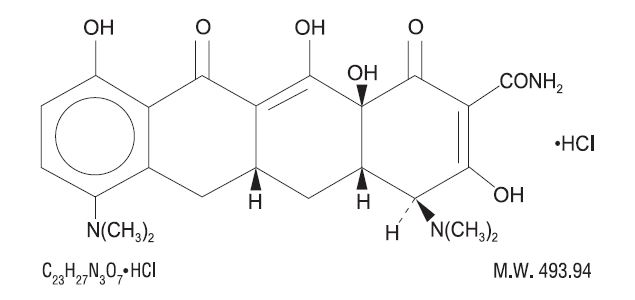
Active ingredient
Classification
Antiinfectives and antiseptics for local oral treatmentTetracycline-class Drug
Drug interactions
Minocycline has several drug interactions that may affect its efficacy and safety.
- moderateanticoagulants — may require downward adjustment of dosage
- unknownpenicillin — may interfere with bactericidal action
- majorantacids containing aluminum, calcium, or magnesium — absorption of minocycline is impaired
- majoriron-containing preparations — absorption of minocycline is impaired
- moderateoral contraceptives — may render oral contraceptives less effective
- majorisotretinoin — should be avoided due to increased risk of pseudotumor cerebri
- moderateergot alkaloids or their derivatives — increased risk of ergotism
Real-world adverse events (FAERS)
Drug Ineffective2,811Off Label Use2,119Nausea1,618Pain1,608Arthralgia1,482Drug Intolerance1,462Rash1,430Fatigue1,429
Indications
INDICATIONS and USAGE Minocycline hydrochloride capsules, USP are indicated in the treatment of the following infections due to susceptible strains of the designated microorganisms: • Rocky Mountain spotted fever, typhus fever and the typhus group, Q fever, rickettsialpox and tick fevers caused by rickettsiae. • Respiratory tract infections caused by Mycoplasma pneumoniae . • Lymphogranuloma venereum caused by Chlamydia trachomatis . • Psittacosis (Ornithosis) due to Chlamydophila psittaci. • Trachoma caused by Chlamydia trachomatis , although the infectious agent is not always eliminated, as judged by immunofluorescence. • Inclusion conjunctivitis caused by Chlamydia trachomatis . • Nongonococcal urethritis, endocervical, or rectal infections in adults caused by Ureaplasma urealyticum or Chlamydia trachomatis . • Relapsing fever due to Borrelia recurrentis . • Chancroid caused by Haemophilus ducreyi . • Plague due to Yersinia pestis . • Tularemia due to Francisella tularensis . • Cholera caused by Vibrio cholerae. • Campylobacter fetus infections caused by Campylobacter fetus. • Brucellosis due to Brucella species (in conjunction with streptomycin). • Bartonellosis due to Bartonella bacilliformis . • Granuloma inguinale caused by Klebsiella granulomatis. Minocycline is indicated for the treatment of infections caused by the following gram-negative microorganisms when bacteriologic testing indicates appropriate susceptibility to the drug: • Escherichia coli. • Enterobacter aerogenes. • Shigella species. • Acinetobacter species. • Respiratory tract infections caused by Haemophilus influenzae . • Respiratory tract and urinary tract infections caused by Klebsiella species. Minocycline hydrochloride capsules, USP are indicated for the treatment of infections caused by the following gram-positive microorganisms when bacteriologic testing indicates appropriate susceptibility to the drug: • Upper respiratory tract infections caused by Streptococcus pneumoniae . • Skin and skin structure infections caused by Staphylococcus aureus . (Note: Minocycline is not the drug of choice in the treatment of any type of staphylococcal infection.) When penicillin is contraindicated, minocycline is an alternative drug in the treatment of the following infections: • Uncomplicated urethritis in men due to Neisseria gonorrhoeae and for the treatment of other gonococcal infections. • Infections in women caused by Neisseria gonorrhoeae . • Syphilis caused by Treponema pallidum subspecies pallidum . • Yaws caused by Treponema pallidum subspecies pertenue . • Listeriosis due to Listeria monocytogenes . • Anthrax due to Bacillus anthracis. • Vincent’s infection caused by Fusobacterium fusiforme . • Actinomycosis caused by Actinomyces israelii . • Infections caused by Clostridium species. In acute intestinal amebiasis, minocycline may be a useful adjunct to amebicides. In severe acne , minocycline may be useful adjunctive therapy. Oral minocycline is indicated in the treatment of asymptomatic carriers of Neisseria meningitidis to eliminate meningococci from the nasopharynx. In order to preserve the usefulness of minocycline in the treatment of asymptomatic meningococcal carriers, diagnostic laboratory procedures, including serotyping and susceptibility testing, should be performed to establish the carrier state and the correct treatment. It is recommended that the prophylactic use of minocycline be reserved for situations in which the risk of meningococcal meningitis is high. Oral minocycline is not indicated for the treatment of meningococcal infection. Although no controlled clinical efficacy studies have been conducted, limited clinical data show that oral minocycline hydrochloride has been used successfully in the treatment of infections caused by Mycobacterium marinum . To reduce the development of drug-resistant bacteria and maintain the effectiveness of minocycline hydrochloride capsules, USP and other antibacterial drugs, minocycline hydrochloride capsules, USP should be used only to treat or prevent infections that are proven or strongly suspected to be caused by susceptible bacteria. When culture and susceptibility information are available, they should be considered in selecting or modifying antibacterial therapy. In the absence of such data, local epidemiology and susceptibility patterns may contribute to the empiric selection of therapy.
Dosage
DOSAGE AND ADMINISTRATION THE USUAL DOSAGE AND FREQUENCY OF ADMINISTRATION OF MINOCYCLINE DIFFER FROM THAT OF THE OTHER TETRACYCLINES. EXCEEDING THE RECOMMENDED DOSAGE MAY RESULT IN AN INCREASED INCIDENCE OF SIDE EFFECTS. Minocycline hydrochloride capsules may be taken with or without food (see CLINICAL PHARMACOLOGY ). Ingestion of adequate amounts of fluids along with capsule and tablet forms of drugs in the tetracycline-class is recommended to reduce the risk of esophageal irritation and ulceration. The capsules should be swallowed whole. For Pediatric Patients above 8 Years of Age Usual pediatric dose: 4 mg/kg initially followed by 2 mg/kg every 12 hours, not to exceed the usual adult dose. Adults The usual dosage of minocycline hydrochloride capsules is 200 mg initially followed by 100 mg every 12 hours. Alternatively, if more frequent doses are preferred, two or four 50 mg capsules may be given initially followed by one 50 mg capsule 4 times daily. Uncomplicated gonococcal infections other than urethritis and anorectal infections in men: 200 mg initially, followed by 100 mg every 12 hours for a minimum of 4 days, with post-therapy cultures within 2 to 3 days. In the treatment of uncomplicated gonococcal urethritis in men, 100 mg every 12 hours for 5 days is recommended. For the treatment of syphilis, the usual dosage of minocycline hydrochloride should be administered over a period of 10 to 15 days. Close follow-up, including laboratory tests, is recommended. In the treatment of meningococcal carrier state, the recommended dosage is 100 mg every 12 hours for 5 days. Mycobacterium marinum infections: Although optimal doses have not been established, 100 mg every 12 hours for 6 to 8 weeks have been used successfully in a limited number of cases. Uncomplicated urethral, endocervical, or rectal infection in adults caused by Chlamydia trachomatis or Ureaplasma urealyticum : 100 mg orally, every 12 hours for at least 7 days. Ingestion of adequate amounts of fluids along with capsule and tablet forms of drugs in the tetracycline class is recommended to reduce the risk of esophageal irritation and ulceration. The pharmacokinetics of minocycline in patients with renal impairment (CL CR <80 mL/min) have not been fully characterized. Current data are insufficient to determine if a dosage adjustment is warranted. The total daily dosage should not exceed 200 mg in 24 hours. However, due to the antianabolic effect of tetracyclines, BUN and creatinine should be monitored (see WARNINGS - Antianabolic Action ).
Warnings
WARNINGS AND PRECAUTIONS The use of Minocycline hydrochloride extended-release tablets during tooth development (last half of pregnancy, infancy, and childhood up to the age of 8 years) may cause permanent discoloration of the teeth (yellow-gray-brown). (5.1) If pseudomembranous colitis occurs, discontinue Minocycline hydrochloride extended-release tablets. (5.2) If liver injury is suspected, discontinue Minocycline hydrochloride extended-release tablets. (5.3) If renal impairment exists, Minocycline hydrochloride extended-release tablets doses may need to be adjusted to avoid excessive systemic accumulations of the drug and possible liver toxicity. (5.4) Minocycline may cause central nervous system side effects including light- headedness, dizziness, or vertigo. Advise patients. (5.5) Minocycline may cause pseudotumor cerebri (benign intracranial hypertension) in adults and adolescents. Discontinue Minocycline hydrochloride extended-release tablets if symptoms occur. (5.6) Minocycline has been associated with autoimmune syndromes; discontinue Minocycline hydrochloride extended-release tablets immediately if symptoms occur. (5.7) Minocycline has been associated with anaphylaxis, serious skin reactions, erythema multiforme, and DRESS syndrome. Discontinue Minocycline hydrochloride extended-release tablets immediately if symptoms occur. (5.9) 5.1 Teratogenic Effects A. MINOCYCLINE, LIKE OTHER TETRACYCLINE-CLASS DRUGS, CAN CAUSE FETAL HARM WHEN ADMINISTERED TO A PREGNANT WOMAN. IF ANY TETRACYCLINE IS USED DURING PREGNANCY OR IF THE PATIENT BECOMES PREGNANT WHILE TAKING THESE DRUGS, THE PATIENT SHOULD BE APPRISED OF THE POTENTIAL HAZARD TO THE FETUS. Minocycline hydrochloride extended-release tablets should not be used during pregnancy or by individuals of either gender who are attempting to conceive a child [see Nonclinical Toxicology (13.1) & Use in Specific Populations (8.1) ] . B. THE USE OF DRUGS OF THE TETRACYCLINE CLASS DURING TOOTH DEVELOPMENT (LAST HALF OF PREGNANCY, INFANCY, AND CHILDHOOD UP TO THE AGE OF 8 YEARS) MAY CAUSE PERMANENT DISCOLORATION OF THE TEETH (YELLOW-GRAY-BROWN). This adverse reaction is more common during long-term use of the drug but has been observed following repeated short-term courses. Enamel hypoplasia has also been reported. TETRACYCLINE DRUGS, THEREFORE, SHOULD NOT BE USED DURING TOOTH DEVELOPMENT. C. All tetracyclines form a stable calcium complex in any bone-forming tissue. A decrease in fibula growth rate has been observed in premature human infants given oral tetracycline in doses of 25 mg/kg every 6 hours. This reaction was shown to be reversible when the drug was discontinued. Results of animal studies indicate that tetracyclines cross the placenta, are found in fetal tissues, and can cause retardation of skeletal development on the developing fetus. Evidence of embryotoxicity has been noted in animals treated early in pregnancy [see Use in Specific Populations (8.1) ] . 5.2 Pseudomembranous Colitis Clostridium difficile associated diarrhea (CDAD) has been reported with nearly all antibacterial agents, including minocycline, and may range in severity from mild diarrhea to fatal colitis. Treatment with antibacterial agents alters the normal flora of the colon leading to overgrowth of C. difficile. C. difficile produces toxins A and B which contribute to the development of CDAD. Hypertoxin producing strains of C. difficile cause increased morbidity and mortality, as these infections can be refractory to antimicrobial therapy and may require colectomy. CDAD must be considered in all patients who present with diarrhea following antibiotic use. Careful medical history is necessary since CDAD has been reported to occur over two months after the administration of antibacterial agents. If CDAD is suspected or confirmed, ongoing antibiotic use not directed against C. difficile may need to be discontinued. Appropriate fluid and electrolyte management, protein supplementation, antibiotic treatment of C. difficile , and surgical evaluation should be instituted as clinically indicated. 5.3 Hepatotoxicity Post-marketing cases of serious liver injury, including irreversible drug-induced hepatitis and fulminant hepatic failure (sometimes fatal) have been reported with minocycline use in the treatment of acne. 5.4 Metabolic Effects The anti-anabolic action of the tetracyclines may cause an increase in BUN. While this is not a problem in those with normal renal function, in patients with significantly impaired function, higher serum levels of tetracycline-class drugs may lead to azotemia, hyperphosphatemia, and acidosis. If renal impairment exists, even usual oral or parenteral doses may lead to excessive systemic accumulations of the drug and possible liver toxicity. Under such conditions, lower than usual total doses are indicated, and if therapy is prolonged, serum level determinations of the drug may be advisable. 5.5 Central Nervous System Effects Central nervous system side effects including light-headedness, dizziness or vertigo have been reported with minocycline therapy. Patients who experience these symptoms should be cautioned about driving vehicles or using hazardous machinery while on minocycline therapy. These symptoms may disappear during therapy and usually rapidly disappear when the drug is discontinued. 5.6 Benign Intracranial Hypertension Pseudotumor cerebri (benign intracranial hypertension) in adults and adolescents has been associated with the use of tetracyclines. Minocycline has been reported to cause or precipitate pseudotumor cerebri, the hallmark of which is papilledema. Clinical manifestations include headache and blurred vision. Bulging fontanels have been associated with the use of tetracyclines in infants. Although signs and symptoms of pseudotumor cerebri resolve after discontinuation of treatment, the possibility for permanent sequelae such as visual loss that may be permanent or severe exists. Patients should be questioned for visual disturbances prior to initiation of treatment with tetracyclines. If visual disturbance occurs during treatment, patients should be checked for papilledema. Concomitant use of isotretinoin and minocycline should be avoided because isotretinoin, a systemic retinoid, is also known to cause pseudotumor cerebri. 5.7 Autoimmune Syndromes Tetracyclines have been associated with the development of autoimmune syndromes. The long-term use of minocycline in the treatment of acne has been associated with drug-induced lupus-like syndrome, autoimmune hepatitis and vasculitis. Sporadic cases of serum sickness have presented shortly after minocycline use. Symptoms may be manifested by fever, rash, arthralgia, and malaise. In symptomatic patients, liver function tests, ANA, CBC, and other appropriate tests should be performed to evaluate the patients. Use of all tetracycline-class drugs should be discontinued immediately. 5.8 Photosensitivity Photosensitivity manifested by an exaggerated sunburn reaction has been observed in some individuals taking tetracyclines. This has been reported rarely with minocycline. Patients should minimize or avoid exposure to natural or artificial sunlight (tanning beds or UVA/B treatment) while using minocycline. If patients need to be outdoors while using minocycline, they should wear loose-fitting clothes that protect skin from sun exposure and discuss other sun protection measures with their physician. 5.9 Serious Skin/Hypersensitivity Reaction Cases of anaphylaxis, serious skin reactions (e.g. Stevens Johnson syndrome), erythema multiforme, and drug rash with eosinophilia and systemic symptoms (DRESS) syndrome have been reported postmarketing with minocycline use in patients with acne. DRESS syndrome consists of cutaneous reaction (such as rash or exfoliative dermatitis), eosinophilia, and one or more of the following visceral complications such as: hepatitis, pneumonitis, nephritis, myocarditis, and pericarditis. Fever and lymphadenopathy may be
Contraindications
CONTRAINDICATIONS Minocycline hydrochloride extended-release tablets is contraindicated in patients with history of a hypersensitivity reaction to any of the tetracyclines [see Warnings and Precautions ( 5.1 )]. Known hypersensitivity to any of the tetracyclines. ( 4 )
Mechanism of action
CLINICAL PHARMACOLOGY Following a single dose of one 100 mg tablet of minocycline hydrochloride administered to 28 normal fasting adult volunteers, maximum serum concentrations were attained in 1 to 3 hours (average 1.71 hours) and ranged from 491.71 to 1292.70 ng/mL (average 758.29 ng/mL). The serum half-life in the normal volunteers ranged from 11.38 to 24.31 hours (average 17.03 hours). When minocycline hydrochloride tablets were given concomitantly with a meal, which included dairy products, the extent of absorption of minocycline hydrochloride tablets was slightly decreased (6%). The peak plasma concentrations were slightly decreased (12%) and delayed by 1.09 hours when administered with food, compared to dosing under fasting conditions. Minocycline HCl may be administered with or without food. In previous studies with other minocycline dosage forms, the minocycline serum half-life ranged from 11 to 16 hours in 7 patients with hepatic dysfunction, and from 18 to 69 hours in 5 patients with renal dysfunction. The urinary and fecal recovery of minocycline when administered to 12 normal volunteers was one-half to one-third that of other tetracyclines. Microbiology The tetracyclines are primarily bacteriostatic and are thought to exert their antimicrobial effect by the inhibition of protein synthesis. The tetracyclines, including minocycline, have similar antimicrobial spectra of activity against a wide range of gram-positive and gram-negative organisms. Cross-resistance of these organisms to tetracyclines is common. Minocycline has been shown to be active against most strains of the following microorganisms, both in vitro and in clinical infections as described in the INDICATIONS AND USAGE section: AEROBIC GRAM-POSITIVE MICROORGANISMS Because many strains of the following gram-positive microorganisms have been shown to be resistant to tetracyclines, culture and susceptibility testing are especially recommended. Tetracycline antibiotics should not be used for streptococcal diseases unless the organism has been demonstrated to be susceptible. Tetracyclines are not the drug of choice in the treatment of any type of staphylococcal infection. Bacillus anthracis a Listeria monocytogenes a Staphylococcus aureus Streptococcus pneumoniae AEROBIC GRAM-NEGATIVE MICROORGANISMS Bartonella bacilliformis Brucella species Calymmatobacterium granulomatis Campylobacter fetus Francisella tularensis Haemophilus ducreyi Vibrio cholerae Yersinia pestis Because many strains of the following groups of gram-negative microorganisms have been shown to be resistant to tetracyclines, culture and susceptibility tests are especially recommended. Acinetobacter species Enterobacter aerogenes Escherichia coli Haemophilus influenzae Klebsiella species Neisseria gonorrhoeae a Neisseria meningitidis a Shigella species “OTHER” MICROORGANISMS Actinomyces species a Borrelia recurrentis Chlamydia psittaci Chlamydia trachomatis Clostridium species a Entamoeba species Fusobacterium nucleatum subspecies fusiforme a Mycobacterium marinum Mycoplasma pneumoniae Propionibacterium acnes Rickettsiae Treponema pallidum subspecies pallidum a Treponema pallidum subspecies pertenue a Ureaplasma urealyticum a When penicillin is contraindicated, tetracyclines are alternative drugs in the treatment of infections caused by the cited microorganisms. Susceptibility Tests Susceptibility testing should be performed with tetracycline since it predicts susceptibility to minocycline. However, certain organisms (e.g., some staphylococci, and Acinetobacter species) may be more susceptible to minocycline and doxycycline than tetracycline. Dilution Techniques Quantitative methods are used to determine antimicrobial minimal inhibitory concentrations (MICs). These MICs provide estimates of the susceptibility of bacteria to antimicrobial compounds. The MICs should be determined using a standardized procedure. Standardized procedures are based on a dilution method 1,3 (broth or agar) or equivalent with standardized inoculum concentrations and standardized concentrations of tetracycline powder. The MIC values should be interpreted according to the following criteria: For testing aerobic gram-negative microorganisms (Enterobacteriaceae), Acinetobacter species and Staphylococcus aureus: MIC (mcg/mL) Interpretation ≤ 4 Susceptible (S) 8 Intermediate (I) ≥ 16 Resistant (R) For testing Haemophilus influenzae b and Streptococcus pneumoniae c : MIC (mcg/mL) Interpretation ≤ 2 Susceptible (S) 4 Intermediate (I) ≥ 8 Resistant (R) b. These interpretative standards are applicable only to broth microdilution susceptibility testing with Haemophilus influenzae using Haemophilus Test Medium. 1 c. These interpretative standards are applicable only to broth microdilution susceptibility testing using cation-adjusted Muller-Hinton broth with 2 to 5% lysed horse blood. 1 For testing Neisseria gonorrhoeae d : MIC (mcg/mL) Interpretation ≤ 0.25 Susceptible (S) 0.5-1 Intermediate (I) ≥ 2 Resistant (R) d. These interpretative standards are applicable only to agar dilution susceptibility testing using GC agar base and 1% defined growth supplements. 1 A report of “Susceptible” indicates that the pathogen is likely to be inhibited if the antimicrobial compound in the blood reaches the concentrations usually achievable. A report of “Intermediate” indicates that the result should be considered equivocal, and, if the microorganism is not fully susceptible to alternative, clinically feasible drugs, the test should be repeated. This category implies possible clinical applicability in body sites where the drug is physiologically concentrated or in situations where high dosage of drug can be used. This category also provides a buffer zone which prevents small uncontrolled technical factors from causing major discrepancies in interpretation. A report of “Resistant” indicates that the pathogen is not likely to be inhibited if the antimicrobial compound in the blood reaches the concentrations usually achievable; other therapy should be selected. Standardized susceptibility test procedures require the use of laboratory control microorganisms to control the technical aspects of the laboratory procedures. Standard tetracycline powder should provide the following MIC values: Microorganism MIC (mcg/mL) Escherichia coli Enterococcus faecalis Staphylococcus aureus Haemophilus influenzae Streptococcus pneumoniae Neisseria gonorrhoeae ATCC 25922 ATCC 29212 ATCC 29213 ATCC 49247 ATCC 49619 ATCC 49226 0.5-2 8-32 0.25-1 4-32 0.12-0.5 0.25-1 Diffusion techniques: Quantitative methods that require measurement of zone diameters also provide reproducible estimates of the susceptibility of bacteria to antimicrobial compounds. One such standardized procedure 2,3 requires the use of standardized inoculum concentrations. This procedure uses paper disks impregnated with 30 mcg tetracycline (class disk) or 30 mcg minocycline to test the susceptibility of microorganisms to minocycline. Reports from the laboratory providing results of the standard single-disk susceptibility test with a 30 mcg tetracycline or minocycline disk should be interpreted according to the following criteria: For testing aerobic gram-negative microorganisms (Enterobacteriaceae). Acinetobacter species and Staphylococcus aureus: Zone Diameter (mm) Interpretation ≥ 19 Susceptible (S) 15-18 Intermediate (I) ≤ 14 Resistant (R) For testing Haemophilus influenzae e : Zone Diameter (mm) Interpretation ≥ 29 Susceptible (S) 26-28 Intermediate (I) ≤ 25 Resistant (R) e. These zone diameter standards are applicable only to susceptibility testing with Haemophilus influenzae using Haemophilus Test Medium and a 30 mcg tetracycline disk. 2 For testing Neisseria gonorrhoeae f : Zone Diameter (mm) Interpretation ≥ 38 Susceptible (S) 31-37 Intermediate (I) ≤ 30 Resistant (R) f. These interpretative standards are applicable only to disk diffusion testing using GC agar and 1% growth supplements, and a 30 mcg tetracycline disk.
Source: RxNorm + openFDA + RxClass + FAERS · 2026
Look up another medication