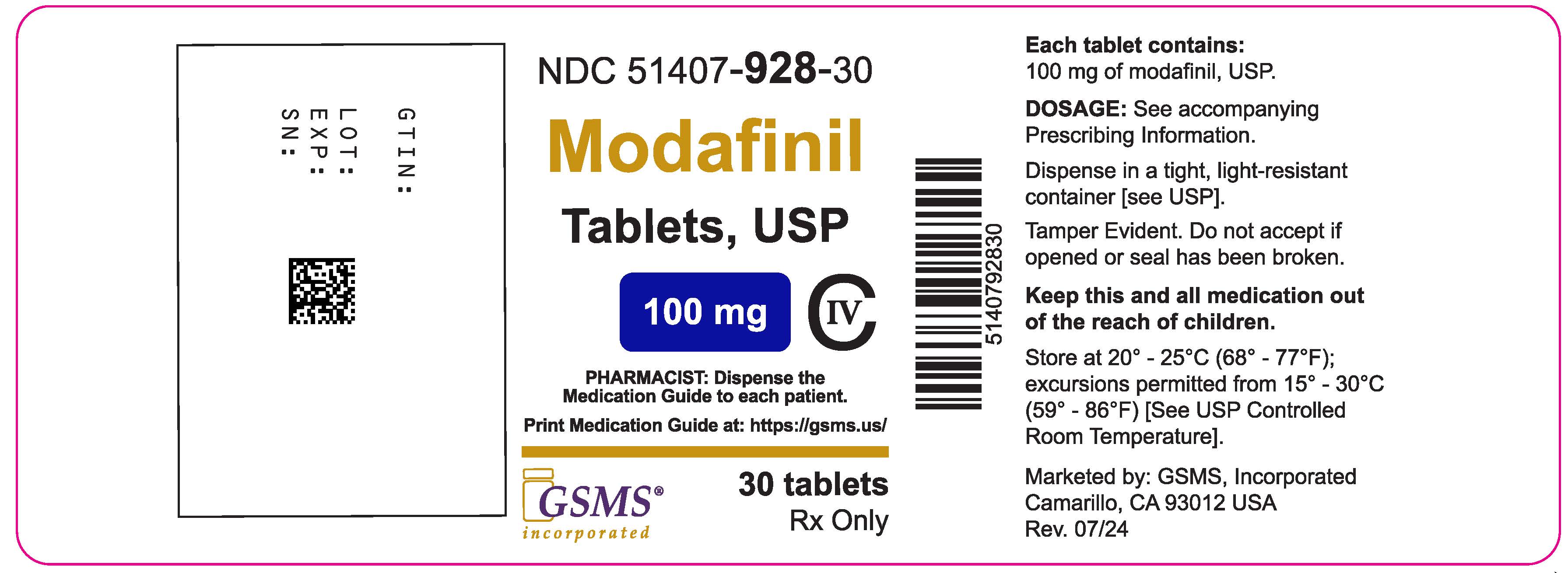
modafinil 100 MG Oral Tablet
Managing this medication for someone you care for? Eleplan keeps diagnoses, medications and appointments in one plan.
Start free with EleplanClinical drug
modafinil 100 MG Oral Tablet
100 MG · Oral Tablet · oral
A form of modafinil →
modafinil 100 MG Oral Tablet — Centrally acting sympathomimetics. INDICATIONS AND USAGE Modafinil tablets, USP are indicated to improve wakefulness in adult patients with excessive sleepiness associated with…
Active ingredient
Classification
Centrally acting sympathomimeticsSympathomimetic-like Agent
Drug interactions
Modafinil has several interactions with other drugs that may affect their clearance and effectiveness.
- moderateCYP3A4/5 substrates (e.g., steroidal contraceptives, cyclosporine, midazolam, triazolam) — Clearance may be increased, leading to lower systemic exposure.
- majorsteroidal contraceptives (e.g., ethinyl estradiol) — Effectiveness may be reduced when used with modafinil.
- moderatecyclosporine — Blood levels may be reduced when used with modafinil.
- moderateCYP2C19 substrates (e.g., phenytoin, diazepam, omeprazole, clomipramine) — Elimination may be prolonged, resulting in higher systemic exposure.
- moderatewarfarin — More frequent monitoring of prothrombin times/INR should be considered.
- moderateMAO inhibitors — Caution should be used when coadministering with modafinil.
Indications
INDICATIONS AND USAGE Modafinil tablets, USP are indicated to improve wakefulness in adult patients with excessive sleepiness associated with narcolepsy, obstructive sleep apnea (OSA), or shift work disorder (SWD). Limitations of Use In OSA, modafinil tablets, USP are indicated to treat excessive sleepiness and not as treatment for the underlying obstruction. If continuous positive airway pressure (CPAP) is the treatment of choice for a patient, a maximal effort to treat with CPAP for an adequate period of time should be made prior to initiating and during treatment with modafinil tablets, USP for excessive sleepiness. Modafinil tablets, USP are indicated to improve wakefulness in adult patients with excessive sleepiness associated with narcolepsy, obstructive sleep apnea (OSA), or shift work disorder (SWD). (1) Limitations of Use In OSA, modafinil tablets, USP are indicated to treat excessive sleepiness and not as treatment for the underlying obstruction.
Dosage
DOSAGE AND ADMINISTRATION The recommended dosage of modafinil tablets for each indication are as follows: • Narcolepsy or OSA: 200 mg once a day in the morning. (2.1) • SWD: 200 mg once a day, taken approximately one hour prior to start of the work shift (2.2) • Severe Hepatic Impairment: reduce dose to half the recommended dose. (2.3, 12.3) • Geriatric Patients: consider lower dose. (2.4, 12.3) 2.1 Dosage in Narcolepsy and Obstructive Sleep Apnea (OSA) The recommended dosage of modafinil tablets for patients with narcolepsy or OSA is 200 mg taken orally once a day as a single dose in the morning. Doses up to 400 mg/day, given as a single dose, have been well tolerated, but there is no consistent evidence that this dose confers additional benefit beyond that of the 200 mg/day dose [see Clinical Pharmacology (12.3) and Clinical Studies (14.1 , 14.2 )]. 2.2 Dosage in Shift Work Disorder (SWD) The recommended dosage of modafinil tablets for patients with SWD is 200 mg taken orally once a day as a single dose approximately 1 hour prior to the start of their work shift. 2.3 Dosage Modifications in Patients with Severe Hepatic Impairment In patients with severe hepatic impairment, the dosage of modafinil tablets should be reduced to one-half of that recommended for patients with normal hepatic function [see Use in Specific Populations (8.6) and Clinical Pharmacology (12.3) ]. 2.4 Use in Geriatric Patients Consideration should be given to the use of lower doses and close monitoring in geriatric patients [see Use in Specific Populations (8.5)] . 2.1 Dosage in Narcolepsy and Obstructive Sleep Apnea (OSA) The recommended dosage of modafinil tablets for patients with narcolepsy or OSA is 200 mg taken orally once a day as a single dose in the morning. Doses up to 400 mg/day, given as a single dose, have been well tolerated, but there is no consistent evidence that this dose confers additional benefit beyond that of the 200 mg/day dose [see Clinical Pharmacology (12.3) and Clinical Studies (14.1 , 14.2 )]. 2.2 Dosage in Shift Work Disorder (SWD) The recommended dosage of modafinil tablets for patients with SWD is 200 mg taken orally once a day as a single dose approximately 1 hour prior to the start of their work shift. 2.3 Dosage Modifications in Patients with Severe Hepatic Impairment In patients with severe hepatic impairment, the dosage of modafinil tablets should be reduced to one-half of that recommended for patients with normal hepatic function [see Use in Specific Populations (8.6) and Clinical Pharmacology (12.3) ]. 2.4 Use in Geriatric Patients Consideration should be given to the use of lower doses and close monitoring in geriatric patients [see Use in Specific Populations (8.5)] .
Warnings
WARNINGS AND PRECAUTIONS • Serious Rash, including Stevens-Johnson Syndrome: Discontinue modafinil at the first sign of rash, unless the rash is clearly not drug-related. ( 5.1 ) • Angioedema and Anaphylaxis Reactions: If suspected, discontinue modafinil. ( 5.2 ) • Multi-organ Hypersensitivity Reactions: If suspected, discontinue modafinil. ( 5.3 ) • Persistent Sleepiness: Assess patients frequently for degree of sleepiness and, if appropriate, advise patients to avoid driving or engaging in any other potentially dangerous activity. ( 5.4 ) • Psychiatric Symptoms: Use caution in patients with a history of psychosis, depression, or mania. Consider discontinuing modafinil if psychiatric symptoms develop. ( 5.5 ) • Known Cardiovascular Disease: Consider increased monitoring. ( 5.7 ) 5.1 Serious Rash, including Stevens-Johnson Syndrome Serious rash requiring hospitalization and discontinuation of treatment has been reported in association with the use of modafinil. In clinical trials of modafinil, the incidence of rash resulting in discontinuation was approximately 0.8% (13 per 1,585) in pediatric patients (age <17 years); these rashes included 1 case of possible Stevens-Johnson Syndrome (SJS) and 1 case of apparent multi-organ hypersensitivity reaction. Several of the cases were associated with fever and other abnormalities (e.g., vomiting, leukopenia). The median time to rash that resulted in discontinuation was 13 days. No such cases were observed among 380 pediatric patients who received placebo. Modafinil is not approved for use in pediatric patients for any indication [see Use in Specific Populations ( 8.4 )] . Rare cases of serious or life-threatening rash, including SJS, Toxic Epidermal Necrolysis (TEN), and Drug Rash with Eosinophilia and Systemic Symptoms (DRESS) have been reported in adults and children in worldwide postmarketing experience. The reporting rate of TEN and SJS associated with modafinil use, which is generally accepted to be an underestimate due to underreporting, exceeds the background incidence rate. Estimates of the background incidence rate for these serious skin reactions in the general population range between 1 to 2 cases per million-person years. There are no factors that are known to predict the risk of occurrence or the severity of rash associated with modafinil. Nearly all cases of serious rash associated with modafinil occurred within 1 to 5 weeks after treatment initiation. However, isolated cases have been reported after prolonged treatment (e.g., 3 months). Accordingly, duration of therapy cannot be relied upon as a means to predict the potential risk heralded by the first appearance of a rash. Although benign rashes also occur with modafinil, it is not possible to reliably predict which rashes will prove to be serious. Accordingly, modafinil should be discontinued at the first sign of rash, unless the rash is clearly not drug-related. Discontinuation of treatment may not prevent a rash from becoming life-threatening or permanently disabling or disfiguring. 5.2 Angioedema and Anaphylaxis Reactions Angioedema and hypersensitivity (with rash, dysphagia, and bronchospasm), were observed in patients treated with armodafinil, the R enantiomer of modafinil (which is the racemic mixture). No such cases were observed in modafinil clinical trials. However, angioedema has been reported in postmarketing experience with modafinil. Patients should be advised to discontinue therapy and immediately report to their physician any signs or symptoms suggesting angioedema or anaphylaxis (e.g., swelling of face, eyes, lips, tongue or larynx; difficulty in swallowing or breathing; hoarseness). 5.3 Multi-organ Hypersensitivity Reactions Multi-organ hypersensitivity reactions, including at least one fatality in postmarketing experience, have occurred in close temporal association (median time to detection 13 days: range 4 to 33) to the initiation of modafinil. Although there have been a limited number of reports, multi-organ hypersensitivity reactions may result in hospitalization or be life-threatening. There are no factors that are known to predict the risk of occurrence or the severity of multi-organ hypersensitivity reactions. Signs and symptoms of this disorder were diverse; however, patients typically, although not exclusively, presented with fever and rash associated with other organ system involvement. Other associated manifestations included myocarditis, hepatitis, liver function test abnormalities, hematological abnormalities (e.g., eosinophilia, leukopenia, thrombocytopenia), pruritus, and asthenia. Because multi-organ hypersensitivity is variable in its expression, other organ system symptoms and signs, not noted here, may occur. If a multi-organ hypersensitivity reaction is suspected, modafinil should be discontinued. Although there are no case reports to indicate cross‑sensitivity with other drugs that produce this syndrome, the experience with drugs associated with multi-organ hypersensitivity would indicate this to be a possibility. 5.4 Persistent Sleepiness Patients with abnormal levels of sleepiness who take modafinil should be advised that their level of wakefulness may not return to normal. Patients with excessive sleepiness, including those taking modafinil, should be frequently reassessed for their degree of sleepiness and, if appropriate, advised to avoid driving or any other potentially dangerous activity. Prescribers should also be aware that patients may not acknowledge sleepiness or drowsiness until directly questioned about drowsiness or sleepiness during specific activities. 5.5 Psychiatric Symptoms Psychiatric adverse reactions have been reported in patients treated with modafinil. In the adult modafinil controlled trials, psychiatric symptoms resulting in treatment discontinuation (at a frequency ≥0.3%) and reported more often in patients treated with modafinil compared to those treated with placebo were anxiety (1%), nervousness (1%), insomnia (<1%), confusion (<1%), agitation (<1%), and depression (<1%). Postmarketing adverse reactions associated with the use of modafinil have included mania, delusions, hallucinations, suicidal ideation, and aggression, some resulting in hospitalization. Many, but not all, patients had a prior psychiatric history. One healthy male volunteer developed ideas of reference, paranoid delusions, and auditory hallucinations in association with multiple daily 600 mg doses of modafinil (three times the recommended dose) and sleep deprivation. There was no evidence of psychosis 36 hours after drug discontinuation. Caution should be exercised when modafinil is given to patients with a history of psychosis, depression, or mania. Consideration should be given to the possible emergence or exacerbation of psychiatric symptoms in patients treated with modafinil. If psychiatric symptoms develop in association with modafinil administration, consider discontinuing modafinil. 5.6 Effects on Ability to Drive and Use Machinery Although modafinil has not been shown to produce functional impairment, any drug affecting the CNS may alter judgment, thinking or motor skills. Patients should be cautioned about operating an automobile or other hazardous machinery until it is reasonably certain that modafinil therapy will not adversely affect their ability to engage in such activities. 5.7 Cardiovascular Events In modafinil clinical studies, cardiovascular adverse reactions, including chest pain, palpitations, dyspnea, and transient ischemic T-wave changes on ECG occurred in three subjects in association with mitral valve prolapse or left ventricular hypertrophy. In a Canadian clinical trial, a 35 year old obese narcoleptic male with a prior history of syncopal episodes experienced a 9 second episode of asystole after 27 days of modafinil treatment (300 mg/day in divided doses). Modafinil is not recommended in patients with a history of left ventricular hypertrophy or in patients with mitral valve pro
Contraindications
CONTRAINDICATIONS Modafinil tablets are contraindicated in patients with known hypersensitivity to modafinil or armodafinil or its inactive ingredients [see Warnings and Precautions ( 5.1 , 5.2 , 5.3 )] . Modafinil tablets are contraindicated in patients with known hypersensitivity to modafinil or armodafinil. ( 4 )
Mechanism of action
CLINICAL PHARMACOLOGY 12.1 Mechanism of Action The mechanism(s) through which modafinil promotes wakefulness is unknown. Modafinil has wake-promoting actions similar to sympathomimetic agents including amphetamine and methylphenidate, although the pharmacologic profile is not identical to that of the sympathomimetic amines. Modafinil-induced wakefulness can be attenuated by the α1-adrenergic receptor antagonist, prazosin; however, modafinil is inactive in other in vitro assay systems known to be responsive to α-adrenergic agonists such as the rat vas deferens preparation. Modafinil is not a direct- or indirect-acting dopamine receptor agonist. However, in vitro , modafinil binds to the dopamine transporter and inhibits dopamine reuptake. This activity has been associated in vivo with increased extracellular dopamine levels in some brain regions of animals. In genetically engineered mice lacking the dopamine transporter (DAT), modafinil lacked wake-promoting activity, suggesting that this activity was DAT-dependent. However, the wake-promoting effects of modafinil, unlike those of amphetamine, were not antagonized by the dopamine receptor antagonist haloperidol in rats. In addition, alpha-methyl-p-tyrosine, a dopamine synthesis inhibitor, blocks the action of amphetamine, but does not block locomotor activity induced by modafinil. In the cat, equal wakefulness-promoting doses of methylphenidate and amphetamine increased neuronal activation throughout the brain. Modafinil at an equivalent wakefulness-promoting dose selectively and prominently increased neuronal activation in more discrete regions of the brain. The relationship of this finding in cats to the effects of modafinil in humans is unknown. In addition to its wake-promoting effects and ability to increase locomotor activity in animals, modafinil produces psychoactive and euphoric effects, alterations in mood, perception, thinking, and feelings typical of other CNS stimulants in humans. Modafinil has reinforcing properties, as evidenced by its self-administration in monkeys previously trained to self-administer cocaine; modafinil was also partially discriminated as stimulant-like. The optical enantiomers of modafinil have similar pharmacological actions in animals. Two major metabolites of modafinil, modafinil acid and modafinil sulfone, do not appear to contribute to the CNS-activating properties of modafinil. 12.3 Pharmacokinetics Modafinil is a 1:1 racemic compound, whose enantiomers have different pharmacokinetics (e.g., the half-life of R-modafinil is approximately three times that of S-modafinil in adult humans). The enantiomers do not interconvert. At steady state, total exposure to R-modafinil is approximately three times that for S-modafinil. The trough concentration (C min,ss ) of circulating modafinil after once daily dosing consists of 90% of R-modafinil and 10% of S-modafinil. The effective elimination half-life of modafinil after multiple doses is about 15 hours. The enantiomers of modafinil exhibit linear kinetics upon multiple dosing of 200 to 600 mg/day once daily in healthy volunteers. Apparent steady states of total modafinil and R-modafinil are reached after 2 to 4 days of dosing. Absorption Modafinil tablet is readily absorbed after oral administration, with peak plasma concentrations occurring at 2 to 4 hours. The bioavailability of modafinil tablets is approximately equal to that of an aqueous suspension. The absolute oral bioavailability was not determined due to the aqueous insolubility (<1 mg/mL) of modafinil, which precluded intravenous administration. Food has no effect on overall modafinil tablets bioavailability; however, time to reach peak concentration (t max ) may be delayed by approximately one hour if taken with food. Distribution Modafinil tablets have an apparent volume of distribution of approximately 0.9 L/kg. In human plasma, in vitro , modafinil is moderately bound to plasma protein (approximately 60%), mainly to albumin. The potential for interactions of modafinil tablets with highly protein-bound drugs is considered to be minimal. Metabolism and Elimination The major route of elimination is metabolism (approximately 90%), primarily by the liver, with subsequent renal elimination of the metabolites. Urine alkalinization has no effect on the elimination of modafinil. Metabolism occurs through hydrolytic deamidation, S-oxidation, aromatic ring hydroxylation, and glucuronide conjugation. Less than 10% of an administered dose is excreted as the parent compound. In a clinical study using radiolabeled modafinil, a total of 81% of the administered radioactivity was recovered in 11 days post-dose, predominantly in the urine (80% vs. 1% in the feces). The largest fraction of the drug in urine was modafinil acid, but at least six other metabolites were present in lower concentrations. Only two metabolites reach appreciable concentrations in plasma, i.e., modafinil acid and modafinil sulfone. In preclinical models, modafinil acid, modafinil sulfone, 2-[(diphenylmethyl)sulfonyl]acetic acid and 4-hydroxy modafinil, were inactive or did not appear to mediate the arousal effects of modafinil. In adults, decreases in trough levels of modafinil have sometimes been observed after multiple weeks of dosing, suggesting auto-induction, but the magnitude of the decreases and the inconsistency of their occurrence suggest that their clinical significance is minimal. Significant accumulation of modafinil sulfone has been observed after multiple doses due to its long elimination half-life of 40 hours. Auto-induction of metabolizing enzymes, most importantly cytochrome P-450 CYP3A4, has also been observed in vitro after incubation of primary cultures of human hepatocytes with modafinil and in vivo after extended administration of modafinil at 400 mg/day. Specific Populations Age A slight decrease (approximately 20%) in the oral clearance (CL/F) of modafinil was observed in a single dose study at 200 mg in 12 subjects with a mean age of 63 years (range 53 to 72 years), but the change was considered not likely to be clinically significant. In a multiple dose study (300 mg/day) in 12 patients with a mean age of 82 years (range 67 to 87 years), the mean levels of modafinil in plasma were approximately two times those historically obtained in matched younger subjects. Due to potential effects from the multiple concomitant medications with which most of the patients were being treated, the apparent difference in modafinil pharmacokinetics may not be attributable solely to the effects of aging. However, the results suggest that the clearance of modafinil may be reduced in the elderly [see Dosage and Administration ( 2.4 ) and Use in Specific Populations ( 8.5 )] . Gender The pharmacokinetics of modafinil are not affected by gender. Race The influence of race on the pharmacokinetics of modafinil has not been studied. Renal Impairment In a single dose 200 mg modafinil study, severe chronic renal failure (creatinine clearance ≤20 mL/min) did not significantly influence the pharmacokinetics of modafinil, but exposure to modafinil acid (an inactive metabolite) was increased 9-fold. Hepatic Impairment The pharmacokinetics and metabolism of modafinil were examined in patients with cirrhosis of the liver (6 men and 3 women). Three patients had stage B or B+ cirrhosis and 6 patients had stage C or C+ cirrhosis (per the Child-Pugh score criteria). Clinically 8 of 9 patients were icteric and all had ascites. In these patients, the oral clearance of modafinil was decreased by about 60% and the steady state concentration was doubled compared to normal patients [see Dosage and Administration ( 2.3 ) and Use in Specific Populations ( 8.6 )] . Drug Interactions In vitro data demonstrated that modafinil weakly induces CYP1A2, CYP2B6, and possibly CYP3A activities in a concentration-related manner and that CYP2C19 activity is reversibly inhibited by modafinil. In vitro data also demonstrated that modafi
Indicated ICD-10 codes
Source: RxNorm + openFDA + RxClass + FAERS · 2026
Look up another medication