odevixibat 0.4 MG Oral Capsule
Managing this medication for someone you care for? Eleplan keeps diagnoses, medications and appointments in one plan.
Start free with EleplanClinical drug
odevixibat 0.4 MG Oral Capsule
0.4 MG · Oral Capsule · oral
A form of odevixibat →
odevixibat 0.4 MG Oral Capsule — Other drugs for bile therapy. INDICATIONS AND USAGE BYLVAY is an ileal bile acid transporter (IBAT) inhibitor indicated for: Progressive Familial Intrahepatic Cholestasis (PFIC)…
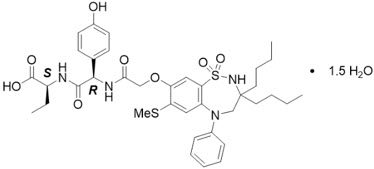
Active ingredient
Classification
Other drugs for bile therapyIleal Bile Acid Transporter Inhibitor
Drug interactions
Odevixibat may interact with bile acid binding resins, potentially reducing its efficacy.
- moderatebile acid binding resins (e.g., cholestyramine, colesevelam, colestipol) — may reduce BYLVAY efficacy
Indications
INDICATIONS AND USAGE BYLVAY is an ileal bile acid transporter (IBAT) inhibitor indicated for: Progressive Familial Intrahepatic Cholestasis (PFIC) the treatment of pruritus in patients 3 months of age and older with progressive familial intrahepatic cholestasis (PFIC). ( 1.1 ) Limitation of Use : BYLVAY is not recommended in a subgroup of PFIC type 2 patients with specific ABCB11 variants resulting in non-functional or complete absence of the bile salt export pump protein. ( 12.5 , 14.1 ) Alagille Syndrome (ALGS) the treatment of cholestatic pruritus in patients 12 months of age and older with Alagille syndrome (ALGS). ( 1.2 ) 1.1 Progressive Familial Intrahepatic Cholestasis (PFIC) BYLVAY is indicated for the treatment of pruritus in patients 3 months of age and older with PFIC. Limitations of Use BYLVAY is not recommended in a subgroup of PFIC type 2 patients with specific ABCB11 variants resulting in non-functional or complete absence of the bile salt export pump (BSEP) protein [see Clinical Pharmacology (12.5) and Clinical Studies (14.1) ]. 1.2 Alagille Syndrome (ALGS) BYLVAY is indicated for the treatment of cholestatic pruritus in patients 12 months of age and older with ALGS.
Dosage
DOSAGE AND ADMINISTRATION Recommended Dosage PFIC: Patients 3 months and older: 40 mcg/kg taken orally once daily. ( 2.1 ) If there is no improvement in pruritus after 3 months, the dosage may be increased in 40 mcg/kg increments up to 120 mcg/kg once daily, not to exceed a daily dosage of 6 mg/day. ( 2.1 ) ALGS: Patients 12 months and older: 120 mcg/kg taken orally once daily. ( 2.2 ) Preparation and Administration Instructions Administer BYLVAY in the morning with a meal. ( 2.4 ) Do not crush or chew capsules. ( 2.4 ) See full prescribing information for preparation and administration instructions. ( 2.4 ) 2.1 Recommended Dosage for Progressive Familial Intrahepatic Cholestasis (PFIC) in Patients Aged 3 Months and Older The recommended dosage of BYLVAY is 40 mcg/kg taken orally once daily in the morning with a meal. Table 1 below shows the recommended once daily dosage by body weight. If there is no improvement in pruritus after 3 months, the dosage may be increased in 40 mcg/kg increments up to 120 mcg/kg once daily not to exceed a daily dosage of 6 mg/day. BYLVAY oral pellets are intended for use by patients weighing less than 19.5 kilograms. BYLVAY capsules are intended for use by patients weighing 19.5 kilograms or above. Table 1. Recommended Dosage for PFIC in Patients aged 3 months and older (40 mcg/kg/day) Body Weight (kg) Once Daily Dosage (mcg) 7.4 and below 200 7.5 to 12.4 400 12.5 to 17.4 600 17.5 to 25.4 800 25.5 to 35.4 1,200 35.5 to 45.4 1,600 45.5 to 55.4 2,000 55.5 and above 2,400 2.2 Recommended Dosage for Alagille Syndrome (ALGS) in Patients Aged 12 Months and Older The recommended dosage of BYLVAY is 120 mcg/kg taken orally once daily in the morning with a meal. Table 2 below shows the recommended once daily dosage by body weight. BYLVAY oral pellets are intended for use by patients weighing less than 19.5 kilograms. BYLVAY capsules are intended for use by patients weighing 19.5 kilograms or above. Table 2. Recommended Dosage for ALGS in Patients aged 12 months and older (120 mcg/kg/day) Body Weight (kg) Once Daily Dosage (mcg) 7.4 and below 600 7.5 to 12.4 1,200 12.5 to 17.4 1,800 17.5 to 25.4 2,400 25.5 to 35.4 3,600 35.5 to 45.4 4,800 45.5 to 55.4 6,000 55.5 and above 7,200 2.3 Dosage Modification for Management of Adverse Reactions Tolerability for Alagille Syndrome (ALGS) Dose reduction to 40 mcg/kg/day (Table 1) may be considered if tolerability issues occur in the absence of other causes. Once tolerability issues stabilize, increase to 120 mcg/kg/day. Liver Test Abnormalities Establish the baseline pattern of variability of liver tests prior to starting BYLVAY, so that potential signs of liver injury can be identified. Monitor liver tests (e.g., ALT [alanine aminotransferase], AST [aspartate aminotransferase], TB [total bilirubin], DB [direct bilirubin] and International Normalized Ratio [INR]) during treatment with BYLVAY. Interrupt BYLVAY if new onset liver test abnormalities occur or symptoms consistent with clinical hepatitis are observed [see Warnings and Precautions (5.1) ]. Once the liver test abnormalities either return to baseline values or stabilize at a new baseline value, consider restarting BYLVAY at the recommended dosage [see Dosage and Administration (2.1 , 2.2) ] . Consider discontinuing BYLVAY permanently if liver test abnormalities recur. Discontinue BYLVAY permanently if a patient experiences a hepatic decompensation event (e.g., variceal hemorrhage, ascites, hepatic encephalopathy). 2.4 Preparation and Administration Instructions For patients taking bile acid binding resins, take BYLVAY at least 4 hours before or 4 hours after taking a bile acid binding resin [see Drug Interactions (7.1) ]. Do not crush or chew capsules. Oral Pellets: Mix the contents of the shell containing Oral Pellets into soft food or a liquid (as described below). Discard the emptied shells. Do not let your child swallow the unopened shells containing the Oral Pellets. Administration Instructions for patients capable of swallowing soft food: Administer BYLVAY with the first morning meal. Place a small amount (up to 2 tablespoons [30 mL]) of soft food (apple sauce, oatmeal, banana or carrot puree, chocolate or rice pudding) in a bowl. Keep the soft food at, or cooler than, room temperature. Open the shell containing Oral Pellets and empty the contents into the bowl of soft food. Gently tap the Oral Pellet shell to ensure that all contents have been dispersed. If the dose requires more than one shell of Oral Pellets, repeat Step 3. Gently mix until well dispersed and administer the entire dose immediately. Follow the dose with breast milk, infant formula, or other age-appropriate liquid. Do not store the mixture for future use. For patients unable to swallow soft food, see the instructions below . Administration Instructions with liquids (Using an oral dosing syringe): Administer BYLVAY with the first morning meal. Open the shell containing Oral Pellets and empty the contents into a small mixing cup. Gently tap the shell containing Oral Pellets to ensure that all contents have been emptied into the mixing cup. If the dose requires more than one shell of Oral Pellets, repeat Step 2. Add 1 teaspoon (5 mL) of an age-appropriate liquid (for example, breast milk, infant formula, or water). Let the pellets sit in the liquid for approximately 5 minutes to allow complete wetting REMINDER: The Oral Pellets will not dissolve in the liquid. After 5 minutes, place the tip of the oral syringe completely into the mixing cup. Pull the plunger of the syringe up slowly to withdraw the liquid/pellet mixture into the syringe. Gently push the plunger down again to expel the liquid/pellet mixture back into the mixing cup. Do this 2 to 3 times to ensure complete mixing of the pellets into the liquid. Withdraw the entire contents into the oral syringe by pulling the plunger on the end of the syringe. Place the tip of the syringe into the front of the patient's mouth between the tongue and the side of the mouth, and then gently push the plunger down to squirt the liquid/pellet mixture between your child's tongue and the side of the mouth. Do not squirt liquid/pellet mixture in the back of the child's throat because this could cause gagging or choking. Do not administer via a bottle or "sippy cup" because the Oral Pellets will not pass through the opening. The oral pellets will not dissolve in liquid. Follow the dose with breast milk, infant formula, or other age-appropriate liquid. If any pellet/liquid mixture remains in the mixing cup, repeat Step 7 and Step 8 until the entire dose has been administered. Check the child's mouth to make sure all of the liquid/pellet mixture has been swallowed. Capsules: Administration Instructions: Take in the morning with a meal. Swallow the capsule whole with a glass of water. Alternatively, for patients unable to swallow the capsules whole, BYLVAY capsules may be opened, and sprinkled and mixed with a small amount of soft food, or mixed with an age-appropriate liquid. Follow directions above for oral pellets to prepare and administer such a mixture.
Warnings
WARNINGS AND PRECAUTIONS Hepatoxicity : Obtain baseline liver tests and monitor patients frequently for the first 6 to 8 months after starting therapy, and as clinically indicated thereafter during treatment. If liver test abnormalities or signs of clinical hepatitis occur, consider dose reduction or treatment interruption. For persistent or recurrent liver test abnormalities relative to baseline, discontinue BYLVAY. Monitor patients with compensated cirrhosis or portal hypertension more frequently. Permanently discontinue BYLVAY if hepatic decompensation occurs. ( 2.3 , 5.1 ) Diarrhea : Treat dehydration. Treatment interruption or discontinuation may be required for persistent diarrhea. ( 5.2 ) Fat-Soluble Vitamin (FSV) Deficiency : Obtain baseline levels and monitor during treatment. Supplement with FSV if deficiency is observed. If FSV deficiency persists or worsens despite FSV supplementation, consider discontinuing BYLVAY treatment. Fracture: Consider interrupting BYLVAY treatment. Supplement with FSV if indicated. Bleeding: Interrupt treatment with BYLVAY. Optimize treatment of FSV deficiency and consider restarting BYLVAY once the patient is clinically stable. ( 5.3 ) 5.1 Hepatoxicity BYLVAY treatment is associated with a potential for drug-induced liver injury (DILI). In the PFIC and ALGS trials, treatment-emergent elevations of liver tests or worsening of liver tests occurred. Of the six patients who experienced DILI, two underwent liver transplant. Obtain baseline liver tests because some ALGS and PFIC patients have abnormal liver tests at baseline. Monitor patients frequently for the first 6 to 8 months after starting therapy and as clinically indicated thereafter during treatment with BYLVAY. Monitor for elevation in liver tests, for the development of liver-related adverse reactions, and for physical signs of hepatic decompensation. If liver test abnormalities or signs of clinical hepatitis occur in the absence of other causes, consider dose reduction or treatment interruption. Permanently discontinue BYLVAY if a patient experiences the following: persistent or recurrent liver test abnormalities, or upon rechallenge, signs and symptoms consistent with clinical hepatitis, or a hepatic decompensation event. The safety and effectiveness of BYLVAY have not been established in patients with decompensated cirrhosis. Monitor patients with compensated cirrhosis or portal hypertension more frequently and discontinue BYLVAY if hepatic decompensation occurs. IBAT inhibitors, including BYLVAY, are contraindicated in patients with prior or active hepatic decompensation events [see Contraindications (4) ] . 5.2 Diarrhea In Trial 1, diarrhea in PFIC patients was reported in 2 (10%) placebo-treated patients, 9 (39%) BYLVAY-treated 40 mcg/kg/day patients and 4 (21%) BYLVAY-treated 120 mcg/kg/day patients. Treatment interruption due to diarrhea occurred in 2 patients with 3 events during treatment with BYLVAY 120 mcg/kg/day. Treatment interruption due to diarrhea ranged between 3 to 7 days [see Adverse Reactions (6.1) ] . One patient treated with BYLVAY 120 mcg/kg/day withdrew from Trial 1 due to persistent diarrhea. In Trial 3, diarrhea in ALGS patients was reported in 1 placebo-treated patient (6%) and in 10 (29%) BYLVAY-treated patients [see Adverse Reactions (6.1) ] . No patients interrupted or permanently discontinued BYLVAY due to diarrhea. If diarrhea occurs, monitor for dehydration and treat promptly. Interrupt BYLVAY dosing if a patient experiences persistent diarrhea. Restart BYLVAY at 40 mcg/kg/day when diarrhea resolves, and increase the dose as tolerated if appropriate. If diarrhea persists and no alternate etiology is identified, stop BYLVAY treatment. 5.3 Fat-Soluble Vitamin Deficiency BYLVAY may adversely affect absorption of fat-soluble vitamins (FSV). FSV include vitamin A, D, E, and K (measured using INR levels). PFIC and ALGS patients can have FSV deficiency at baseline and are frequently supplemented with FSV. In Trial 1 in PFIC patients, new onset or worsening of existing FSV deficiency was reported in 1 (5%) placebo-treated patient, and 3 (16%) BYLVAY-treated 120 mcg/kg/day patients; none of the patients treated with BYLVAY dosage 40 mcg/kg/day had new onset or worsening of existing FSV deficiency. In Trial 3 in ALGS patients, new or worsening of existing FSV deficiency was reported in 3 (17.6%) placebo- treated patients and 3 (8.6%) BYLVAY-treated patients [see Adverse Reactions (6.1) ]. Obtain serum FSV levels at baseline and monitor during treatment, along with any clinical manifestations of FSV deficiency. If FSV deficiency is diagnosed, supplement with FSV. If FSV deficiency persists or worsens despite adequate FSV supplementation, consider permanent discontinuation of BYLVAY depending on the benefit and risk balance. If complications of FSV deficiency occur, consider interrupting BYLVAY treatment and reassess to ensure adequate supplementation with FSV. Consider restarting BYLVAY once the patient is clinically stable. Bone Fracture Fracture events have been observed with BYLVAY-treated patients in two open-label postmarketing studies (5% in PFIC patients and 4% in ALGS patients) [see Adverse Reactions (6) ] . If fracture occurs, consider interrupting BYLVAY treatment and supplement with FSV if indicated. Bleeding Interrupt treatment with BYLVAY if bleeding occurs. Optimize treatment of FSV deficiency and consider restarting BYLVAY once the patient is clinically stable.
Contraindications
CONTRAINDICATIONS IBAT inhibitors, including BYLVAY, are contraindicated in patients with prior or active hepatic decompensation events (e.g., variceal hemorrhage, ascites, hepatic encephalopathy) [see Warnings and Precautions (5.1) ] . Patients with prior or active hepatic decompensation events (e.g., variceal hemorrhage, ascites, hepatic encephalopathy). ( 4 )
Mechanism of action
Mechanism of Action Odevixibat is a reversible inhibitor of the ileal bile acid transporter (IBAT). It decreases the reabsorption of bile acids (primarily the salt forms) from the terminal ileum . Pruritus is a common symptom in patients with PFIC and ALGS; the pathophysiology of pruritus in patients with PFIC is not completely understood. Although the complete mechanism by which odevixibat improves pruritus in both PFIC and ALGS patients is unknown, it may involve inhibition of the IBAT, which results in decreased reuptake of bile salts, as observed by a decrease in serum bile acids [see Clinical Pharmacology (12.2) ] .
Source: RxNorm + openFDA + RxClass + FAERS · 2026
Look up another medication