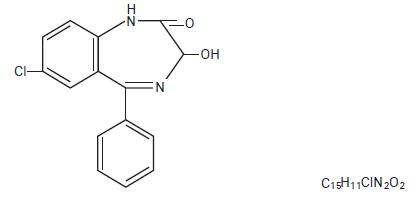
oxazepam 15 MG Oral Tablet — Benzodiazepine derivatives. INDICATIONS Oxazepam capsules are indicated for the management of anxiety disorders or for the short-term relief of the symptoms of anxiety. Anxiety…
Boxed warning
WARNING: RISKS FROM CONCOMITANT USE WITH OPIOIDS; ABUSE, MISUSE, AND ADDICTION; and DEPENDENCE AND WITHDRAWAL REACTIONS Concomitant use of benzodiazepines and opioids may result in profound sedation, respiratory depression, coma, and death. Reserve concomitant prescribing of these drugs for use in patients for whom alternative treatment options are inadequate. Limit dosages and durations to the minimum required. Follow patients for signs and symptoms of respiratory depression and sedation [see WARNINGS and PRECAUTIONS ] . The use of benzodiazepines, including oxazepam, exposes users to risks of abuse, misuse, and addiction, which can lead to overdose or death. Abuse and misuse of benzodiazepines commonly involve concomitant use of other medications, alcohol, and/or illicit substances, which is associated with an increased frequency of serious adverse outcomes. Before prescribing oxazepam and throughout treatment, assess each patient’s risk for abuse, misuse, and addiction [see WARNINGS ] . The continued use of benzodiazepines, including oxazepam, may lead to clinically significant physical dependence. The risks of dependence and withdrawal increase with longer treatment duration and higher daily dose. Abrupt discontinuation or rapid dosage reduction of oxazepam after continued use may precipitate acute withdrawal reactions, which can be life-threatening. To reduce the risk of withdrawal reactions, use a gradual taper to discontinue oxazepam or reduce the dosage [see DOSAGE AND ADMINISTRATION and WARNINGS ].
The concomitant use of benzodiazepines and opioids increases the risk of respiratory depression.
majoropioids — increased risk of respiratory depression
Indications
INDICATIONS Oxazepam capsules are indicated for the management of anxiety disorders or for the short-term relief of the symptoms of anxiety. Anxiety or tension associated with the stress of everyday life usually does not require treatment with an anxiolytic. Anxiety associated with depression is also responsive to oxazepam therapy. This product has been found particularly useful in the management of anxiety, tension, agitation and irritability in older patients. Alcoholics with acute tremulousness, inebriation, or with anxiety associated with alcohol withdrawal are responsive to therapy. The effectiveness of oxazepam in long-term use, that is, more than 4 months, has not been assessed by systematic clinical studies. The physician should periodically reassess the usefulness of the drug for the individual patient.
Dosage
DOSAGE AND ADMINISTRATION Because of the flexibility of this product and the range of emotional disturbances responsive to it, dosage should be individualized for maximum beneficial effects. Oxazepam Usual Dose Mild-to-moderate anxiety, with associated tension, irritability, agitation, or related symptoms of functional origin or secondary to organic disease. 10 to 15 mg, 3 or 4 times daily Severe anxiety syndromes, agitation, or anxiety associated with depression. 15 to 30 mg, 3 or 4 times daily Older patients with anxiety, tension, irritability and agitation. Initial dosage: 10 mg, 3 times daily. If necessary, increase cautiously to 15 mg, 3 or 4 times daily. Alcoholics with acute inebriation, tremulousness, or anxiety on withdrawal. 15 to 30 mg, 3 or 4 times daily This product is not indicated in pediatric patients under 6 years of age. Absolute dosage for pediatric patients 6 to 12 years of age is not established. Discontinuation or Dosage Reduction of Oxazepam To reduce the risk of withdrawal reactions, use a gradual taper to discontinue oxazepam or reduce the dosage. If a patient develops withdrawal reactions, consider pausing the taper or increasing the dosage to the previous tapered dosage level. Subsequently decrease the dosage more slowly [see WARNINGS : Dependence and Withdrawal Reactions and DRUG ABUSE AND DEPENDENCE : Dependence ] .
Warnings
WARNINGS Risks from Concomitant Use with Opioids: Concomitant use of benzodiazepines, including oxazepam, and opioids may result in profound sedation, respiratory depression, coma, and death. Because of these risks, reserve concomitant prescribing of these drugs in patients for whom alternative treatment options are inadequate. Observational studies have demonstrated that concomitant use of opioid analgesics and benzodiazepines increases the risk of drug-related mortality compared to use of opioids alone. If a decision is made to prescribe oxazepam concomitantly with opioids, prescribe the lowest effective dosages and minimum durations of concomitant use, and follow patients closely for signs and symptoms of respiratory depression and sedation. In patients already receiving an opioid analgesic, prescribe a lower initial dose of oxazepam than indicated in the absence of an opioid and titrate based on clinical response. If an opioid is initiated in a patient already taking oxazepam, prescribe a lower initial dose of the opioid and titrate based upon clinical response. Advise both patients and caregivers about the risks of respiratory depression and sedation when oxazepam is used with opioids. Advise patients not to drive or operate heavy machinery until the effects of concomitant use with the opioid have been determined [see PRECAUTIONS : Drug Interactions ]. Abuse, Misuse, and Addiction: The use of benzodiazepines, including oxazepam, exposes users to the risks of abuse, misuse, and addiction, which can lead to overdose or death. Abuse and misuse of benzodiazepines often (but not always) involve the use of doses greater than the maximum recommended dosage and commonly involve concomitant use of other medications, alcohol, and/or illicit substances, which is associated with an increased frequency of serious adverse outcomes, including respiratory depression, overdose, or death [see DRUG ABUSE AND DEPENDENCE : Abuse ] . Before prescribing oxazepam and throughout treatment, assess each patient’s risk for abuse, misuse, and addiction (e.g., using a standardized screening tool). Use of oxazepam, particularly in patients at elevated risk, necessitates counseling about the risks and proper use of oxazepam along with monitoring for signs and symptoms of abuse, misuse, and addiction. Prescribe the lowest effective dosage; avoid or minimize concomitant use of CNS depressants and other substances associated with abuse, misuse, and addiction (e.g., opioid analgesics, stimulants); and advise patients on the proper disposal of unused drug. If a substance use disorder is suspected, evaluate the patient and institute (or refer them for) early treatment, as appropriate. Dependence and Withdrawal Reactions: To reduce the risk of withdrawal reactions, use a gradual taper to discontinue oxazepam or reduce the dosage (a patient-specific plan should be used to taper the dose) [see DOSAGE AND ADMINISTRATION : Discontinuation or Dosage Reduction of Oxazepam ] . Patients at an increased risk of withdrawal adverse reactions after benzodiazepine discontinuation or rapid dosage reduction include those who take higher dosages, and those who have had longer durations of use. Acute Withdrawal Reactions The continued use of benzodiazepines, including oxazepam, may lead to clinically significant physical dependence. Abrupt discontinuation or rapid dosage reduction of oxazepam after continued use, or administration of flumazenil (a benzodiazepine antagonist) may precipitate acute withdrawal reactions, which can be life-threatening (e.g., seizures) [see DRUG ABUSE AND DEPENDENCE : Dependence ]. Protracted Withdrawal Syndrome In some cases, benzodiazepine users have developed a protracted withdrawal syndrome with withdrawal symptoms lasting weeks to more than 12 months [see DRUG ABUSE AND DEPENDENCE : Dependence ] . As with other CNS-acting drugs, patients should be cautioned against driving automobiles or operating dangerous machinery until it is known that they do not become drowsy or dizzy on oxazepam therapy. Patients should be warned that the effects of alcohol or other CNS-depressant drugs may be additive to those of Oxazepam, possibly requiring adjustment of dosage or elimination of such agents. Neonatal Sedation and Withdrawal Syndrome Use of oxazepam late in pregnancy can result in sedation (respiratory depression, lethargy, hypotonia) and/or withdrawal symptoms (hyperreflexia, irritability, restlessness, tremors, inconsolable crying, and feeding difficulties) in the neonate [see PRECAUTIONS , Pregnancy ]. Monitor neonates exposed to oxazepam during pregnancy or labor for signs of sedation and monitor neonates exposed to oxazepam during pregnancy for signs of withdrawal; manage these neonates accordingly.
Contraindications
CONTRAINDICATIONS History of previous hypersensitivity reaction to oxazepam. Oxazepam is not indicated in psychoses.
Mechanism of action
CLINICAL PHARMACOLOGY Pharmacokinetic testing in 12 volunteers demonstrated that a single 30 mg dose of a capsule, tablet or suspension will result in an equivalent extent of absorption. For the capsule and tablet, peak plasma levels averaged 450 mg/mL and were observed to occur about 3 hours after dosing. The mean elimination half-life for oxazepam was approximately 8.2 hours (range 5.7 to 10.9 hours). This product has a single, major inactive metabolite in man, a glucuronide excreted in the urine. Age (less than 80 years old) does not appear to have a clinically significant effect on oxazepam kinetics. A statistically significant increase in elimination half-life in the very elderly (greater than 80 years of age) as compared to younger subjects has been reported, due to a 30% increase in volume of distribution, as well as a 50% reduction in unbound clearance of oxazepam in the very elderly [see PRECAUTIONS : Geriatric Use ].
A drug lookup is just the start. Eleplan keeps the whole care plan in one place.
Medications, diagnoses, documents, appointments, and the whole care team — organized and always in sync, with Ellie, your AI care assistant, on top of it. Free to start.