tadalafil 4 MG/ML Oral Suspension
Managing this medication for someone you care for? Eleplan keeps diagnoses, medications and appointments in one plan.
Start free with EleplanClinical drug
tadalafil 4 MG/ML Oral Suspension
4 MG/ML · Oral Suspension · oral
A form of tadalafil →
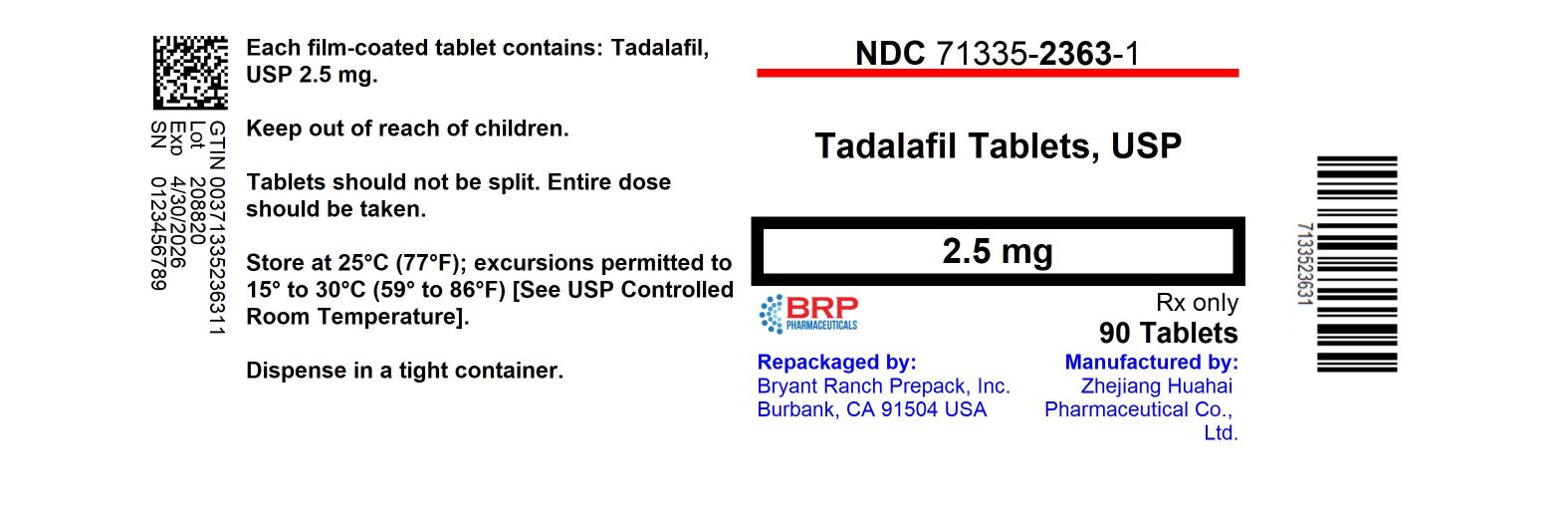
tadalafil 4 MG/ML Oral Suspension — Antihypertensives for pulmonary arterial hypertension. INDICATIONS AND USAGE Tadalafil Tablets are phosphodiesterase 5 (PDE5) inhibitor indicated for the treatment of: • erectile dysfunction (ED) (…
Active ingredient
Classification
Antihypertensives for pulmonary arterial hypertensionPhosphodiesterase 5 Inhibitor
Drug interactions
Tadalafil has several drug interactions that can affect its efficacy and safety profile.
- majornitrates — potentiation of hypotensive effects
- moderatealpha-blockers — additive blood pressure-lowering effects
- minorantihypertensives — small reductions in blood pressure
- moderatealcohol — increased potential for orthostatic signs and symptoms
- majorCYP3A4 inhibitors (e.g. ketoconazole, ritonavir) — increased tadalafil exposure
- majorCYP3A4 inducers (e.g. rifampin) — decreased tadalafil exposure
Indications
INDICATIONS AND USAGE Tadalafil Tablets are phosphodiesterase 5 (PDE5) inhibitor indicated for the treatment of: • erectile dysfunction (ED) ( Error! Hyperlink reference not valid. ) • the signs and symptoms of benign prostatic hyperplasia (BPH) ( Error! Hyperlink reference not valid. ) • ED and the signs and symptoms of BPH (ED/BPH) ( Error! Hyperlink reference not valid. ) If Tadalafil Tablets are used with finasteride to initiate BPH treatment, such use is recommended for up to 26 weeks ( Error! Hyperlink reference not valid. ). 1.1 Erectile Dysfunction Tadalafil Tablets are indicated for the treatment of erectile dysfunction (ED). 1.2 Benign Prostatic Hyperplasia Tadalafil Tablets are indicated for the treatment of the signs and symptoms of benign prostatic hyperplasia (BPH). 1.3 Erectile Dysfunction and Benign Prostatic Hyperplasia Tadalafil Tablets are indicated for the treatment of ED and the signs and symptoms of BPH (ED/BPH). 1.4 Limitation of Use If Tadalafil Tablets are used with finasteride to initiate BPH treatment, such use is recommended for up to 26 weeks because the incremental benefit of Tadalafil Tablets decreases from 4 weeks until 26 weeks, and the incremental benefit of Tadalafil Tablets beyond 26 weeks is unknown [see Clinical Studies ( Error! Hyperlink reference not valid. )] .
Dosage
DOSAGE AND ADMINISTRATION Do not split Tadalafil Tablets; entire dose should be taken. • Tadalafil Tablets for use as needed: • ED: Starting dose: 10 mg as needed prior to sexual activity. Increase to 20 mg or decrease to 5 mg based upon efficacy/tolerability. Improves erectile function compared to placebo up to 36 hours post dose. Not to be taken more than once per day ( Error! Hyperlink reference not valid. ). • Tadalafil Tablets for once daily use: • ED: 2.5 mg taken once daily, without regard to timing of sexual activity. May increase to 5 mg based upon efficacy and tolerability ( Error! Hyperlink reference not valid. ). • BPH: 5 mg, taken at approximately the same time every day ( Error! Hyperlink reference not valid. ) • ED and BPH: 5 mg, taken at approximately the same time every day ( Error! Hyperlink reference not valid. , Error! Hyperlink reference not valid. ) • Tadalafil Tablets may be taken without regard to food ( Error! Hyperlink reference not valid. ). 2.1 Tadalafil Tablets for Use as Needed for Erectile Dysfunction • The recommended starting dose of Tadalafil Tablets for use as needed in most patients is 10 mg, taken prior to anticipated sexual activity. • The dose may be increased to 20 mg or decreased to 5 mg, based on individual efficacy and tolerability. The maximum recommended dosing frequency is once per day in most patients. • Tadalafil Tablets for use as needed was shown to improve erectile function compared to placebo up to 36 hours following dosing. Therefore, when advising patients on optimal use of Tadalafil Tablets, this should be taken into consideration. 2.2 Tadalafil Tablets for Once Daily Use for Erectile Dysfunction • The recommended starting dose of Tadalafil Tablets for once daily use is 2.5 mg, taken at approximately the same time every day, without regard to timing of sexual activity. • The Tadalafil Tablets dose for once daily use may be increased to 5 mg, based on individual efficacy and tolerability. 2.3 Tadalafil Tablets for Once Daily Use for Benign Prostatic Hyperplasia • The recommended dose of Tadalafil Tablets for once daily use is 5 mg, taken at approximately the same time every day. • When therapy for BPH is initiated with Tadalafil Tablets and finasteride, the recommended dose of Tadalafil Tablets for once daily use is 5 mg, taken at approximately the same time every day for up to 26 weeks. 2.4 Tadalafil Tablets for Once Daily Use for Erectile Dysfunction and Benign Prostatic Hyperplasia The recommended dose of Tadalafil Tablets for once daily use is 5 mg, taken at approximately the same time every day, without regard to timing of sexual activity. 2.5 Use with Food Tadalafil Tablets may be taken without regard to food. 2.6 Use in Specific Populations Renal Impairment Tadalafil Tablets for Use as Needed • Creatinine clearance 30 to 50 mL/min: A starting dose of 5 mg not more than once per day is recommended, and the maximum dose is 10 mg not more than once in every 48 hours. • Creatinine clearance less than 30 mL/min or on hemodialysis: The maximum dose is 5 mg not more than once in every 72 hours [see Warnings and Precautions ( Error! Hyperlink reference not valid. ) and Use in Specific Populations ( Error! Hyperlink reference not valid. )] . Tadalafil Tablets for Once Daily Use Erectile Dysfunction • Creatinine clearance less than 30 mL/min or on hemodialysis: Tadalafil Tablets for once daily use is not recommended [see Warnings and Precautions ( Error! Hyperlink reference not valid. ) and Use in Specific Populations ( Error! Hyperlink reference not valid. )] . Benign Prostatic Hyperplasia and Erectile Dysfunction/Benign Prostatic Hyperplasia • Creatinine clearance 30 to 50 mL/min: A starting dose of 2.5 mg is recommended. An increase to 5 mg may be considered based on individual response. • Creatinine clearance less than 30 mL/min or on hemodialysis: Tadalafil Tablets for once daily use is not recommended [see Warnings and Precautions ( Error! Hyperlink reference not valid. ) and Use in Specific Populations ( Error! Hyperlink reference not valid. )] . Hepatic Impairment Tadalafil Tablets for Use as Needed • Mild or moderate (Child Pugh Class A or B): The dose should not exceed 10 mg once per day. The use of Tadalafil Tablets once per day has not been extensively evaluated in patients with hepatic impairment and therefore, caution is advised. • Severe (Child Pugh Class C): The use of Tadalafil Tablets is not recommended [see Warnings and Precautions ( Error! Hyperlink reference not valid. )and Use in Specific Populations ( Error! Hyperlink reference not valid. )] . Tadalafil Tablets for Once Daily Use • Mild or moderate (Child Pugh Class A or B): Tadalafil Tablets for once daily use has not been extensively evaluated in patients with hepatic impairment. Therefore, caution is advised if Tadalafil Tablets for once daily use is prescribed to these patients. • Severe (Child Pugh Class C): The use of Tadalafil Tablets is not recommended [see Warnings and Precautions ( Error! Hyperlink reference not valid. )and Use in Specific Populations ( Error! Hyperlink reference not valid. )] . 2.7 Concomitant Medications Nitrates Concomitant use of nitrates in any form is contraindicated [see Contraindications ( Error! Hyperlink reference not valid. )] . Alpha-Blockers ED — When Tadalafil Tablets are coadministered with an alpha-blocker in patients being treated for ED, patients should be stable on alpha-blocker therapy prior to initiating treatment, and Tadalafil Tablets should be initiated at the lowest recommended dose [see Warnings and Precautions ( 5.6 ), Drug Interactions ( Error! Hyperlink reference not valid. ), and Clinical Pharmacology ( Error! Hyperlink reference not valid. )] . BPH — Tadalafil Tablets are not recommended for use in combination with alpha-blockers for the treatment of BPH [see Warnings and Precautions ( 5.6 ), Drug Interactions ( Error! Hyperlink reference not valid. ), and Clinical Pharmacology ( Error! Hyperlink reference not valid. )] . CYP3A4 Inhibitors Tadalafil Tablets for Use as Needed — For patients taking concomitant potent inhibitors of CYP3A4, such as ketoconazole or ritonavir, the maximum recommended dose of Tadalafil Tablets is 10 mg, not to exceed once every 72 hours [see Warnings and Precautions ( Error! Hyperlink reference not valid. ) and Drug Interactions ( Error! Hyperlink reference not valid. )] . Tadalafil Tablets for Once Daily Use — For patients taking concomitant potent inhibitors of CYP3A4, such as ketoconazole or ritonavir, the maximum recommended dose is 2.5 mg [see Warnings and Precautions ( Error! Hyperlink reference not valid. ) and Drug Interactions ( Error! Hyperlink reference not valid. )] .
Warnings
WARNINGS AND PRECAUTIONS Evaluation of erectile dysfunction and BPH should include an appropriate medical assessment to identify potential underlying causes, as well as treatment options. Before prescribing tadalafil tablets, it is important to note the following: Patients should not use tadalafil tablets if sex is inadvisable due to cardiovascular status ( 5.1 ). Use of tadalafil tablets with alpha-blockers, antihypertensives or substantial amounts of alcohol (≥5 units) may lead to hypotension ( 5.6 , 5.9 ). Tadalafil tablets are not recommended in combination with alpha-blockers for the treatment of BPH because efficacy of the combination has not been adequately studied and because of the risk of blood pressure lowering. Caution is advised when tadalafil tablets are used as a treatment for ED in men taking alpha-blockers. ( 2.7 , 5.6 , 7.1 , 12.2 ) Patients should seek emergency treatment if an erection lasts >4 hours. Use tadalafil tablets with caution in patients predisposed to priapism ( 5.3 ). Patients should stop tadalafil tablets and seek medical care if a sudden loss of vision occurs in one or both eyes, which could be a sign of non-arteritic anterior ischemic optic neuropathy (NAION). Tadalafil tablets should be used with caution, and only when the anticipated benefits outweigh the risks, in patients with a history of NAION. Patients with a "crowded" optic disc may also be at an increased risk of NAION ( 5.4 , 6.2 ). Patients should stop tadalafil tablets and seek prompt medical attention in the event of sudden decrease or loss of hearing ( 5.5 ). Prior to initiating treatment with tadalafil tablets for BPH, consideration should be given to other urological conditions that may cause similar symptoms ( 5.14 ). 5.1 Cardiovascular Physicians should consider the cardiovascular status of their patients, since there is a degree of cardiac risk associated with sexual activity. Therefore, treatments for erectile dysfunction, including tadalafil tablets, should not be used in men for whom sexual activity is inadvisable as a result of their underlying cardiovascular status. Patients who experience symptoms upon initiation of sexual activity should be advised to refrain from further sexual activity and seek immediate medical attention. Physicians should discuss with patients the appropriate action in the event that they experience anginal chest pain requiring nitroglycerin following intake of tadalafil tablets. In such a patient, who has taken tadalafil tablets, where nitrate administration is deemed medically necessary for a life-threatening situation, at least 48 hours should have elapsed after the last dose of tadalafil tablets before nitrate administration is considered. In such circumstances, nitrates should still only be administered under close medical supervision with appropriate hemodynamic monitoring. Therefore, patients who experience anginal chest pain after taking tadalafil tablets should seek immediate medical attention. [see Contraindications ( 4.1 ) and Patient Counseling Information ( 17.1 )] . Patients with left ventricular outflow obstruction, (e.g., aortic stenosis and idiopathic hypertrophic subaortic stenosis) can be sensitive to the action of vasodilators, including PDE5 inhibitors. The following groups of patients with cardiovascular disease were not included in clinical safety and efficacy trials for tadalafil tablets, and therefore until further information is available, tadalafil tablets are not recommended for the following groups of patients: myocardial infarction within the last 90 days unstable angina or angina occurring during sexual intercourse New York Heart Association Class 2 or greater heart failure in the last 6 months uncontrolled arrhythmias, hypotension (<90/50 mm Hg), or uncontrolled hypertension stroke within the last 6 months. As with other PDE5 inhibitors, tadalafil has mild systemic vasodilatory properties that may result in transient decreases in blood pressure. In a clinical pharmacology study, tadalafil 20 mg resulted in a mean maximal decrease in supine blood pressure, relative to placebo, of 1.6/0.8 mm Hg in healthy subjects [see Clinical Pharmacology ( 12.2 )] . While this effect should not be of consequence in most patients, prior to prescribing tadalafil tablets, physicians should carefully consider whether their patients with underlying cardiovascular disease could be affected adversely by such vasodilatory effects. Patients with severely impaired autonomic control of blood pressure may be particularly sensitive to the actions of vasodilators, including PDE5 inhibitors. 5.2 Potential for Drug Interactions When Taking Tadalafil Tablets for Once Daily Use Physicians should be aware that tadalafil tablets for once daily use provides continuous plasma tadalafil levels and should consider this when evaluating the potential for interactions with medications (e.g., nitrates, alpha-blockers, anti-hypertensives and potent inhibitors of CYP3A4) and with substantial consumption of alcohol [see Drug Interactions ( 7.1 , 7.2 , 7.3 )] . 5.3 Prolonged Erection There have been rare reports of prolonged erections greater than 4 hours and priapism (painful erections greater than 6 hours in duration) for this class of compounds. Priapism, if not treated promptly, can result in irreversible damage to the erectile tissue. Patients who have an erection lasting greater than 4 hours, whether painful or not, should seek emergency medical attention. Tadalafil tablets should be used with caution in patients who have conditions that might predispose them to priapism (such as sickle cell anemia, multiple myeloma, or leukemia), or in patients with anatomical deformation of the penis (such as angulation, cavernosal fibrosis, or Peyronie's disease). 5.4 Effects on the Eye Physicians should advise patients to stop use of all phosphodiesterase type 5 (PDE5) inhibitors, including tadalafil, and seek medical attention in the event of a sudden loss of vision in one or both eyes. Such an event may be a sign of non-arteritic anterior ischemic optic neuropathy (NAION), a rare condition and a cause of decreased vision, including permanent loss of vision, that has been reported rarely postmarketing in temporal association with the use of all PDE5 inhibitors. Based on published literature, the annual incidence of NAION is 2.5-11.8 cases per 100,000 in males aged ≥50. An observational case-crossover study evaluated the risk of NAION when PDE5 inhibitor use, as a class, occurred immediately before NAION onset (within 5 half-lives), compared to PDE5 inhibitor use in a prior time period. The results suggest an approximate 2-fold increase in the risk of NAION, with a risk estimate of 2.15 (95% CI 1.06, 4.34). A similar study reported a consistent result, with a risk estimate of 2.27 (95% CI 0.99, 5.20). Other risk factors for NAION, such as the presence of "crowded" optic disc, may have contributed to the occurrence of NAION in these studies. Neither the rare postmarketing reports, nor the association of PDE5 inhibitor use and NAION in the observational studies, substantiate a causal relationship between PDE5 inhibitor use and NAION [see Adverse Reactions ( 6.2 )] . Physicians should consider whether their patients with underlying NAION risk factors could be adversely affected by use of PDE5 inhibitors. Individuals who have already experienced NAION are at increased risk of NAION recurrence. Therefore, PDE5 inhibitors, including tadalafil, should be used with caution in these patients and only when the anticipated benefits outweigh the risks. Individuals with "crowded" optic disc are also considered at greater risk for NAION compared to the general population; however, evidence is insufficient to support screening of prospective users of PDE5 inhibitors, including tadalafil, for this uncommon condition. Patients with known hereditary degenerative retinal disorders, including retinitis pigmentosa, were not included in the clinical trials, and
Contraindications
CONTRAINDICATIONS Administration of tadalafil tablets to patients using any form of organic nitrate is contraindicated. In clinical pharmacology studies, tadalafil tablets were shown to potentiate the hypotensive effect of nitrates ( 4.1 ). History of known serious hypersensitivity reaction to tadalafil tablets or ADCIRCA ® ( 4.2 ). Administration with guanylate cyclase (GC) stimulators, such as riociguat ( 4.3 ). 4.1 Nitrates Administration of tadalafil tablets to patients who are using any form of organic nitrate, either regularly and/or intermittently, is contraindicated. In clinical pharmacology studies, tadalafil tablets were shown to potentiate the hypotensive effect of nitrates [see Clinical Pharmacology ( 12.2 )] . 4.2 Hypersensitivity Reactions Tadalafil tablets are contraindicated in patients with a known serious hypersensitivity to tadalafil (or ADCIRCA ® ). Hypersensitivity reactions have been reported, including Stevens-Johnson syndrome and exfoliative dermatitis [see Adverse Reactions ( 6.2 )] . 4.3 Concomitant Guanylate Cyclase (GC) Stimulators Do not use tadalafil tablets in patients who are using a GC stimulator, such as riociguat. PDE5 inhibitors, including tadalafil tablets, may potentiate the hypotensive effects of GC stimulators. Do not use tadalafil tablets in patients who are using a GC stimulator, such as riociguat. PDE5 inhibitors, including tadalafil tablets, may potentiate the hypotensive effects of GC stimulators.
Mechanism of action
CLINICAL PHARMACOLOGY 12.1 Mechanism of Action Penile erection during sexual stimulation is caused by increased penile blood flow resulting from the relaxation of penile arteries and corpus cavernosal smooth muscle. This response is mediated by the release of nitric oxide (NO) from nerve terminals and endothelial cells, which stimulates the synthesis of cGMP in smooth muscle cells. Cyclic GMP causes smooth muscle relaxation and increased blood flow into the corpus cavernosum. The inhibition of phosphodiesterase type 5 (PDE5) enhances erectile function by increasing the amount of cGMP. Tadalafil inhibits PDE5. Because sexual stimulation is required to initiate the local release of nitric oxide, the inhibition of PDE5 by tadalafil has no effect in the absence of sexual stimulation. The effect of PDE5 inhibition on cGMP concentration in the corpus cavernosum and pulmonary arteries is also observed in the smooth muscle of the prostate, the bladder and their vascular supply. The mechanism for reducing BPH symptoms has not been established. Studies in vitro have demonstrated that tadalafil is a selective inhibitor of PDE5. PDE5 is found in the smooth muscle of the corpus cavernosum, prostate, and bladder as well as in vascular and visceral smooth muscle, skeletal muscle, urethra, platelets, kidney, lung, cerebellum, heart, liver, testis, seminal vesicle, and pancreas. In vitro studies have shown that the effect of tadalafil is more potent on PDE5 than on other phosphodiesterases. These studies have shown that tadalafil is >10,000-fold more potent for PDE5 than for PDE1, PDE2, PDE4, and PDE7 enzymes, which are found in the heart, brain, blood vessels, liver, leukocytes, skeletal muscle, and other organs. Tadalafil is >10,000-fold more potent for PDE5 than for PDE3, an enzyme found in the heart and blood vessels. Additionally, tadalafil is 700-fold more potent for PDE5 than for PDE6, which is found in the retina and is responsible for phototransduction. Tadalafil is >9,000-fold more potent for PDE5 than for PDE8, PDE9, and PDE10. Tadalafil is 14-fold more potent for PDE5 than for PDE11A1 and 40-fold more potent for PDE5 than for PDE11A4, two of the four known forms of PDE11. PDE11 is an enzyme found in human prostate, testes, skeletal muscle and in other tissues (e.g., adrenal cortex). In vitro , tadalafil inhibits human recombinant PDE11A1 and, to a lesser degree, PDE11A4 activities at concentrations within the therapeutic range. The physiological role and clinical consequence of PDE11 inhibition in humans have not been defined. 12.2 Pharmacodynamics Effects on Blood Pressure Tadalafil 20 mg administered to healthy male subjects produced no significant difference compared to placebo in supine systolic and diastolic blood pressure (difference in the mean maximal decrease of 1.6/0.8 mm Hg, respectively) and in standing systolic and diastolic blood pressure (difference in the mean maximal decrease of 0.2/4.6 mm Hg, respectively). In addition, there was no significant effect on heart rate. Effects on Blood Pressure When Administered with Nitrates In clinical pharmacology studies, tadalafil (5 to 20 mg) was shown to potentiate the hypotensive effect of nitrates. Therefore, the use of tadalafil tablets in patients taking any form of nitrates is contraindicated [see Contraindications ( 4.1 )] . A study was conducted to assess the degree of interaction between nitroglycerin and tadalafil, should nitroglycerin be required in an emergency situation after tadalafil was taken. This was a double-blind, placebo-controlled, crossover study in 150 male subjects at least 40 years of age (including subjects with diabetes mellitus and/or controlled hypertension) and receiving daily doses of tadalafil 20 mg or matching placebo for 7 days. Subjects were administered a single dose of 0.4 mg sublingual nitroglycerin (NTG) at pre-specified timepoints, following their last dose of tadalafil (2, 4, 8, 24, 48, 72, and 96 hours after tadalafil). The objective of the study was to determine when, after tadalafil dosing, no apparent blood pressure interaction was observed. In this study, a significant interaction between tadalafil and NTG was observed at each timepoint up to and including 24 hours. At 48 hours, by most hemodynamic measures, the interaction between tadalafil and NTG was not observed, although a few more tadalafil subjects compared to placebo experienced greater blood-pressure lowering at this timepoint. After 48 hours, the interaction was not detectable ( see Figure 1). Figure 1: Mean Maximal Change in Blood Pressure (Tadalafil Minus Placebo, Point Estimate with 90% CI) in Response to Sublingual Nitroglycerin at 2 (Supine Only), 4, 8, 24, 48, 72, and 96 Hours after the Last Dose of Tadalafil 20 mg or Placebo Therefore, tadalafil tablets administration with nitrates is contraindicated. In a patient who has taken tadalafil tablets, where nitrate administration is deemed medically necessary in a life-threatening situation, at least 48 hours should elapse after the last dose of tadalafil tablets before nitrate administration is considered. In such circumstances, nitrates should still only be administered under close medical supervision with appropriate hemodynamic monitoring [see Contraindications ( 4.1 )] . Effect on Blood Pressure When Administered with Alpha-Blockers Six randomized, double-blinded, crossover clinical pharmacology studies were conducted to investigate the potential interaction of tadalafil with alpha-blocker agents in healthy male subjects [see Dosage and Administration ( 2.7 ) and Warnings and Precautions ( 5.6 )] . In four studies, a single oral dose of tadalafil was administered to healthy male subjects taking daily (at least 7 days duration) an oral alpha-blocker. In two studies, a daily oral alpha-blocker (at least 7 days duration) was administered to healthy male subjects taking repeated daily doses of tadalafil. Doxazosin — Three clinical pharmacology studies were conducted with tadalafil and doxazosin, an alpha[1]-adrenergic blocker. In the first doxazosin study, a single oral dose of tadalafil 20 mg or placebo was administered in a 2-period, crossover design to healthy subjects taking oral doxazosin 8 mg daily (N=18 subjects). Doxazosin was administered at the same time as tadalafil or placebo after a minimum of seven days of doxazosin dosing ( see Table 5 and Figure 2). Table 5: Doxazosin (8 mg/day) Study 1: Mean Maximal Decrease (95% CI) in Systolic Blood Pressure Placebo-subtracted mean maximal Tadalafil decrease in systolic blood pressure (mm Hg) 20 mg Supine 3.6 (-1.5, 8.8) Standing 9.8 (4.1, 15.5) Figure 2: Doxazosin Study 1: Mean Change from Baseline in Systolic Blood Pressure Blood pressure was measured manually at 1, 2, 3, 4, 5, 6, 7, 8, 10, 12, and 24 hours after tadalafil or placebo administration. Outliers were defined as subjects with a standing systolic blood pressure of <85 mm Hg or a decrease from baseline in standing systolic blood pressure of >30 mm Hg at one or more time points. There were nine and three outliers following administration of tadalafil 20 mg and placebo, respectively. Five and two subjects were outliers due to a decrease from baseline in standing systolic BP of >30 mm Hg, while five and one subject were outliers due to standing systolic BP <85 mm Hg following tadalafil and placebo, respectively. Severe adverse events potentially related to blood-pressure effects were assessed. No such events were reported following placebo. Two such events were reported following administration of tadalafil. Vertigo was reported in one subject that began 7 hours after dosing and lasted about 5 days. This subject previously experienced a mild episode of vertigo on doxazosin and placebo. Dizziness was reported in another subject that began 25 minutes after dosing and lasted 1 day. No syncope was reported. In the second doxazosin study, a single oral dose of tadalafil 20 mg was administered to healthy subjects taking oral doxazosin,
Source: RxNorm + openFDA + RxClass + FAERS · 2026
Look up another medication