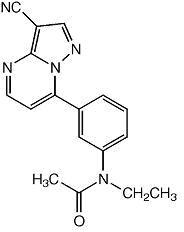
zaleplon 10 MG Oral Capsule — Benzodiazepine related drugs. INDICATIONS AND USAGE Zaleplon capsules are indicated for the short-term treatment of insomnia. Zaleplon capsules have been shown to decrease the…
Boxed warning
WARNING: COMPLEX SLEEP BEHAVIORS Complex sleep behaviors including sleep-walking, sleep-driving, and engaging in other activities while not fully awake may occur following use of zaleplon. Some of these events may result in serious injuries, including death. Discontinue zaleplon immediately if a patient experiences a complex sleep behavior (see CONTRAINDICATIONS and Error! Hyperlink reference not valid. under WARNINGS). Zaleplon capsules are a federally controlled substance (C-IV) because it can be abused or lead to dependence. Keep zaleplon capsules in a safe place to prevent misuse and abuse. Selling or giving away zaleplon capsules may harm others, and is against the law. Tell your doctor if you have ever abused or been dependent on alcohol, prescription medicines or street drugs.
Benzodiazepine related drugsgamma-Aminobutyric Acid A Receptor Agonist
Drug interactions
Zaleplon has several documented interactions with other drugs, particularly those affecting the central nervous system and metabolic pathways.
majorethanol — potentiated CNS-impairing effects
majorimipramine — additive effects on decreased alertness and impaired psychomotor performance
majorthioridazine — additive effects on decreased alertness and impaired psychomotor performance
majorrifampin — reduced zaleplon effectiveness
moderateerythromycin — increased maximal plasma concentrations and AUC of zaleplon
majorcimetidine — increased mean C max and AUC of zaleplon
moderatediphenhydramine — possible additive pharmacodynamic effect
unknownwarfarin — no effect on pharmacokinetics or pharmacodynamics
unknownibuprofen — no apparent pharmacokinetic interaction
Indications
INDICATIONS AND USAGE Zaleplon capsules are indicated for the short-term treatment of insomnia. Zaleplon capsules have been shown to decrease the time to sleep onset for up to 30 days in controlled clinical studies (see Clinical Trials under CLINICAL PHARMACOLOGY ). They have not been shown to increase total sleep time or decrease the number of awakenings. The clinical trials performed in support of efficacy ranged from a single night to 5 weeks in duration. The final formal assessments of sleep latency were performed at the end of treatment.
Dosage
DOSAGE AND ADMINISTRATION The dose of zaleplon capsules should be individualized. The recommended dose of zaleplon capsules for most nonelderly adults is 10 mg. For certain low weight individuals, 5 mg may be a sufficient dose. Although the risk of certain adverse events associated with the use of zaleplon capsules appears to be dose dependent, the 20 mg dose has been shown to be adequately tolerated and may be considered for the occasional patient who does not benefit from a trial of a lower dose. Doses above 20 mg have not been adequately evaluated and are not recommended. Zaleplon capsules should be taken immediately before bedtime or after the patient has gone to bed and has experienced difficulty falling asleep (see PRECAUTIONS ). Taking zaleplon capsules with or immediately after a heavy, high-fat meal results in slower absorption and would be expected to reduce the effect of zaleplon capsules on sleep latency (see Pharmacokinetics under CLINICAL PHARMACOLOGY ). Special Populations Elderly patients and debilitated patients appear to be more sensitive to the effects of hypnotics, and respond to 5 mg of zaleplon capsules. The recommended dose for these patients is therefore 5 mg. Doses over 10 mg are not recommended. Hepatic insufficiency: Patients with mild to moderate hepatic impairment should be treated with zaleplon capsules 5 mg because clearance is reduced in this population. Zaleplon capsules are not recommended for use in patients with severe hepatic impairment. Renal insufficiency: No dose adjustment is necessary in patients with mild to moderate renal impairment. Zaleplon capsules have not been adequately studied in patients with severe renal impairment. An initial dose of 5 mg should be given to patients concomitantly taking cimetidine because zaleplon clearance is reduced in this population (see Drug Interactions under PRECAUTIONS ).
Warnings
WARNINGS Complex Sleep Behaviors Complex sleep behaviors including sleep-walking, sleep-driving, and engaging in other activities while not fully awake may occur following the first or any subsequent use of zaleplon. Patients can be seriously injured or injure others during complex sleep behaviors. Such injuries may result in a fatal outcome. a. Other complex sleep behaviors (e.g., preparing and eating food, making phone calls, or having sex) have also been reported. Patients usually do not remember these events. Post-marketing reports have shown that complex sleep behaviors may occur with zaleplon alone at recommended dosages, with or without the concomitant use of alcohol or other central nervous system (CNS) depressants. CNS-Depressant Effects and Next-Day Impairment Zaleplon, like other hypnotics, has CNS-depressant effects. Because of the rapid onset of action, zaleplon should only be ingested immediately prior to going to bed or after the patient has gone to bed and has experienced difficulty falling asleep. Co-administration with other CNS depressants (e.g., benzodiazepines, opioids, tricyclic antidepressants, alcohol) increases the risk of CNS depression. Dosage adjustments of zaleplon and of other concomitant CNS depressants may be necessary when zaleplon is administered with such agents because of the potentially additive effects. The use of zaleplon with other sedative-hypnotics at bedtime or the middle of the night is not recommended (see DOSAGE AND ADMINISTRATION ). The risk of next-day psychomotor impairment, including impaired driving, is increased if zaleplon is taken with less than a full night of sleep remaining (7 to 8 hours); if a higher than the recommended dose is taken; if co-administered with other CNS depressants or alcohol; or if co-administered with other drugs that increase the blood levels of zaleplon. Patients should be warned against driving and other activities requiring complete mental alertness if zaleplon is taken in these circumstances (see DOSAGE AND ADMINISTRATION and Clinical Trials under CLINICAL PHARMACOLOGY ). Vehicle drivers and machine operators should be warned that, as with other hypnotics, there may be a possible risk of adverse reactions including drowsiness, prolonged reaction time, dizziness, sleepiness, blurred/double vision, reduced alertness, and impaired driving the morning after therapy. In order to minimize this risk a full night of sleep (7-8 hours) is recommended. Because zaleplon can cause drowsiness and a decreased level of consciousness, patients, particularly the elderly, are at higher risk of falls. Need to Evaluate for Co-morbid Diagnoses Because sleep disturbances may be the presenting manifestation of a physical and/or psychiatric disorder, symptomatic treatment of insomnia should be initiated only after a careful evaluation of the patient. The failure of insomnia to remit after 7 to 10 days of treatment may indicate the presence of a primary psychiatric and/or medical illness that should be evaluated. Worsening of insomnia or the emergence of new thinking or behavior abnormalities may be the consequence of an unrecognized psychiatric or physical disorder. Such findings have emerged during the course of treatment with sedative/hypnotic drugs, including zaleplon. Because some of the important adverse effects of zaleplon appear to be dose-related, it is important to use the lowest possible effective dose, especially in the elderly (see DOSAGE AND ADMINISTRATION ). Severe Anaphylactic and Anaphylactoid Reactions Rare cases of angioedema involving the tongue, glottis or larynx have been reported in patients after taking the first or subsequent doses of sedative-hypnotics, including zaleplon. Some patients have had additional symptoms such as dyspnea, throat closing, or nausea and vomiting that suggest anaphylaxis. Some patients have required medical therapy in the emergency department. If angioedema involves the tongue, glottis or larynx, airway obstruction may occur and be fatal. Patients who develop angioedema after treatment with zaleplon should not be rechallenged with the drug. Abnormal Thinking and Behavioral Changes A variety of abnormal thinking and behavior changes have been reported to occur in association with the use of sedative/hypnotics. Some of these changes may be characterized by decreased inhibition (e.g., aggressiveness and extroversion that seem out of character), similar to effects produced by alcohol and other CNS depressants. Other reported behavioral changes have included bizarre behavior, agitation, hallucinations, and depersonalization. Amnesia and other neuropsychiatric symptoms may occur unpredictably. It can rarely be determined with certainty whether a particular instance of the abnormal behaviors listed above is drug induced, spontaneous in origin, or a result of an underlying psychiatric or physical disorder. Nonetheless, the emergence of any new behavioral sign or symptom of concern requires careful and immediate evaluation. Withdrawal Effects Following rapid dose decrease or abrupt discontinuation of the use of sedative/hypnotics, there have been reports of signs and symptoms similar to those associated with withdrawal from other CNS-depressant drugs (see DRUG ABUSE AND DEPENDENCE ).
Contraindications
CONTRAINDICATIONS Zaleplon capsules are contraindicated in patients: who have experienced complex sleep behaviors after taking zaleplon capsules (see WARNINGS ). with hypersensitivity to zaleplon or any excipients in the formulation (see PRECAUTIONS ) .
Mechanism of action
CLINICAL PHARMACOLOGY Pharmacodynamics and Mechanism of Action While zaleplon is a hypnotic agent with a chemical structure unrelated to benzodiazepines, barbiturates, or other drugs with known hypnotic properties, it interacts with the gamma-aminobutyric acid-benzodiazepine (GABA-BZ) receptor complex. Subunit modulation of the GABA-BZ receptor chloride channel macromolecular complex is hypothesized to be responsible for some of the pharmacological properties of benzodiazepines, which include sedative, anxiolytic, muscle relaxant, and anticonvulsive effects in animal models. Other nonclinical studies have also shown that zaleplon binds selectively to the brain omega-1 receptor situated on the alpha subunit of the GABA A /chloride ion channel receptor complex and potentiates t-butyl-bicyclophosphorothionate (TBPS) binding. Studies of binding of zaleplon to recombinant GABA A receptors ( α 1 β 1 γ 2 [omega-1] and α 2 β 1 γ 2 [omega-2]) have shown that zaleplon has a low affinity for these receptors, with preferential binding to the omega-1 receptor. Pharmacokinetics The pharmacokinetics of zaleplon have been investigated in more than 500 healthy subjects (young and elderly), nursing mothers, and patients with hepatic disease or renal disease. In healthy subjects, the pharmacokinetic profile has been examined after single doses of up to 60 mg and once-daily administration at 15 mg and 30 mg for 10 days. Zaleplon was rapidly absorbed with a time to peak concentration (t max ) of approximately 1 hour and a terminal-phase elimination half-life (t 1/2 ) of approximately 1 hour. Zaleplon does not accumulate with once-daily administration and its pharmacokinetics are dose proportional in the therapeutic range. Absorption Zaleplon is rapidly and almost completely absorbed following oral administration. Peak plasma concentrations are attained within approximately 1 hour after oral administration. Although zaleplon is well absorbed, its absolute bioavailability is approximately 30% because it undergoes significant presystemic metabolism. Distribution Zaleplon is a lipophilic compound with a volume of distribution of approximately 1.4 L/kg following intravenous (IV) administration, indicating substantial distribution into extravascular tissues. The in vitro plasma protein binding is approximately 60%±15% and is independent of zaleplon concentration over the range of 10 ng/mL to 1000 ng/mL. This suggests that zaleplon disposition should not be sensitive to alterations in protein binding. The blood to plasma ratio for zaleplon is approximately 1, indicating that zaleplon is uniformly distributed throughout the blood with no extensive distribution into red blood cells. Metabolism After oral administration, zaleplon is extensively metabolized, with less than 1% of the dose excreted unchanged in urine. Zaleplon is primarily metabolized by aldehyde oxidase to form 5-oxo-zaleplon. Zaleplon is metabolized to a lesser extent by cytochrome P450 (CYP) 3A4 to form desethylzaleplon, which is quickly converted, presumably by aldehyde oxidase, to 5-oxo-desethylzaleplon. These oxidative metabolites are then converted to glucuronides and eliminated in urine. All of zaleplon's metabolites are pharmacologically inactive. Elimination After either oral or IV administration, zaleplon is rapidly eliminated with a mean t 1/2 of approximately 1 hour. The oral-dose plasma clearance of zaleplon is about 3 L/h/kg and the IV zaleplon plasma clearance is approximately 1 L/h/kg. Assuming normal hepatic blood flow and negligible renal clearance of zaleplon, the estimated hepatic extraction ratio of zaleplon is approximately 0.7, indicating that zaleplon is subject to high first-pass metabolism. After administration of a radiolabeled dose of zaleplon, 70% of the administered dose is recovered in urine within 48 hours (71% recovered within 6 days), almost all as zaleplon metabolites and their glucuronides. An additional 17% is recovered in feces within 6 days, most as 5-oxo-zaleplon. Effect of Food In healthy adults a high-fat/heavy meal prolonged the absorption of zaleplon compared to the fasted state, delaying t max by approximately 2 hours and reducing C max by approximately 35%. Zaleplon AUC and elimination half-life were not significantly affected. These results suggest that the effects of zaleplon on sleep onset may be reduced if it is taken with or immediately after a high-fat/heavy meal. Special Populations Age: The pharmacokinetics of zaleplon have been investigated in three studies with elderly men and women ranging in age from 65 to 85 years. The pharmacokinetics of zaleplon in elderly subjects, including those over 75 years of age, are not significantly different from those in young healthy subjects. Gender: There is no significant difference in the pharmacokinetics of zaleplon in men and women. Race: The pharmacokinetics of zaleplon have been studied in Japanese subjects as representative of Asian populations. For this group, C max and AUC were increased 37% and 64%, respectively. This finding can likely be attributed to differences in body weight, or alternatively, may represent differences in enzyme activities resulting from differences in diet, environment, or other factors. The effects of race on pharmacokinetic characteristics in other ethnic groups have not been well characterized. Hepatic impairment: Zaleplon is metabolized primarily by the liver and undergoes significant presystemic metabolism. Consequently, the oral clearance of zaleplon was reduced by 70% and 87% in compensated and decompensated cirrhotic patients, respectively, leading to marked increases in mean C max and AUC (up to 4-fold and 7-fold in compensated and decompensated patients, respectively), in comparison with healthy subjects. The dose of zaleplon should therefore be reduced in patients with mild to moderate hepatic impairment (see DOSAGE AND ADMINISTRATION ). Zaleplon is not recommended for use in patients with severe hepatic impairment. Renal impairment: Because renal excretion of unchanged zaleplon accounts for less than 1% of the administered dose, the pharmacokinetics of zaleplon are not altered in patients with renal insufficiency. No dose adjustment is necessary in patients with mild to moderate renal impairment. Zaleplon has not been adequately studied in patients with severe renal impairment. Drug-Drug Interactions Because zaleplon is primarily metabolized by aldehyde oxidase, and to a lesser extent by CYP3A4, inhibitors of these enzymes might be expected to decrease zaleplon's clearance and inducers of these enzymes might be expected to increase its clearance. Zaleplon has been shown to have minimal effects on the kinetics of warfarin (both R- and S- forms), imipramine, ethanol, ibuprofen, diphenhydramine, thioridazine, and digoxin. However, the effects of zaleplon on inhibition of enzymes involved in the metabolism of other drugs have not been studied (see Drug Interactions under PRECAUTIONS ). Clinical Trials Controlled Trials Supporting Effectiveness Zaleplon (typically administered in doses of 5 mg, 10 mg, or 20 mg) has been studied in patients with chronic insomnia (n = 3,435) in 12 placebo- and active-drug-controlled trials. Three of the trials were in elderly patients (n=1,019). It has also been studied in transient insomnia (n=264). Because of its very short half-life, studies focused on decreasing sleep latency, with less attention to duration of sleep and number of awakenings, for which consistent differences from placebo were not demonstrated. Studies were also carried out to examine the time course of effects on memory and psychomotor function, and to examine withdrawal phenomena. Transient Insomnia Normal adults experiencing transient insomnia during the first night in a sleep laboratory were evaluated in a double-blind, parallel-group trial comparing the effects of two doses of zaleplon (5 mg and 10 mg) with placebo. Zaleplon 10 mg, but not 5 mg, was superior to placebo in decrea
A drug lookup is just the start. Eleplan keeps the whole care plan in one place.
Medications, diagnoses, documents, appointments, and the whole care team — organized and always in sync, with Ellie, your AI care assistant, on top of it. Free to start.