Selexipag
Managing this medication for someone you care for? Eleplan keeps diagnoses, medications and appointments in one plan.
Start free with EleplanMedication reference
Selexipag
Prostacyclin Receptor Agonist [EPC] — ORAL · INTRAVENOUS
Selexipag — Prostacyclin Receptor Agonist [EPC]. INDICATIONS AND USAGE UPTRAVI is a prostacyclin receptor agonist indicated for the treatment of pulmonary arterial hypertension (PAH, WHO Group I)…
Brand names
UPTRAVIUPTRAVI Titration Pack
Active ingredients
SELEXIPAG
Indications
INDICATIONS AND USAGE UPTRAVI is a prostacyclin receptor agonist indicated for the treatment of pulmonary arterial hypertension (PAH, WHO Group I): In adults to delay disease progression and reduce the risk of hospitalization for PAH. ( 1.1 ) In pediatric patients aged 2 years and older. UPTRAVI reduces NT-proBNP and is expected to delay disease progression and reduce the risk of hospitalization for PAH. ( 1.1 ) 1.1 Pulmonary Arterial Hypertension Adult Patients UPTRAVI is indicated for the treatment of pulmonary arterial hypertension in adults (PAH, WHO Group I) to delay disease progression and reduce the risk of hospitalization for PAH. Effectiveness of UPTRAVI tablets was established in a long-term study in adult PAH patients with WHO Functional Class II–III symptoms. Patients had idiopathic and heritable PAH (58%), PAH associated with connective tissue disease (29%), PAH associated with congenital heart disease with repaired shunts (10%) [see Clinical Studies (14.1) ] . Pediatric Patients UPTRAVI is indicated for the treatment of PAH (WHO Group I) in pediatric patients aged two years and older. UPTRAVI reduces NT-proBNP and is expected to delay disease progression and reduce the risk of hospitalization for PAH.
Dosage
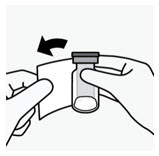
DOSAGE AND ADMINISTRATION Adult patients: UPTRAVI tablets starting dose: 200 mcg orally twice daily. Increase the dose by 200 mcg orally twice daily at weekly intervals to the highest tolerated dose up to 1,600 mcg orally twice daily. ( 2.1 ) Pediatric patients: See Full Prescribing Information for recommended starting dose, titration increments, and maximum allowed dose based on body weight category. ( 2.1 ) Maintenance dose is determined by tolerability. ( 2.1 ) Moderate hepatic impairment: Starting dose once daily, increase in increments of the starting dose once daily at weekly intervals to the maximum allowed or highest tolerated dose. ( 2.6 ) Adult patients: UPTRAVI for injection dose is determined by the patient's current dose of UPTRAVI tablets. Administer UPTRAVI for injection by intravenous infusion, twice daily. ( 2.2 ) See Full Prescribing Information for instructions on preparation and administration. ( 2.3 , 2.4 ) 2.1 Recommended Dosage and Administration for UPTRAVI Film-coated Tablets Adult Patients The recommended starting dosage of UPTRAVI tablets is 200 mcg given orally twice daily. Tolerability may be improved when taken with food [see Clinical Pharmacology (12.3) ] . Increase the dose in increments of 200 mcg orally twice daily, usually at weekly intervals, to the highest tolerated dose up to 1,600 mcg orally twice daily. If a patient reaches a dose that cannot be tolerated, the dose should be reduced to the previous tolerated dose. Swallow the UPTRAVI tablets whole. Do not split or crush the tablets. Pediatric Patients Two Years and Older The recommended starting dose of UPTRAVI is determined based on the patient's body weight and is given orally twice daily. The recommended UPTRAVI starting doses, titration increments, and maximum allowed doses based on body weight categories in pediatric patients are shown in Table 1. Table 1: Pediatric Dosing Regimen Body weight (kg) Recommended starting dose Recommended titration increments Maximum dose allowed 9 kg to less than 25 kg 100 mcg orally twice daily 100 mcg orally twice daily 800 mcg orally twice daily 25 kg to less than 40 kg 150 mcg orally twice daily 150 mcg orally twice daily 1,200 mcg orally twice daily 40 kg to less than 50 kg 150 mcg orally twice daily 150 mcg orally twice daily 1,600 mcg orally twice daily For pediatric patients with a body weight ≥40 kg to <50 kg multiple tablet dose strengths may be needed to reach the doses up to 1,600 mcg twice daily. 50 kg and greater 200 mcg orally twice daily 200 mcg orally twice daily 1,600 mcg orally twice daily Increase the dose in increments equivalent to the starting dose (i.e., 100 mcg, 150 mcg or 200 mcg given orally twice daily), at weekly intervals, to the highest tolerated dose up to the maximum dose allowed for the patient's body weight (see Table 1 ). If a patient reaches a dose that cannot be tolerated or medically managed, the dose should be reduced to the previous tolerated dose. Re-evaluate further dose titration based on changes in body weight category over time. Tolerability may be improved when taken with food [see Clinical Pharmacology (12.3) ] . Swallow the UPTRAVI tablets whole. Do not split or crush the tablets. Alternate Methods of Administration of 100 mcg and 150 mcg UPTRAVI Film-coated Tablets For patients who cannot swallow the tablets whole, 100 mcg or 150 mcg UPTRAVI tablets can be dispersed and administered in apple or orange juice. Do not disperse the tablet(s) in water or milk. Do not crush or split the tablet(s). At least 1 mL of juice per tablet is recommended. Add the juice to the required number of tablet(s) per dosing schedule (see Table 1 ). Wait for 5 min and then stir until the tablets are dispersed. Administer the mixture immediately after dispersion. Do not store tablets that are mixed with juice for later use. Alternatively, 100 mcg and 150 mcg UPTRAVI tablets can also be administered with soft foods such as yogurt, applesauce, or mashed banana. Cover the required number of tablets with soft food. Administer the mixture immediately. To ensure no tablet residue is left, add more soft food and administer the contents immediately. Do not store tablets that are mixed with soft food for later use. 2.2 Recommended Dosage for UPTRAVI for Injection in Adults Use UPTRAVI for injection in adult patients who are temporarily unable to take oral therapy. Administer UPTRAVI for injection twice daily by intravenous infusion at a dose that corresponds to the patient's current dose of UPTRAVI tablets (see Table 2 ). Administer UPTRAVI for injection as an 80-minute intravenous infusion. 2.3 Preparation Instructions for UPTRAVI for Injection Reconstitute and further dilute UPTRAVI for injection prior to intravenous infusion following aseptic procedures. Determine the dose and total volume of reconstituted UPTRAVI solution required (see Table 2 ). Reconstitution Remove the carton of UPTRAVI for injection from the refrigerator and allow to stand for approximately 30 to 60 minutes to reach room temperature (20 °C to 25 °C [68 °F to 77 °F]). The vial needs to be protected from light at all times. Ensure the protective wrap around label is covering the entire vial. Peel back light protective wrap on vial to inspect the contents in the vial. It should appear white to almost white broken cake or powdered material. Immediately close the light protective wrap on the vial. Reconstitute UPTRAVI for injection using a polypropylene syringe with 8.6 mL of 0.9% Sodium Chloride Injection, USP and slowly inject into the UPTRAVI vial with the stream directed toward the inside wall of the vial to obtain a concentration of 225 mcg/mL of selexipag. Document date and time of first puncture. Complete infusion within 4 hours of first puncture. Gently invert the vial and repeat until powder is completely dissolved. Do not shake. Inspect the vial by peeling back the light protective wrap around label for discoloration. The reconstituted solution should appear clear, colorless and free from foreign material. Do not use if the reconstituted solution is discolored, cloudy, or contains visible particles. Image Image Dilution UPTRAVI for injection must be diluted in glass containers only . Withdraw 100 mL of 0.9% Sodium Chloride Injection, USP and transfer into an empty sterile glass container. Withdraw the required volume of reconstituted solution (see Table 2 for reconstituted transfer volume) from the UPTRAVI vial using a single, appropriately sized polypropylene syringe and dilute into the glass container containing 100 mL 0.9% Sodium Chloride Injection, USP to obtain the desired final dose. Mix the diluted UPTRAVI infusion solution by gentle inversion of the glass container 5 times. Do not shake. Protect diluted UPTRAVI infusion solution from light at all times. Assign a 4-hour expiry from the time of first vial puncture and wrap the glass container completely with light protective cover. The UPTRAVI infusion solution should be kept at room temperature (20 °C to 25 °C [68 °F to 77 °F]) and must be infused within 4 hours from the first puncture of the vial stopper (including infusion time). Parenteral drug products should be inspected visually for particulate matter and discoloration prior to administration. The diluted UPTRAVI infusion solution should be clear and colorless. Discard if particulate matter is observed. UPTRAVI for injection vials are single-dose, for single administration. All remaining reconstituted product must be discarded. Table 2: Dosing Table for UPTRAVI Intravenous Based on Current UPTRAVI Tablets Dose UPTRAVI tablets dose (mcg) for twice daily dosing Corresponding intravenous UPTRAVI dose (mcg) for twice daily dosing Reconstituted transfer volume (mL) for dilution 200 225 1 400 450 2 600 675 3 800 900 4 1,000 1,125 5 1,200 1,350 6 1,400 1,575 7 1,600 1,800 8 2.4 Administration Instructions for UPTRAVI for Injection Administer by intravenous infusion over 80 minutes using an infusion set made of DEHP-free pol
Warnings
WARNINGS AND PRECAUTIONS Pulmonary edema in patients with pulmonary veno-occlusive disease. If confirmed, discontinue treatment. ( 5.1 ) 5.1 Pulmonary Edema with Pulmonary Veno-Occlusive Disease Should signs of pulmonary edema occur, consider the possibility of associated pulmonary veno-occlusive disease. If confirmed, discontinue UPTRAVI.
Contraindications
CONTRAINDICATIONS Hypersensitivity to the active substance or to any of the excipients. Concomitant use of strong inhibitors of CYP2C8 (e.g., gemfibrozil) [see Drug Interactions (7.1) and Clinical Pharmacology (12.3) ] . Concomitant use with strong CYP2C8 inhibitors. ( 4 , 7.1 , 12.3 ) Hypersensitivity to the active substance or to any of the excipients. ( 4 )
Drug interactions
DRUG INTERACTIONS Moderate CYP2C8 inhibitors (e.g., clopidogrel, deferasirox and teriflunomide) increase exposure to the active metabolite of UPTRAVI. Reduce the dosing of UPTRAVI to once daily. ( 2.7 , 7.1 , 12.3 ) CYP2C8 inducers (e.g., rifampin) decrease exposure to the active metabolite. Increase up to twice the dose of UPTRAVI. ( 7.2 , 12.3 ) 7.1 CYP2C8 Inhibitors Concomitant administration with gemfibrozil, a strong inhibitor of CYP2C8, doubled the exposure to selexipag and increased exposure to the active metabolite by approximately 11-fold. Concomitant administration of UPTRAVI with strong inhibitors of CYP2C8 (e.g., gemfibrozil) is contraindicated [see Contraindications (4) and Clinical Pharmacology (12.3) ] . Concomitant administration of UPTRAVI tablets with clopidogrel, a moderate inhibitor of CYP2C8, had no relevant effect on the exposure to selexipag and increased the exposure to the active metabolite by approximately 2.7-fold [see Clinical Pharmacology (12.3) ] . Reduce the dosing of UPTRAVI to once daily in adult and pediatric patients on a moderate CYP2C8 inhibitor [see Dosage and Administration (2.7) ] . 7.2 CYP2C8 Inducers Concomitant administration with an inducer of CYP2C8 and UGT 1A3 and 2B7 enzymes (rifampin) halved exposure to the active metabolite. Increase UPTRAVI up to twice the dose when co-administered with rifampin. Reduce UPTRAVI when rifampin is stopped [see Clinical Pharmacology (12.3) ] .
Adverse reactions
ADVERSE REACTIONS Adverse reactions in adult and pediatric patients occurring more frequently (≥5%) on UPTRAVI compared to placebo are headache, diarrhea, jaw pain, nausea, myalgia, vomiting, pain in extremity, and flushing. Additional adverse reaction occurring in pediatric patients more frequently (≥5%) on UPTRAVI compared to placebo is abdominal pain. ( 6.1 ) To report SUSPECTED ADVERSE REACTIONS, contact Actelion at 1-800-526-7736 or FDA at 1-800-FDA-1088 or www.fda.gov/medwatch. 6.1 Clinical Trial Experience Because clinical trials are conducted under widely varying conditions, adverse reaction rates observed in the clinical trials of a drug cannot be directly compared to rates in the clinical trials of another drug and may not reflect the rates observed in practice. UPTRAVI Tablets Adult Patients The safety of UPTRAVI tablets has been evaluated in a long-term, placebo-controlled study enrolling 1,156 adult patients with symptomatic PAH (GRIPHON study) [see Clinical Studies (14.1) ] . The exposure to UPTRAVI in this trial was up to 4.2 years with median duration of exposure of 1.4 years. Table 3 presents adverse reactions more frequent on UPTRAVI tablets than on placebo by ≥3%. Table 3: Adverse Reactions UPTRAVI Placebo Adverse Reaction N=575 N=577 Headache 65% 32% Diarrhea 42% 18% Jaw pain 26% 6% Nausea 33% 18% Myalgia 16% 6% Vomiting 18% 9% Pain in extremity 17% 8% Flushing 12% 5% Arthralgia 11% 8% Anemia 8% 5% Decreased appetite 6% 3% Rash 11% 8% These adverse reactions are more frequent during the dose titration phase. Hyperthyroidism was observed in 1% (n=8) of patients on UPTRAVI tablets and in none of the patients on placebo. Pediatric Patients Two Years and Older The safety of UPTRAVI tablets has been evaluated in a long-term, Phase 3, double-blind, placebo-controlled study (SALTO), where a total of 138 pediatric patients with symptomatic PAH ≥2 to <18 years of age were randomized 1:1 to receive either UPTRAVI or placebo [see Clinical Studies (14.2) ] . The exposure to UPTRAVI in this study was up to 4.1 years with a median duration of exposure of 1.5 years. The safety profile in pediatric patients was consistent with that observed in adults with PAH. Compared to adults, a higher frequency of vomiting was observed (39% on UPTRAVI versus 19% on placebo). In addition, abdominal pain was observed in 15% of pediatric patients on UPTRAVI and in 6% on placebo. UPTRAVI-treated pediatric patients experienced a smaller mean increase in body weight and height compared to the placebo group. The mean change in weight Z-score from baseline at 48 weeks in UPTRAVI-treated pediatric patients (n=54) was –0.31 compared to –0.09 in the placebo group (n=61); and at 96 weeks in UPTRAVI-treated pediatric patients (n=32) was –0.46 compared to –0.12 in the placebo group (n=35). The mean change in height Z-score from baseline at 48 weeks in UPTRAVI-treated pediatric patients (n=54) was –0.16 compared to –0.04 in the placebo group (n=61); and at 96 weeks in the UPTRAVI-treated pediatric patients (n=32) was –0.30 compared to –0.05 in the placebo group (n=35). When treating pediatric patients with UPTRAVI, monitor growth. UPTRAVI for Injection Infusion-site reactions (infusion site erythema/redness, pain and swelling) were reported with UPTRAVI for Injection in adult patients. Laboratory Test Abnormalities Hemoglobin In a Phase 3 placebo-controlled study in adult patients with PAH, mean absolute changes in hemoglobin at regular visits compared to baseline ranged from −0.34 to −0.02 g/dL in the UPTRAVI group compared to −0.05 to 0.25 g/dL in the placebo group. A decrease in hemoglobin concentration to below 10 g/dL was reported in 8.6% of patients treated with UPTRAVI tablets and 5.0% of placebo-treated patients. Thyroid Function Tests In a Phase 3 placebo-controlled study in adult patients with PAH, a reduction (up to −0.3 MU/L from a baseline median of 2.5 MU/L) in median thyroid-stimulating hormone (TSH) was observed at most visits in the UPTRAVI group. In the placebo group, little change in median values was apparent. There were no mean changes in triiodothyronine or thyroxine in either group. 6.2 Postmarketing Experience The following adverse reactions have been identified during post approval use of UPTRAVI. Because these reactions are reported voluntarily from a population of uncertain size, it is not always possible to reliably estimate their frequency or establish a causal relationship to drug exposure. Vascular disorders: symptomatic hypotension
Mechanism of action
Mechanism of Action Selexipag is a prostacyclin receptor (IP receptor) agonist that is structurally distinct from prostacyclin. Selexipag is hydrolyzed by carboxylesterase 1 to yield its active metabolite, which is approximately 37-fold as potent as selexipag. Selexipag and the active metabolite are selective for the IP receptor versus other prostanoid receptors (EP 1–4 , DP, FP, and TP).
Available forms (18)
selexipag 0.2 MG Oral Tabletselexipag 0.4 MG Oral Tabletselexipag 0.6 MG Oral Tabletselexipag 0.8 MG Oral Tabletselexipag 1.2 MG Oral Tabletselexipag 1.4 MG Oral Tabletselexipag 1.6 MG Oral Tabletselexipag 1.8 MG Injectionselexipag 1 MG Oral Tabletselexipag 0.2 MG Oral Tablet [Uptravi]brandselexipag 0.4 MG Oral Tablet [Uptravi]brandselexipag 0.6 MG Oral Tablet [Uptravi]brandselexipag 0.8 MG Oral Tablet [Uptravi]brandselexipag 1.2 MG Oral Tablet [Uptravi]brandselexipag 1.4 MG Oral Tablet [Uptravi]brandselexipag 1.6 MG Oral Tablet [Uptravi]brandselexipag 1.8 MG Injection [Uptravi]brandselexipag 1 MG Oral Tablet [Uptravi]brand
NDC examples
66215-60266215-60466215-606
Indicated ICD-10 codes
Treats these conditions
Source: openFDA + RxNorm · 2026
Look up another medication