Sevelamer
Managing this medication for someone you care for? Eleplan keeps diagnoses, medications and appointments in one plan.
Start free with EleplanMedication reference
Sevelamer
ORAL · PARENTERAL
Sevelamer. INDICATIONS AND USAGE Sevelamer carbonate tablets are indicated for the control of serum phosphorus in adults with chronic kidney disease (CKD) on…
Brand names
Sevelamer CarbonateSEVELAMER CARBONATESevelamer carbonatesevelamer hydrochlorideSevelamer HydrochlorideSevelamer hydrochloride
Active ingredients
SEVELAMER CARBONATESEVELAMER HYDROCHLORIDE
Indications
INDICATIONS AND USAGE Sevelamer carbonate tablets are indicated for the control of serum phosphorus in adults with chronic kidney disease (CKD) on dialysis. Pediatric use information is approved for Genzyme Corporation’s Renvela (sevelamer carbonate) tablets and Renvela (sevelamer carbonate) for oral suspension. However, due to Genzyme Corporation’s marketing exclusivity rights, these drug products are not labeled with that pediatric information. Sevelamer carbonate tablets are a phosphate binder indicated for the control of serum phosphorus in adults with chronic kidney disease on dialysis. (1)
Dosage
DOSAGE & ADMINISTRATION • Starting dose of sevelamer carbonate for oral suspension is 0.8 or 1.6 grams administered orally three times per day with meals based on serum phosphorus levels for adult patients and based on body surface area (BSA) category for pediatric patients. ( 2.1 ) • Titrate by 0.8 grams per meal in two week intervals for adult patients as needed to obtain serum phosphorus target. ( 2.1 ) • Titrate based on BSA category for pediatric patients in two week intervals for 6 weeks and then every 4 weeks as needed to obtain serum phosphorus target. ( 2.1 ) 2.1 General Dosing Information Starting Dose for Adult Patients Not Taking a Phosphate Binder. The recommended starting dose of sevelamer carbonate for oral suspension is 0.8 to 1.6 g taken orally with meals based on serum phosphorus level. Table 1 provides recommended starting doses of sevelamer carbonate for oral suspension for adult patients not taking a phosphate binder. Table 1: Starting Dose for Adult Dialysis Patients Not Taking a Phosphate Binder Serum Phosphorus Sevelamer Carbonate for Oral Suspension >5.5 and <7.5 mg/dL 0.8 g three times daily with meals ≥7.5 mg/dL 1.6 g three times daily with meals Dose Titration for Adult Patients Taking Sevelamer Carbonate for Oral Suspension. Titrate the sevelamer carbonate for oral suspension dose by 0.8 g three times per day with meals at two-week intervals as necessary to achieve target serum phosphorus levels. Based on clinical studies, the average prescribed adult daily dose of sevelamer carbonate is approximately 7.2 g per day. The highest daily adult dose of sevelamer carbonate studied was 14 grams in CKD patients on dialysis. Starting Dose for Pediatric Patients Not Taking a Phosphate Binder. The recommended starting dose for pediatric patients 6 years of age and older is 0.8 g to 1.6 g taken three times per day with meals based on the patient’s body surface area (BSA) category; see Table 2. Table 2: Recommended Starting Dosage and Titration Increment Based on Pediatric Patient’s Body Surface Area (m 2 ) BSA (m 2 ) Starting Dose Per Meal/Snack Titration Increases/Decreases Per Dose ≥0.75 to <1.2 0.8 g Titrate by 0.4 g ≥1.2 1.6 g Titrate by 0.8 g Dose Titration for Pediatric Patients Taking Sevelamer Carbonate for Oral Suspension. Titrate the sevelamer carbonate for oral suspension dose as needed to achieve target levels at two-week intervals based on BSA category, as shown in Table 2. Switching from Sevelamer Hydrochloride Tablets. For adult patients switching from sevelamer hydrochloride tablets to sevelamer carbonate tablets or powder, use the same dose in grams. Switching between Sevelamer Carbonate Tablets and Powder. Use the same dose in grams. Switching from Calcium Acetate. Table 3 gives recommended starting doses of sevelamer carbonate for oral suspension based on a patient’s current calcium acetate dose. Table 3: Starting Dose for Dialysis Patients Switching from Calcium Acetate to Sevelamer Carbonate for Oral Suspension Calcium Acetate 667 mg (Tablets per meal) Sevelamer Carbonate for Oral Suspension 1 tablet 0.8 g 2 tablets 1.6 g 3 tablets 2.4 g 2.2 Sevelamer Carbonate Powder Preparation Instructions Sevelamer carbonate powder is available in 0.8 or 2.4 g packets. For dose increments of 0.4 g, use one half of a 0.8 g packet. Place the sevelamer carbonate powder in a cup and suspend in the amount of water described in Table 4. Table 4: Sevelamer Carbonate Powder Preparation Instructions Amount of Sevelamer Carbonate Powder Minimum Amount of Water for Dose Preparation (either ounces, mL, or tablespoon) Ounces mL Tablespoons 0.4 g 1 30 2 0.8 g 1 30 2 2.4 g 2 60 4 Instruct patients to stir the mixture vigorously (it does not dissolve), resuspend, if necessary, right before administration, and drink the entire preparation within 30 minutes. As an alternative to water, the entire contents of the packet may be pre-mixed with a small amount of food or beverage and consumed immediately (within 30 minutes) as part of the meal. Do not heat sevelamer carbonate powder (e.g., microwave) or add to heated foods or liquids.
Warnings
WARNINGS AND PRECAUTIONS . 5.1 Gastrointestinal Adverse Events Patients with dysphagia, swallowing disorders, severe gastrointestinal (GI) motility disorders, including severe constipation, or major GI tract surgery were not included in the sevelamer carbonate clinical studies. Cases of dysphagia and esophageal tablet retention have been reported in association with use of the tablet formulation of sevelamer, some requiring hospitalization and intervention. Consider using sevelamer suspension in patients with a history of swallowing disorders. Cases of bowel obstruction, bleeding gastrointestinal ulcers, colitis, ulceration, necrosis, and perforation have also been reported with sevelamer use [see Adverse Reactions (6.2) ]. Inflammatory disorders may resolve upon sevelamer carbonate discontinuation. Treatment with sevelamer carbonate should be re-evaluated in patients who develop severe gastrointestinal symptoms. 5.2 Reductions in Vitamins D, E, K (Clotting Factors), and Folic Acid Levels In preclinical studies in rats and dogs, sevelamer hydrochloride, which contains the same active moiety as sevelamer carbonate, reduced vitamins D, E, and K (coagulation parameters) and folic acid levels at doses of 6-10 times the recommended human dose. In short-term clinical trials, there was no evidence of reduction in serum levels of vitamins. However, in a one-year clinical trial, 25-hydroxyvitamin D (normal range 10 to 55 ng/mL) fell from 39 ± 22 ng/mL to 34 ± 22 ng/mL (p<0.01) with sevelamer hydrochloride treatment. Most (approximately 75%) patients in sevelamer hydrochloride clinical trials were receiving vitamin supplements. 5.1 Gastrointestinal Adverse Events Patients with dysphagia, swallowing disorders, severe gastrointestinal (GI) motility disorders, including severe constipation, or major GI tract surgery were not included in the sevelamer carbonate clinical studies. Cases of dysphagia and esophageal tablet retention have been reported in association with use of the tablet formulation of sevelamer, some requiring hospitalization and intervention. Consider using sevelamer suspension in patients with a history of swallowing disorders. Cases of bowel obstruction, bleeding gastrointestinal ulcers, colitis, ulceration, necrosis, and perforation have also been reported with sevelamer use [see Adverse Reactions (6.2) ]. Inflammatory disorders may resolve upon sevelamer carbonate discontinuation. Treatment with sevelamer carbonate should be re-evaluated in patients who develop severe gastrointestinal symptoms. 5.2 Reductions in Vitamins D, E, K (Clotting Factors), and Folic Acid Levels In preclinical studies in rats and dogs, sevelamer hydrochloride, which contains the same active moiety as sevelamer carbonate, reduced vitamins D, E, and K (coagulation parameters) and folic acid levels at doses of 6-10 times the recommended human dose. In short-term clinical trials, there was no evidence of reduction in serum levels of vitamins. However, in a one-year clinical trial, 25-hydroxyvitamin D (normal range 10 to 55 ng/mL) fell from 39 ± 22 ng/mL to 34 ± 22 ng/mL (p<0.01) with sevelamer hydrochloride treatment. Most (approximately 75%) patients in sevelamer hydrochloride clinical trials were receiving vitamin supplements.
Contraindications
CONTRAINDICATIONS Sevelamer carbonate for oral suspension is contraindicated in patients with bowel obstruction. Sevelamer carbonate for oral suspension is contraindicated in patients with known hypersensitivity to sevelamer carbonate, sevelamer hydrochloride, or to any of the excipients. • Bowel obstruction. ( 4 ) • Known hypersensitivity to sevelamer carbonate, sevelamer hydrochloride, or to any of the excipients. ( 4 )
Drug interactions
DRUG INTERACTIONS There are no empirical data on avoiding drug interactions between sevelamer carbonate tablets and most concomitant oral drugs. For oral medication where a reduction in the bioavailability of that medication would have a clinically significant effect on its safety or efficacy (e.g., cyclosporine, tacrolimus, levothyroxine), consider separation of the timing of the administration of the two drugs [see Clinical Pharmacology (12.3) ] . The duration of separation depends upon the absorption characteristics of the medication concomitantly administered, such as the time to reach peak systemic levels and whether the drug is an immediate-release or an extended-release product. Where possible consider monitoring clinical responses and/or blood levels of concomitant drugs that have a narrow therapeutic range. Table 5. Sevelamer Drug Interactions Oral drugs for which sevelamer did not alter the pharmacokinetics when administered concomitantly Digoxin Enalapril Iron Metoprolol Warfarin Oral drugs that have demonstrated interaction with sevelamer and are to be dosed separately from sevelamer carbonate tablets Ciprofloxacin Mycophenolate mofetil Dosing Recommendations Take at least 2 hours before or 6 hours after sevelamer Take at least 2 hours before sevelamer For oral medication where a reduction in the bioavailability of that medication would have a clinically significant effect on its safety or efficacy, consider separation of the timing of administration and/or monitor clinical responses or blood levels of the concomitant medication. ( 7 ) Sevelamer did not alter the pharmacokinetics of digoxin, enalapril, iron, metoprolol and warfarin. ( 7 ) Sevelamer has demonstrated interaction with ciprofloxacin, mycophenolate mofetil, and therefore, these drugs should be dosed separately from sevelamer carbonate tablets. ( 7 ) Drug Interactions In vivo Sevelamer carbonate has been studied in human drug-drug interaction studies (9.6 grams once daily with a meal) with warfarin and digoxin. Sevelamer hydrochloride, which contains the same active moiety as sevelamer carbonate, has been studied in human drug-drug interaction studies (2.4-2.8 grams single dose or three times daily with meals or two times daily without meals) with ciprofloxacin, digoxin, enalapril, iron, metoprolol, mycophenolate mofetil, and warfarin. Coadministered single dose of 2.8 grams of sevelamer hydrochloride in fasted state decreased the bioavailability of ciprofloxacin by approximately 50% in healthy subjects. Concomitant administration of sevelamer and mycophenolate mofetil in adult and pediatric patients decreased the mean MPA C max and AUC 0–12h by 36% and 26%, respectively. Sevelamer carbonate or sevelamer hydrochloride did not alter the pharmacokinetics of enalapril, digoxin, iron, metoprolol, and warfarin when coadministered. During postmarketing experience, cases of increased thyroid stimulating hormone (TSH) levels have been reported in patients coadministered sevelamer hydrochloride and levothyroxine. Reduction in concentrations of cyclosporine and tacrolimus leading to dose increases has also been reported in transplant patients when coadministered with sevelamer hydrochloride without any clinical consequences (for example, graft rejection). The possibility of an interaction cannot be excluded with these drugs.
Adverse reactions
ADVERSE REACTIONS . 6.1 Clinical Trials Experience Because clinical trials are conducted under widely varying conditions, adverse reaction rates observed in the clinical trials of a drug cannot be directly compared to rates in the clinical trials of another drug and may not reflect the rates observed in practice. There are limited clinical trial data on the safety of sevelamer carbonate tablets. However, because it contains the same active ingredient as the hydrochloride salt, the adverse event profiles of the two salts are expected to be similar. In a cross-over study in hemodialysis patients with treatment durations of eight weeks each and no washout, and another cross-over study in hemodialysis patients with treatment durations of four weeks each and no washout between treatment periods, the adverse reactions on sevelamer carbonate powder were similar to those reported for sevelamer hydrochloride. In a parallel design study of sevelamer hydrochloride with treatment duration of 52 weeks, adverse reactions reported for sevelamer hydrochloride (n=99) were similar to those reported for the active-comparator group (n=101). Overall adverse reactions among those treated with sevelamer hydrochloride occurring in >5% of patients included: vomiting (22%), nausea (20%), diarrhea (19%), dyspepsia (16%), abdominal pain (9%), flatulence (8%), and constipation (8%). A total of 27 patients treated with sevelamer and 10 patients treated with comparator withdrew from the study due to adverse reactions. Based on studies of 8-52 weeks, the most common reason for withdrawal from sevelamer hydrochloride was gastrointestinal adverse reactions (3%-16%). In 143 peritoneal dialysis patients studied for 12 weeks using sevelamer hydrochloride, most common adverse reactions were similar to adverse reactions observed in hemodialysis patients. The most frequently occurring treatment emergent serious adverse reaction was peritonitis (8 reactions in 8 patients [8%] in the sevelamer group and 2 reactions in 2 patients [4%] on active control). Thirteen patients (14%) in the sevelamer group and 9 patients (20%) in the active-control group discontinued, mostly for gastrointestinal adverse reactions. 6.2 Postmarketing Experience Because these reactions are reported voluntarily from a population of uncertain size, it is not always possible to reliably estimate their frequency or to establish a causal relationship to drug exposure. The following adverse reactions have been identified during postapproval use of sevelamer hydrochloride or sevelamer carbonate: hypersensitivity, pruritus, rash, abdominal pain, bleeding gastrointestinal ulcers, colitis, ulceration, necrosis, fecal impaction, and uncommon cases of ileus, intestinal obstruction, and intestinal perforation. Appropriate medical management should be given to patients who develop constipation or have worsening of existing constipation to avoid severe complications. 6.1 Clinical Trials Experience Because clinical trials are conducted under widely varying conditions, adverse reaction rates observed in the clinical trials of a drug cannot be directly compared to rates in the clinical trials of another drug and may not reflect the rates observed in practice. There are limited clinical trial data on the safety of sevelamer carbonate tablets. However, because it contains the same active ingredient as the hydrochloride salt, the adverse event profiles of the two salts are expected to be similar. In a cross-over study in hemodialysis patients with treatment durations of eight weeks each and no washout, and another cross-over study in hemodialysis patients with treatment durations of four weeks each and no washout between treatment periods, the adverse reactions on sevelamer carbonate powder were similar to those reported for sevelamer hydrochloride. In a parallel design study of sevelamer hydrochloride with treatment duration of 52 weeks, adverse reactions reported for sevelamer hydrochloride (n=99) were similar to those reported for the active-comparator group (n=101). Overall adverse reactions among those treated with sevelamer hydrochloride occurring in >5% of patients included: vomiting (22%), nausea (20%), diarrhea (19%), dyspepsia (16%), abdominal pain (9%), flatulence (8%), and constipation (8%). A total of 27 patients treated with sevelamer and 10 patients treated with comparator withdrew from the study due to adverse reactions. Based on studies of 8-52 weeks, the most common reason for withdrawal from sevelamer hydrochloride was gastrointestinal adverse reactions (3%-16%). In 143 peritoneal dialysis patients studied for 12 weeks using sevelamer hydrochloride, most common adverse reactions were similar to adverse reactions observed in hemodialysis patients. The most frequently occurring treatment emergent serious adverse reaction was peritonitis (8 reactions in 8 patients [8%] in the sevelamer group and 2 reactions in 2 patients [4%] on active control). Thirteen patients (14%) in the sevelamer group and 9 patients (20%) in the active-control group discontinued, mostly for gastrointestinal adverse reactions. 6.2 Postmarketing Experience Because these reactions are reported voluntarily from a population of uncertain size, it is not always possible to reliably estimate their frequency or to establish a causal relationship to drug exposure. The following adverse reactions have been identified during postapproval use of sevelamer hydrochloride or sevelamer carbonate: hypersensitivity, pruritus, rash, abdominal pain, bleeding gastrointestinal ulcers, colitis, ulceration, necrosis, fecal impaction, and uncommon cases of ileus, intestinal obstruction, and intestinal perforation. Appropriate medical management should be given to patients who develop constipation or have worsening of existing constipation to avoid severe complications.
Mechanism of action
CLINICAL PHARMACOLOGY . 12.1 Mechanism of Action Sevelamer carbonate tablets contain sevelamer carbonate, a non-absorbed phosphate-binding cross-linked polymer, free of metal and calcium. It contains multiple amines separated by one carbon from the polymer backbone. These amines exist in a protonated form in the intestine and interact with phosphate molecules through ionic and hydrogen bonding. By binding phosphate in the gastrointestinal tract and decreasing absorption, sevelamer carbonate lowers the phosphate concentration in the serum (serum phosphorus). 12.2 Pharmacodynamics In addition to effects on serum phosphorus levels, sevelamer hydrochloride has been shown to bind bile acids in vitro and in vivo in experimental animal models. Because sevelamer binds bile acids, it may interfere with normal fat absorption and thus may reduce absorption of fat soluble vitamins such as A, D and K. In clinical trials of sevelamer hydrochloride, both the mean total and LDL cholesterol declined by 15%-31%; the clinical significance of this finding, which was observed after 2 weeks, is unclear. Triglycerides, HDL cholesterol, and albumin did not change. 12.3 Pharmacokinetics A mass balance study using 14C-sevelamer hydrochloride, in 16 healthy male and female volunteers showed that sevelamer hydrochloride is not systemically absorbed. No absorption studies have been performed in patients with renal disease. Drug Interactions In vivo Sevelamer carbonate has been studied in human drug-drug interaction studies (9.6 grams once daily with a meal) with warfarin and digoxin. Sevelamer hydrochloride, which contains the same active moiety as sevelamer carbonate, has been studied in human drug-drug interaction studies (2.4-2.8 grams single dose or three times daily with meals or two times daily without meals) with ciprofloxacin, digoxin, enalapril, iron, metoprolol, mycophenolate mofetil, and warfarin. Coadministered single dose of 2.8 grams of sevelamer hydrochloride in fasted state decreased the bioavailability of ciprofloxacin by approximately 50% in healthy subjects. Concomitant administration of sevelamer and mycophenolate mofetil in adult and pediatric patients decreased the mean MPA Cmax and AUC0-12h by 36% and 26%, respectively. Sevelamer carbonate or sevelamer hydrochloride did not alter the pharmacokinetics of enalapril, digoxin, iron, metoprolol, and warfarin when coadministered. During postmarketing experience, cases of increased thyroid stimulating hormone (TSH) levels have been reported in patients coadministered sevelamer hydrochloride and levothyroxine. Reduction in concentrations of cyclosporine and tacrolimus leading to dose increases has also been reported in transplant patients when coadministered with sevelamer hydrochloride without any clinical consequences (for example, graft rejection). The possibility of an interaction cannot be excluded with these drugs. 12.1 Mechanism of Action Sevelamer carbonate tablets contain sevelamer carbonate, a non-absorbed phosphate-binding cross-linked polymer, free of metal and calcium. It contains multiple amines separated by one carbon from the polymer backbone. These amines exist in a protonated form in the intestine and interact with phosphate molecules through ionic and hydrogen bonding. By binding phosphate in the gastrointestinal tract and decreasing absorption, sevelamer carbonate lowers the phosphate concentration in the serum (serum phosphorus). 12.2 Pharmacodynamics In addition to effects on serum phosphorus levels, sevelamer hydrochloride has been shown to bind bile acids in vitro and in vivo in experimental animal models. Because sevelamer binds bile acids, it may interfere with normal fat absorption and thus may reduce absorption of fat soluble vitamins such as A, D and K. In clinical trials of sevelamer hydrochloride, both the mean total and LDL cholesterol declined by 15%-31%; the clinical significance of this finding, which was observed after 2 weeks, is unclear. Triglycerides, HDL cholesterol, and albumin did not change. 12.3 Pharmacokinetics A mass balance study using 14C-sevelamer hydrochloride, in 16 healthy male and female volunteers showed that sevelamer hydrochloride is not systemically absorbed. No absorption studies have been performed in patients with renal disease. Drug Interactions In vivo Sevelamer carbonate has been studied in human drug-drug interaction studies (9.6 grams once daily with a meal) with warfarin and digoxin. Sevelamer hydrochloride, which contains the same active moiety as sevelamer carbonate, has been studied in human drug-drug interaction studies (2.4-2.8 grams single dose or three times daily with meals or two times daily without meals) with ciprofloxacin, digoxin, enalapril, iron, metoprolol, mycophenolate mofetil, and warfarin. Coadministered single dose of 2.8 grams of sevelamer hydrochloride in fasted state decreased the bioavailability of ciprofloxacin by approximately 50% in healthy subjects. Concomitant administration of sevelamer and mycophenolate mofetil in adult and pediatric patients decreased the mean MPA Cmax and AUC0-12h by 36% and 26%, respectively. Sevelamer carbonate or sevelamer hydrochloride did not alter the pharmacokinetics of enalapril, digoxin, iron, metoprolol, and warfarin when coadministered. During postmarketing experience, cases of increased thyroid stimulating hormone (TSH) levels have been reported in patients coadministered sevelamer hydrochloride and levothyroxine. Reduction in concentrations of cyclosporine and tacrolimus leading to dose increases has also been reported in transplant patients when coadministered with sevelamer hydrochloride without any clinical consequences (for example, graft rejection). The possibility of an interaction cannot be excluded with these drugs.
Available forms (9)
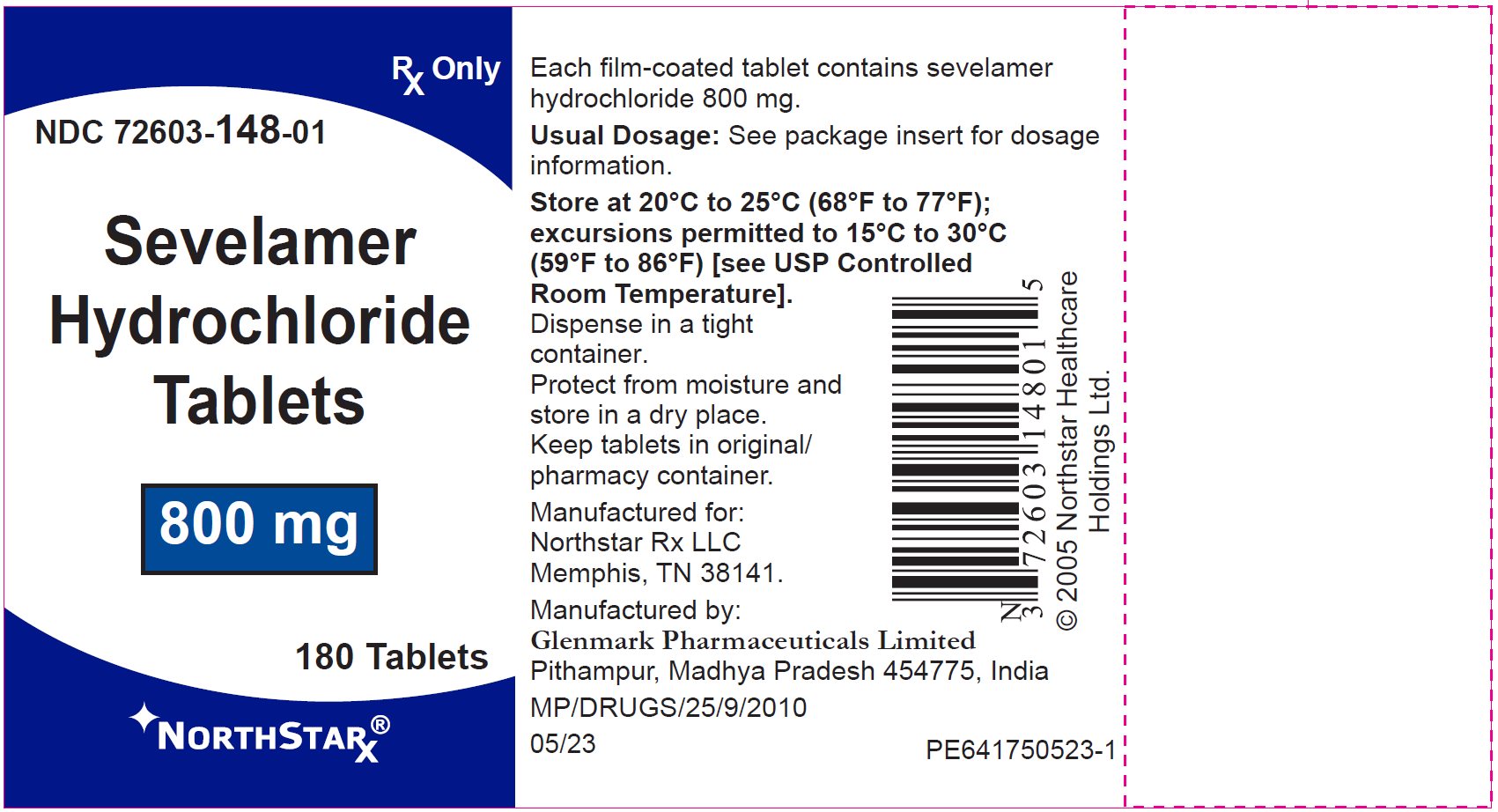
sevelamer carbonate 2400 MG Powder for Oral Suspensionsevelamer carbonate 800 MG Oral Tabletsevelamer carbonate 800 MG Powder for Oral Suspensionsevelamer hydrochloride 400 MG Oral Tabletsevelamer hydrochloride 800 MG Oral Tabletsevelamer carbonate 2400 MG Powder for Oral Suspension [Renvela]brandsevelamer carbonate 800 MG Oral Tablet [Renvela]brandsevelamer carbonate 800 MG Powder for Oral Suspension [Renvela]brandsevelamer hydrochloride 800 MG Oral Tablet [RenaGel]brand
NDC examples
55111-78924979-18617856-092168094-03411788-11669097-96771335-302170710-217051407-7060955-10500955-10520955-1054
Indicated ICD-10 codes
Treats these conditions
Source: openFDA + RxNorm · 2026
Look up another medication