Tafluprost
Managing this medication for someone you care for? Eleplan keeps diagnoses, medications and appointments in one plan.
Start free with EleplanMedication reference
Tafluprost
Prostaglandin Analog [EPC] — OPHTHALMIC
Tafluprost — Prostaglandin Analog [EPC]. INDICATIONS AND USAGE Tafluprost ophthalmic solution, 0.0015% is indicated for reducing elevated intraocular pressure in patients with open-angle…
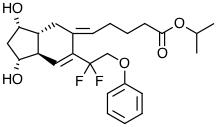
Brand names
TafluprostTafluprost Ophthalmic
Active ingredients
TAFLUPROST
Indications
INDICATIONS AND USAGE Tafluprost ophthalmic solution, 0.0015% is indicated for reducing elevated intraocular pressure in patients with open-angle glaucoma or ocular hypertension. Tafluprost ophthalmic solution, 0.0015% is a prostaglandin analog indicated for reducing elevated intraocular pressure in patients with open-angle glaucoma or ocular hypertension. ( 1 )
Dosage
DOSAGE AND ADMINISTRATION The recommended dose is one drop of tafluprost ophthalmic solution in the conjunctival sac of the affected eye(s) once daily in the evening. The dose should not exceed once daily since it has been shown that more frequent administration of prostaglandin analogs may lessen the intraocular pressure lowering effect. Reduction of the intraocular pressure starts approximately 2 to 4 hours after the first administration with the maximum effect reached after 12 hours. Tafluprost ophthalmic solution may be used concomitantly with other topical ophthalmic drug products to lower intraocular pressure. If more than one topical ophthalmic product is being used, each one should be administered at least 5 minutes apart. The solution from one individual unit is to be used immediately after opening for administration to one or both eyes. Since sterility cannot be maintained after the individual unit is opened, the remaining contents should be discarded immediately after administration. One drop in the affected eye(s) once daily in the evening. ( 2 )
Warnings
WARNINGS AND PRECAUTIONS Pigmentation Pigmentation of the iris, periorbital tissue (eyelid) and eyelashes can occur. Iris pigmentation is likely to be permanent. ( 5.1 ) Eyelash Changes Gradual changes to eyelashes including increased length, thickness and number of lashes. Usually reversible. ( 5.2 ) 5.1 Pigmentation Tafluprost Ophthalmic Solution has been reported to cause changes to pigmented tissues. The most frequently reported changes have been increased pigmentation of the iris, periorbital tissue (eyelid) and eyelashes. Pigmentation is expected to increase as long as tafluprost is administered. The pigmentation change is due to increased melanin content in the melanocytes rather than to an increase in the number of melanocytes. After discontinuation of tafluprost, pigmentation of the iris is likely to be permanent, while pigmentation of the periorbital tissue and eyelash changes have been reported to be reversible in some patients. Patients who receive treatment should be informed of the possibility of increased pigmentation. The long term effects of increased pigmentation are not known. Iris color change may not be noticeable for several months to years. Typically, the brown pigmentation around the pupil spreads concentrically towards the periphery of the iris and the entire iris or parts of the iris become more brownish. Neither nevi nor freckles of the iris appear to be affected by treatment. While treatment with Tafluprost Ophthalmic Solution can be continued in patients who develop noticeably increased iris pigmentation, these patients should be examined regularly. [See Patient Counseling Information ( 17.3 )]. 5.2 Eyelash Changes Tafluprost Ophthalmic Solution may gradually change eyelashes and vellus hair in the treated eye. These changes include increased length, color, thickness, shape and number of lashes. Eyelash changes are usually reversible upon discontinuation of treatment. 5.3 Intraocular Inflammation Tafluprost Ophthalmic Solution should be used with caution in patients with active intraocular inflammation (e.g., iritis/uveitis) because the inflammation may be exacerbated. 5.4 Macular Edema Macular edema, including cystoid macular edema, has been reported during treatment with prostaglandin F2α analogs. Tafluprost Ophthalmic Solution should be used with caution in aphakic patients, in pseudophakic patients with a torn posterior lens capsule, or in patients with known risk factors for macular edema.
Contraindications
CONTRAINDICATIONS None. None. ( 4 )
Adverse reactions
ADVERSE REACTIONS Most common ocular adverse reaction is conjunctival hyperemia (range 4% – 20%). ( 6.1 ) To report SUSPECTED ADVERSE REACTIONS, contact Ingenus Pharmaceuticals, LLC at 1-877-748-1970 or FDA at 1-800-FDA-1088 or www.fda.gov/medwatch . 6.1 Clinical Studies Experience Because clinical studies are conducted under widely varying conditions, adverse reaction rates observed in the clinical studies of a drug cannot be directly compared to rates in the clinical studies of another drug and may not reflect the rates observed in practice. Preservative-containing or preservative-free tafluprost 0.0015% was evaluated in 905 patients in five controlled clinical studies of up to 24-months duration. The most common adverse reaction observed in patients treated with tafluprost was conjunctival hyperemia which was reported in a range of 4% to 20% of patients. Approximately 1% of patients discontinued therapy due to ocular adverse reactions. Ocular adverse reactions reported at an incidence of ≥ 2% in these clinical studies included ocular stinging/irritation (7%), ocular pruritus including allergic conjunctivitis (5%), cataract (3%), dry eye (3%), ocular pain (3%), eyelash darkening (2%), growth of eyelashes (2%) and vision blurred (2%). Nonocular adverse reactions reported at an incidence of 2% to 6% in these clinical studies in patients treated with tafluprost 0.0015% were headache (6%), common cold (4%), cough (3%) and urinary tract infection (2%). 6.2 Postmarketing Experience The following adverse reactions have been identified during postapproval use of tafluprost. Because postapproval adverse reactions are reported voluntarily from a population of uncertain size, it is not always possible to reliably estimate their frequency or establish a causal relationship to drug exposure. Respiratory disorders : exacerbation of asthma, dyspnea Eye disorders : iritis/uveitis In postmarketing use with prostaglandin analogs, periorbital and lid changes including deepening of the eyelid sulcus have been observed.
Mechanism of action
Mechanism of Action Tafluprost acid, a prostaglandin analog is a selective FP prostanoid receptor agonist which is believed to reduce intraocular pressure by increasing uveoscleral outflow. The exact mechanism of action is unknown at this time.
Available forms (2)
NDC examples
50742-33966993-429
Indicated ICD-10 codes
Treats these conditions
Source: openFDA + RxNorm · 2026
Look up another medication