Tiotropium
Managing this medication for someone you care for? Eleplan keeps diagnoses, medications and appointments in one plan.
Start free with EleplanMedication reference
Tiotropium
ORAL · RESPIRATORY (INHALATION)
Tiotropium. INDICATIONS AND USAGE SPIRIVA RESPIMAT is an anticholinergic indicated for: The long-term, once-daily, maintenance treatment of bronchospasm…
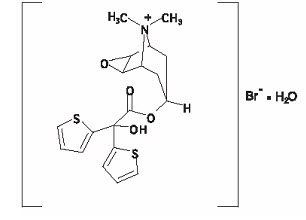
Brand names
Tiotropium BromideSpiriva HandiHalerSpiriva Respimat
Active ingredients
TIOTROPIUM BROMIDE MONOHYDRATETIOTROPIUM BROMIDE ANHYDROUS
Indications
INDICATIONS AND USAGE SPIRIVA RESPIMAT is an anticholinergic indicated for: The long-term, once-daily, maintenance treatment of bronchospasm associated with chronic obstructive pulmonary disease (COPD), and for reducing COPD exacerbations ( 1.1 ) The long-term, once-daily, maintenance treatment of asthma in patients 6 years of age and older ( 1.2 ) Limitation of Use: Not indicated for relief of acute bronchospasm ( 1.1 , 1.2 , 5.1 ) 1.1 Maintenance Treatment of Chronic Obstructive Pulmonary Disease SPIRIVA RESPIMAT (tiotropium bromide) is indicated for the long-term, once-daily, maintenance treatment of bronchospasm associated with chronic obstructive pulmonary disease (COPD), including chronic bronchitis and emphysema. SPIRIVA RESPIMAT is indicated to reduce exacerbations in COPD patients. Important Limitation of Use: SPIRIVA RESPIMAT is NOT indicated for the relief of acute bronchospasm. 1.2 Maintenance Treatment of Asthma SPIRIVA RESPIMAT is a bronchodilator indicated for the long-term, once-daily, maintenance treatment of asthma in patients 6 years of age and older . Important Limitation of Use: SPIRIVA RESPIMAT is NOT indicated for the relief of acute bronchospasm.
Dosage
DOSAGE AND ADMINISTRATION To receive the full dosage of medication, SPIRIVA RESPIMAT must be administered as two inhalations once-daily. Do not take more than one dose (2 inhalations) in 24 hours. Prior to first use, the SPIRIVA RESPIMAT cartridge is inserted into the SPIRIVA RESPIMAT inhaler and the unit is primed. When using the unit for the first time, patients are to actuate the inhaler toward the ground until an aerosol cloud is visible and then repeat the process three more times. The unit is then considered primed and ready for use. If not used for more than 3 days, patients are to actuate the inhaler once to prepare the inhaler for use. If not used for more than 21 days, patients are to actuate the inhaler until an aerosol cloud is visible and then repeat the process three more times to prepare the inhaler for use [see Patient Counseling Information (17) ]. For oral inhalation only. To receive the full dose of medication, SPIRIVA RESPIMAT must be administered as two inhalations once-daily. Treatment of COPD: 2 inhalations of SPIRIVA RESPIMAT 2.5 mcg once-daily. ( 2 ) Treatment of asthma patients 6 years and older: 2 inhalations of SPIRIVA RESPIMAT 1.25 mcg once-daily. ( 2 ) 2.1 Chronic Obstructive Pulmonary Disease The recommended dosage for patients with COPD is 2 inhalations of SPIRIVA RESPIMAT 2.5 mcg per actuation once-daily; total dose equals 5 mcg of SPIRIVA RESPIMAT. 2.2 Asthma The recommended dosage for patients with asthma is 2 inhalations of SPIRIVA RESPIMAT 1.25 mcg per actuation once-daily; total dose equals 2.5 mcg of SPIRIVA RESPIMAT. In the treatment of asthma, the maximum benefits in lung function may take up to 4 to 8 weeks of dosing [see Patient Counseling Information (17) ]. 2.3 Special Populations No dosage adjustment is required for geriatric, hepatically-impaired, or renally-impaired patients. However, patients with moderate to severe renal impairment given SPIRIVA RESPIMAT should be monitored closely for anticholinergic effects [see Warnings and Precautions (5.6) , Use in Specific Populations (8.5 , 8.6 , 8.7) , and Clinical Pharmacology (12.3) ] .
Warnings
WARNINGS AND PRECAUTIONS Not for acute use: Not a rescue medication ( 5.1 ) Immediate hypersensitivity reactions: Discontinue tiotropium bromide inhalation powder at once and consider alternatives if immediate hypersensitivity reactions, including angioedema, urticaria, rash, bronchospasm, or anaphylaxis, occur. Use with caution in patients with severe hypersensitivity to milk proteins. ( 5.2 ) Paradoxical bronchospasm: Discontinue tiotropium bromide inhalation powder and consider other treatments if paradoxical bronchospasm occurs ( 5.3 ) Worsening of narrow-angle glaucoma may occur. Use with caution in patients with narrow-angle glaucoma and instruct patients to consult a physician immediately if this occurs. ( 5.4 ) Worsening of urinary retention may occur. Use with caution in patients with prostatic hyperplasia or bladder-neck obstruction and instruct patients to consult a physician immediately if this occurs. ( 5.5 ) 5.1 Not for Acute Use Tiotropium bromide inhalation powder is intended as a once-daily maintenance treatment for COPD and should not be used for relief of acute symptoms, i.e., as rescue therapy for the treatment of acute episodes of bronchospasm. 5.2 Immediate Hypersensitivity Reactions Immediate hypersensitivity reactions, including urticaria, angioedema (including swelling of the lips, tongue, or throat), rash, bronchospasm, anaphylaxis, or itching, may occur after administration of tiotropium bromide inhalation powder. If such a reaction occurs, therapy with tiotropium bromide inhalation powder should be stopped at once and alternative treatments should be considered. Given the similar structural formula of atropine to tiotropium, patients with a history of hypersensitivity reactions to atropine or its derivatives should be closely monitored for similar hypersensitivity reactions to tiotropium bromide inhalation powder. In addition, tiotropium bromide inhalation powder should be used with caution in patients with severe hypersensitivity to milk proteins. 5.3 Paradoxical Bronchospasm Inhaled medicines, including tiotropium bromide inhalation powder, may cause paradoxical bronchospasm. If this occurs, it should be treated immediately with an inhaled short- acting beta 2 -agonist such as albuterol. Treatment with tiotropium bromide inhalation powder should be stopped and other treatments considered. 5.4 Worsening of Narrow-Angle Glaucoma Tiotropium bromide inhalation powder should be used with caution in patients with narrow-angle glaucoma. Prescribers and patients should be alert for signs and symptoms of acute narrow-angle glaucoma (e.g., eye pain or discomfort, blurred vision, visual halos or colored images in association with red eyes from conjunctival congestion and corneal edema). Instruct patients to consult a physician immediately should any of these signs or symptoms develop. 5.5 Worsening of Urinary Retention Tiotropium bromide inhalation powder should be used with caution in patients with urinary retention. Prescribers and patients should be alert for signs and symptoms of urinary retention (e.g., difficulty passing urine, painful urination), especially in patients with prostatic hyperplasia or bladder-neck obstruction. Instruct patients to consult a physician immediately should any of these signs or symptoms develop. 5.6 Renal Impairment As a predominantly renally excreted drug, patients with moderate to severe renal impairment (creatinine clearance of <60 mL/min) treated with tiotropium bromide inhalation powder should be monitored closely for anticholinergic side effects [see Clinical Pharmacology ( 12.3 )].
Contraindications
CONTRAINDICATIONS Tiotropium bromide inhalation powder is contraindicated in patients with a hypersensitivity to tiotropium, ipratropium, or any components of this product [see Warnings and Precautions ( 5.2 )] . In clinical trials and postmarketing experience with tiotropium bromide inhalation powder, immediate hypersensitivity reactions, including angioedema (including swelling of the lips, tongue, or throat), itching, or rash have been reported [see Warnings and Precautions ( 5.2 )] . Hypersensitivity to tiotropium, ipratropium, or any components of tiotropium bromide inhalation powder capsules ( 4 )
Drug interactions
DRUG INTERACTIONS Anticholinergics: May interact additively with concomitantly used anticholinergic medications. Avoid administration of SPIRIVA RESPIMAT with other anticholinergic-containing drugs. ( 7.2 ) 7.1 Concomitant Respiratory Medications SPIRIVA RESPIMAT has been used concomitantly with short-acting and long-acting sympathomimetic (beta-agonists) bronchodilators, methylxanthines, oral and inhaled steroids, antihistamines, mucolytics, leukotriene modifiers, cromones, and anti-IgE treatment without increases in adverse reactions. 7.2 Anticholinergics There is potential for an additive interaction with concomitantly used anticholinergic medications. Therefore, avoid coadministration of SPIRIVA RESPIMAT with other anticholinergic-containing drugs as this may lead to an increase in anticholinergic adverse effects [see Warnings and Precautions (5.4 , 5.5) and Adverse Reactions (6) ].
Adverse reactions
ADVERSE REACTIONS The following adverse reactions are described, or described in greater detail, in other sections: Immediate hypersensitivity reactions [see Warnings and Precautions (5.2) ] Paradoxical bronchospasm [see Warnings and Precautions (5.3) ] Worsening of narrow-angle glaucoma [see Warnings and Precautions (5.4) ] Worsening of urinary retention [see Warnings and Precautions (5.5) ] Because clinical trials are conducted under widely varying conditions, the incidence of adverse reactions observed in the clinical trials of a drug cannot be directly compared to the incidences in the clinical trials of another drug and may not reflect the incidences observed in practice. Since the same active ingredient (tiotropium bromide) is administered to COPD and asthma patients, prescribers and patients should take into account that the observed adverse reactions could be relevant for both patient populations independent of dosage strength. The most common adverse reactions in: COPD: (>3% incidence in the placebo-controlled trials with treatment durations of between 4 and 48 weeks) were pharyngitis, cough, dry mouth, and sinusitis. ( 6.1 ). Asthma: (>2% incidence in the placebo-controlled trials with treatment durations of between 12 and 52 weeks) were pharyngitis, headache, bronchitis, and sinusitis in adults. ( 6.2 ). To report SUSPECTED ADVERSE REACTIONS, contact Boehringer Ingelheim Pharmaceuticals, Inc. at 1-800-542-6257 or FDA at 1-800-FDA-1088 or www.fda.gov/medwatch . 6.1 Clinical Trials Experience in Chronic Obstructive Pulmonary Disease The SPIRIVA RESPIMAT clinical development program included ten placebo controlled clinical trials in COPD. Two trials were four-week cross-over trials and eight were parallel group trials. The parallel group trials included a three-week dose-ranging trial, two 12-week trials, three 48-week trials, and two trials of 4-week and 24-week duration conducted for a different program that contained tiotropium bromide 5 mcg treatment arms. The primary safety database consists of pooled data from the 7 randomized, parallel-group, double-blind, placebo-controlled studies of 4-48 weeks in treatment duration. These trials included 6,565 adult COPD patients (75% males and 25% females) 40 years of age and older. Of these patients, 3,282 patients were treated with SPIRIVA RESPIMAT 5 mcg and 3,283 received placebo. The SPIRIVA RESPIMAT 5 mcg group was composed mostly of Caucasians (78%) with a mean age of 65 years and a mean baseline percent predicted post-bronchodilator FEV 1 of 46%. In these 7 clinical trials, 68.3% of patients exposed to SPIRIVA RESPIMAT 5 mcg reported an adverse event compared to 68.7% of patients in the placebo group. There were 68 deaths in the SPIRIVA RESPIMAT 5 mcg treatment group (2.1%) and 52 deaths (1.6%) in patients who received placebo [see Clinical Studies (14) Long-term Active-Controlled Mortality Trial: Survival ] . The percentage of SPIRIVA RESPIMAT patients who discontinued due to an adverse event were 7.3% compared to 10% with placebo patients. The percentage of SPIRIVA RESPIMAT 5 mcg patients who experienced a serious adverse event were 15.0% compared to 15.1% with placebo patients. In both groups, the adverse event most commonly leading to discontinuation was COPD exacerbation (SPIRIVA RESPIMAT 2.0%, placebo 4.0%) which was also the most frequent serious adverse event. The most commonly reported adverse reactions were pharyngitis, cough, dry mouth, and sinusitis (Table 1). Other adverse reactions reported in individual patients and consistent with possible anticholinergic effects included constipation, dysuria, and urinary retention. Table 1 shows all adverse reactions that occurred with an incidence of >3% in the SPIRIVA RESPIMAT 5 mcg treatment group, and a higher incidence rate on SPIRIVA RESPIMAT 5 mcg than on placebo. Table 1 Number (Percentage) of COPD Patients Exposed to SPIRIVA RESPIMAT 5 mcg with Adverse Reactions >3% (and Higher than Placebo): Pooled Data from 7 Clinical Trials with Treatment Periods Ranging between 4 and 48 Weeks in COPD Patients Body System (Reaction)* SPIRIVA RESPIMAT 5 mcg [n=3,282] Placebo [n=3,283] *Adverse reactions include a grouping of similar terms Gastrointestinal Disorders Dry mouth 134 (4.1) 52 (1.6) Infections and Infestations Pharyngitis 378 (11.5) 333 (10.1) Respiratory, Thoracic, and Mediastinal Disorders Cough 190 (5.8) 182 (5.5) Sinusitis 103 (3.1) 88 (2.7) Other reactions that occurred in the SPIRIVA RESPIMAT 5 mcg group at an incidence of 1% to 3% and at a higher incidence rate on SPIRIVA RESPIMAT 5 mcg than on placebo included: Cardiac disorders: palpitations; Gastrointestinal disorders: constipation, gastroesophageal reflux disease, oropharyngeal candidiasis; Nervous system disorders: dizziness; Respiratory, thoracic, and mediastinal disorders: dysphonia; Skin and subcutaneous tissue disorders: pruritus, rash; Renal and urinary disorders: urinary tract infection. Less Common Adverse Reactions Among the adverse reactions observed in the clinical trials with an incidence of <1% and at a higher incidence rate on SPIRIVA RESPIMAT 5 mcg than on placebo were: dysphagia, gingivitis, intestinal obstruction including ileus paralytic, joint swelling, dysuria, urinary retention, epistaxis, laryngitis, angioedema, dry skin, skin infection, and skin ulcer. 6.2 Clinical Trials Experience in Asthma Adult Patients SPIRIVA RESPIMAT 2.5 mcg has been compared to placebo in four placebo-controlled parallel-group trials ranging from 12 to 52 weeks of treatment duration in adult patients (aged 18 to 75 years) with asthma. The safety data described below are based on one 1-year, two 6-month and one 12-week randomized, double-blind, placebo-controlled trials in a total of 2,849 asthma patients on background treatment of at least ICS or ICS and long-acting beta agonist (ICS/LABA). Of these patients, 787 were treated with SPIRIVA RESPIMAT at the recommended dosage of 2.5 mcg once-daily; 59.7% were female and 47.5% were Caucasian with a mean age of 43.7 years and a mean post-bronchodilator percent predicted forced expiratory volume in 1 second (FEV 1 ) of 90.0% at baseline. Table 2 shows all adverse reactions that occurred with an incidence of >2% in the SPIRIVA RESPIMAT 2.5 mcg treatment group, and a higher incidence rate on SPIRIVA RESPIMAT 2.5 mcg than on placebo. Table 2 Number (Percentage) of Asthma Patients Exposed to SPIRIVA RESPIMAT 2.5 mcg with Adverse Reactions >2% (and Higher than Placebo): Pooled Data from 4 Adult Clinical Trials with Treatment Periods Ranging between 12 and 52 Weeks in Asthma Patients Body System (Reaction)* SPIRIVA RESPIMAT 2.5 mcg [n=787] Placebo [n=735] *Adverse reactions include a grouping of similar terms Respiratory, Thoracic, and Mediastinal Disorders Pharyngitis 125 (15.9) 91 (12.4) Sinusitis 21 (2.7) 10 (1.4) Bronchitis 26 (3.3) 10 (1.4) Nervous System Disorders Headache 30 (3.8) 20 (2.7) Other reactions that occurred in the SPIRIVA RESPIMAT 2.5 mcg group at an incidence of 1% to 2% and at a higher incidence rate on SPIRIVA RESPIMAT 2.5 mcg than on placebo included: Nervous system disorders: dizziness; Gastrointestinal disorders: oropharyngeal candidiasis, diarrhea; Respiratory, thoracic, and mediastinal disorders: cough, rhinitis allergic; Renal and urinary disorders: urinary tract infection; General disorders and administration site conditions: pyrexia; and Vascular disorders: hypertension. Less Common Adverse Reactions Among the adverse reactions observed in the clinical trials with an incidence of 0.5% to <1% and at a higher incidence rate on SPIRIVA RESPIMAT 2.5 mcg than on placebo were: palpitations, dysphonia, acute tonsillitis, tonsillitis, rhinitis, herpes zoster, gastroesophageal reflux disease, oropharyngeal discomfort, abdominal pain upper, insomnia, hypersensitivity (including immediate reactions), angioedema, dehydration, arthralgia, muscle spasms, pain in extremity, chest pain, hepatic function abnormal, liver func
Mechanism of action
Mechanism of Action Tiotropium is a long-acting, antimuscarinic agent, which is often referred to as an anticholinergic. It has similar affinity to the subtypes of muscarinic receptors, M 1 to M 5 . In the airways, it exhibits pharmacological effects through inhibition of M 3 -receptors at the smooth muscle leading to bronchodilation. The competitive and reversible nature of antagonism was shown with human and animal origin receptors and isolated organ preparations. In preclinical in vitro as well as in vivo studies, prevention of methacholine-induced bronchoconstriction effects was dose-dependent and lasted longer than 24 hours. The bronchodilation following inhalation of tiotropium is predominantly a site-specific effect.
Available forms (2)
NDC examples
68180-9640597-00750597-01000597-0160
Source: openFDA + RxNorm · 2026
Look up another medication