Tremelimumab
Managing this medication for someone you care for? Eleplan keeps diagnoses, medications and appointments in one plan.
Start free with EleplanMedication reference
Tremelimumab
CTLA-4-directed Blocking Antibody [EPC] — INTRAVENOUS
Tremelimumab — CTLA-4-directed Blocking Antibody [EPC]. INDICATIONS AND USAGE IMJUDO is a cytotoxic T-lymphocyte-associated antigen 4 (CTLA-4) blocking antibody indicated: • in combination with…
Brand names
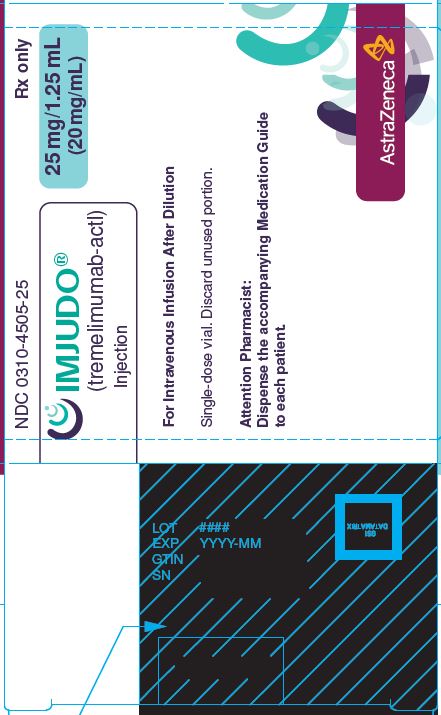
IMJUDO
Active ingredients
TREMELIMUMAB
Indications
INDICATIONS AND USAGE IMJUDO is a cytotoxic T-lymphocyte-associated antigen 4 (CTLA-4) blocking antibody indicated: • in combination with durvalumab, for the treatment of adult patients with unresectable hepatocellular carcinoma (uHCC). ( 1.1 ) • in combination with durvalumab and platinum-based chemotherapy for the treatment of adult patients with metastatic non-small cell lung cancer (NSCLC) with no sensitizing epidermal growth factor receptor (EGFR) mutation or anaplastic lymphoma kinase (ALK) genomic tumor aberrations. ( 1.2 ) 1.1 Hepatocellular Carcinoma IMJUDO, in combination with durvalumab, is indicated for the treatment of adult patients with unresectable hepatocellular carcinoma (uHCC). 1.2 Non-Small Cell Lung Cancer (NSCLC) IMJUDO, in combination with durvalumab and platinum-based chemotherapy, is indicated for the treatment of adult patients with metastatic NSCLC with no sensitizing epidermal growth factor receptor (EGFR) mutations or anaplastic lymphoma kinase (ALK) genomic tumor aberrations.
Dosage
DOSAGE AND ADMINISTRATION • Administer IMJUDO as an intravenous infusion over 60 minutes after dilution. ( 2.3 ) • uHCC: Weight 30 kg and more: IMJUDO 300 mg as a single dose in combination with durvalumab 1,500 mg at Cycle 1/Day 1, followed by durvalumab as a single agent every 4 weeks ( 2.1 ) Weight less than 30 kg: IMJUDO 4 mg/kg as a single dose in combination with durvalumab 20 mg/kg at Cycle 1/Day 1, followed by durvalumab as a single agent every 4 weeks ( 2.1 ) • Metastatic NSCLC: Weight 30 kg and more: 75 mg every 3 weeks in combination with durvalumab 1,500 mg and platinum-based chemotherapy for 4 cycles, and then administer durvalumab 1,500 mg every 4 weeks as a single agent with histology-based pemetrexed therapy every 4 weeks, and a fifth dose of IMJUDO 75 mg in combination with durvalumab dose 6 at week 16 ( 2.1 ) Weight less than 30 kg: 1 mg/kg every 3 weeks in combination with durvalumab 20 mg/kg and platinum-based chemotherapy for 4 cycles, and then administer durvalumab 20 mg/kg every 4 weeks as a single agent with histology-based pemetrexed therapy every 4 weeks, and a fifth dose of IMJUDO 1 mg/kg in combination with durvalumab dose 6 at week 16 ( 2.1 ) • See full Prescribing Information for preparation and administration instructions and dosage modifications for adverse reactions. 2.1 Recommended Dosage The recommended dosages of IMJUDO are presented in Tables 1, 2 and 3. Administer IMJUDO as an intravenous infusion after dilution as recommended [see Dosage and Administration (2.3) ]. IMJUDO in Combination with Durvalumab Table 1. Recommended dosage of IMJUDO Indication Recommended IMJUDO Dosage Duration of Therapy uHCC Patients with a body weight of 30 kg and more : • A single dose of IMJUDO Administer IMJUDO prior to durvalumab on the same day. 300 mg followed by durvalumab Refer to the Prescribing Information for durvalumab dosing information. 1,500 mg at Day 1 of Cycle 1; • Continue durvalumab 1,500 mg as a single agent every 4 weeks Patients with a body weight of less than 30 kg: • A single dose of IMJUDO 4 mg/kg followed by durvalumab 20 mg/kg at Day 1 of Cycle 1; • Continue durvalumab 20 mg/kg as a single agent every 4 weeks After Cycle 1 of combination therapy, administer durvalumab as a single agent every 4 weeks until disease progression or unacceptable toxicity IMJUDO in Combination with Durvalumab and Platinum-Based Chemotherapy The recommended dosage schedule and regimens for IMJUDO for the treatment of metastatic non-small cell lung cancer (NSCLC) are provided in Tables 2 and 3. Weigh patients prior to each infusion. Calculate the appropriate dose using Table 3 below based on the patient’s weight and tumor histology. Table 2: Recommended Dosage Schedule Week continue durvalumab until disease progression or intolerable toxicity. , dosing interval change from every 3 weeks to every 4 weeks starting at cycle 5. 0 1 2 3 4 5 6 7 8 9 10 11 12 13 14 15 16 17 18 19 20 21 22 23 24 Cycle: 1 2 3 4 5 6 7 8 IMJUDO intravenous infusion over 60 minutes [see Dosage and Administration (2.3) ]. , if patients receive fewer than 4 cycles of platinum-based chemotherapy, the remaining cycles of IMJUDO (up to a total of 5) should be given after the platinum-based chemotherapy phase, in combination with durvalumab, every 4 weeks. X X X X X Durvalumab , X X X X X X X X Chemotherapy X X X X X optional pemetrexed therapy from week 12 until disease progression or intolerable toxicity for patients with non-squamous disease who received treatment with pemetrexed and carboplatin/cisplatin. X X X Table 3: Recommended Regimen and Dosage Tumor Histology Patient Weight IMJUDO Dosage Durvalumab Refer to the Prescribing Information for dosing information. Dosage Platinum-based Chemotherapy Regimen Non-Squamous ≥ 30 kg 75 mg 1,500 mg • carboplatin & nab-paclitaxel OR • carboplatin or cisplatin & pemetrexed < 30 kg 1 mg/kg 20 mg/kg Squamous ≥ 30 kg 75 mg 1,500 mg • carboplatin & nab-paclitaxel OR • carboplatin or cisplatin & gemcitabine < 30 kg 1 mg/kg 20 mg/kg 2.2 Dosage Modifications for Adverse Reactions No dose reduction for treatment is recommended. In general, withhold treatment regimen for severe (Grade 3) immune-mediated adverse reactions. Permanently discontinue treatment regimen for life-threatening (Grade 4) immune-mediated adverse reactions, recurrent severe (Grade 3) immune-mediated reactions that require systemic immunosuppressive treatment, or an inability to reduce corticosteroid dose to 10 mg or less of prednisone or equivalent per day within 12 weeks of initiating corticosteroids. Recommended treatment modifications are presented in Table 4. Table 4. Recommended Dosage Modifications for Adverse Reactions Adverse Reaction Severity Based on National Cancer Institute Common Terminology Criteria for Adverse Events, version 4.03. Dosage Modification Immune-Mediated Adverse Reactions [see Warnings and Precautions (5.1) ] Pneumonitis Grade 2 Withhold Resume in patients with complete or partial resolution (Grade 0 to 1) after corticosteroid taper. Permanently discontinue if no complete or partial resolution within 12 weeks of initiating steroids or an inability to reduce corticosteroid dose to 10 mg of prednisone or less per day (or equivalent) within 12 weeks of initiating corticosteroids. Grade 3 or 4 Permanently discontinue Colitis Grade 2 Withhold Grade 3 or 4 Permanently discontinue Intestinal perforation Any grade Permanently discontinue Hepatitis with no tumor involvement of the liver ALT or AST increases to more than 3 and up to 8 times the ULN or total bilirubin increases to more than 1.5 and up to 3 times ULN Withhold ALT or AST increases to more than 8 times ULN or total bilirubin increases to more than 3 times the ULN Permanently discontinue Hepatitis with tumor involvement of the liver If AST and ALT are less than or equal to ULN at baseline in patients with liver involvement, withhold or permanently discontinue durvalumab based on recommendations for hepatitis with no liver involvement. AST or ALT is more than 1 and up to 3 times ULN at baseline and increases to more than 5 and up to 10 times ULN or AST or ALT is more than 3 and up to 5 times ULN at baseline and increases to more than 8 and up to 10 times ULN Withhold AST or ALT increases to more than 10 times ULN or Total bilirubin increases to more than 3 times ULN Permanently discontinue Endocrinopathies Grade 3 or 4 Withhold until clinically stable or permanently discontinue depending on severity Nephritis with Renal Dysfunction Grade 2 or 3 increased blood creatinine Withhold Grade 4 increased blood creatinine Permanently discontinue Exfoliative Dermatologic Conditions Suspected SJS, TEN, or DRESS Withhold Confirmed SJS, TEN, or DRESS Permanently discontinue Myocarditis Grade 2, 3, or 4 Permanently discontinue Neurological Toxicities Grade 2 Withhold Grade 3 or 4 Permanently discontinue Other Adverse Reactions Infusion-related reactions [see Warnings and Precautions (5.2) ] Grade 1 or 2 Interrupt or slow the rate of infusion Grade 3 or 4 Permanently discontinue ALT = alanine aminotransferase, AST = aspartate aminotransferase, DRESS = Drug Rash with Eosinophilia and Systemic Symptoms, SJS = Stevens Johnson Syndrome, TEN = toxic epidermal necrolysis, ULN = upper limit normal 2.3 Preparation and Administration Preparation • Visually inspect drug product for particulate matter and discoloration. Discard if the solution is cloudy, discolored, or visible particles are observed. • Do not shake the vial. • Withdraw the required volume from the vial(s) of IMJUDO and discard the vial with any unused portion. • Transfer into an intravenous bag containing 0.9% Sodium Chloride Injection, USP or 5% Dextrose Injection, USP and dilute to a concentration between 0.1 mg/mL and 10 mg/mL. Mix diluted solution by gentle inversion. Do not shake the solution. Storage of Diluted IMJUDO Infusion Solution • IMJUDO does not contain a preservative. Administer infusion solution immediately once prepared.
Warnings
WARNINGS AND PRECAUTIONS • Immune-Mediated Adverse Reactions ( 5.1 ) Immune-mediated adverse reactions, which may be severe or fatal, can occur in any organ system or tissue, including the following: immune-mediated pneumonitis, immune-mediated colitis, immune-mediated hepatitis, immune-mediated endocrinopathies, immune-mediated nephritis with renal dysfunction, immune-mediated dermatologic adverse reactions and immune-mediated pancreatitis. o Monitor for early identification and management. Evaluate liver enzymes, creatinine, adrenocorticotropic hormone level and thyroid function at baseline and before each dose. o Withhold or permanently discontinue based on severity and type of reaction. • Infusion-Related Reactions: Interrupt, slow the rate of infusion, or permanently discontinue treatment based on the severity of the reaction. ( 5.2 ) • Embryo-Fetal Toxicity: Can cause fetal harm. Advise females of reproductive potential of the potential risk to a fetus and use of effective contraception. ( 5.3 , 8.1 , 8.3 ) 5.1 Severe and Fatal Immune-Mediated Adverse Reactions IMJUDO is a monoclonal antibody that blocks T-cell inhibitory signals induced by the CTLA-4 pathway, thereby removing inhibition of the immune response. In combination with durvalumab, a PD-L1 inhibitor, these drugs have the potential for induction of immune-mediated adverse reactions. Immune-mediated adverse reactions listed herein may not be inclusive of all possible severe and fatal immune-mediated reactions. Immune-mediated adverse reactions, which may be severe or fatal, can occur in any organ system or tissue. Immune-mediated adverse reactions can occur at any time after starting IMJUDO in combination with durvalumab. While immune-mediated adverse reactions usually manifest during treatment, immune-mediated adverse reactions can also manifest after discontinuation of IMJUDO and/or durvalumab. Early identification and management of immune-mediated adverse reactions are essential to ensure safe use of IMJUDO in combination with durvalumab. Monitor for signs and symptoms that may be clinical manifestations of underlying immune-mediated adverse reactions. Evaluate clinical chemistries including liver enzymes, creatinine, adrenocorticotropic hormone (ACTH) level, and thyroid function at baseline and before each dose. Institute medical management promptly, including specialty consultation as appropriate. Withhold or permanently discontinue IMJUDO and durvalumab depending on severity [see Dosage and Administration (2.2) ] . In general, if combination of IMJUDO and durvalumab requires interruption or discontinuation, administer systemic corticosteroid therapy (1 to 2 mg/kg/day prednisone or equivalent) until improvement to Grade 1 or less. Upon improvement to Grade 1 or less, initiate corticosteroid taper and continue to taper over at least 1 month. Consider administration of other systemic immunosuppressants in patients whose immune-mediated adverse reactions are not controlled with corticosteroid therapy. Toxicity management guidelines for adverse reactions that do not necessarily require systemic steroids (e.g., endocrinopathies and dermatologic reactions) are discussed below. Immune-Mediated Pneumonitis IMJUDO in combination with durvalumab can cause immune-mediated pneumonitis, which may be fatal. IMJUDO with Durvalumab Immune-mediated pneumonitis occurred in 1.3% (5/388) of patients receiving IMJUDO in combination with durvalumab, including fatal (0.3%) and Grade 3 (0.2%) adverse reactions. Events resolved in 3 of the 5 patients and resulted in permanent discontinuation in 1 patient. Systemic corticosteroids were required in all patients; of these, 4 patients required high-dose corticosteroid treatment (at least 40 mg prednisone or equivalent per day). One patient (1/5) required other immunosuppressants. IMJUDO with Durvalumab and Platinum-Based Chemotherapy Immune-mediated pneumonitis occurred in 3.5% (21/596) of patients receiving IMJUDO in combination with durvalumab and platinum-based chemotherapy, including fatal (0.5%) and Grade 3 (1%) adverse reactions. Events resolved in 11 of the 21 patients and resulted in permanent discontinuation in 7 patients. Systemic corticosteroids were required in all patients with immune-mediated pneumonitis, while 1 patient (1/21) required other immunosuppressants . Immune-Mediated Colitis IMJUDO in combination with durvalumab and platinum-based chemotherapy can cause immune-mediated colitis, which may be fatal. IMJUDO in combination with durvalumab can cause immune-mediated colitis that is frequently associated with diarrhea. Cytomegalovirus (CMV) infection/reactivation has been reported in patients with corticosteroid-refractory immune-mediated colitis. In cases of corticosteroid-refractory colitis, consider repeating infectious workup to exclude alternative etiologies. IMJUDO with Durvalumab Immune-mediated colitis or diarrhea occurred in 6% (23/388) of patients receiving IMJUDO in combination with durvalumab, including Grade 3 (3.6%) adverse reactions. Events resolved in 22 of the 23 patients and resulted in permanent discontinuation in 5 patients. All patients received systemic corticosteroids, and 20 of the 23 patients received high-dose corticosteroid treatment (at least 40 mg prednisone or equivalent per day). Three patients also received other immunosuppressants. Intestinal perforation has been observed in other studies of IMJUDO in combination with durvalumab. IMJUDO with Durvalumab and Platinum-Based Chemotherapy Immune-mediated colitis occurred in 6.5% (39/596) of patients receiving IMJUDO in combination with durvalumab and platinum-based chemotherapy, including fatal (0.2%) and Grade 3 (2.5%) adverse reactions. Events resolved in 33 of the 39 patients and resulted in permanent discontinuation in 11 patients. Systemic corticosteroids were required in all patients with immune-mediated colitis, while 4 patients (4/39) required other immunosuppressants. Intestinal perforation and large intestine perforation were reported in 0.1% of patients receiving IMJUDO in combination with durvalumab. Immune-Mediated Hepatitis IMJUDO in combination with durvalumab can cause immune-mediated hepatitis, which may be fatal. IMJUDO with Durvalumab Immune-mediated hepatitis occurred in 7.5% (29/388) of patients receiving IMJUDO in combination with durvalumab, including fatal (0.8%), Grade 4 (0.3%), and Grade 3 (4.1%) adverse reactions. Events resolved in 12 of the 29 patients and resulted in permanent discontinuation in 9 patients. Systemic corticosteroids were required in all 29 patients and all 29 patients required high-dose corticosteroid treatment (at least 40 mg prednisone or equivalent per day). Eight patients (8/29) required other immunosuppressants. IMJUDO with Durvalumab and Platinum-Based Chemotherapy Immune-mediated hepatitis occurred in 3.9% (23/596) of patients receiving IMJUDO in combination with durvalumab and platinum-based chemotherapy, including fatal (0.3%), Grade 4 (0.5%), and Grade 3 (2%) adverse reactions. Events resolved in 12 of the 23 patients and resulted in permanent discontinuation in 27 patients. Systemic corticosteroids were required in all patients with immune-mediated hepatitis, while 2 patients (2/23) required use of other immunosuppressants. Immune-Mediated Endocrinopathies Adrenal Insufficiency : IMJUDO in combination with durvalumab can cause primary or secondary adrenal insufficiency. For Grade 2 or higher adrenal insufficiency, initiate symptomatic treatment, including hormone replacement as clinically indicated. Withhold or permanently discontinue IMJUDO in combination with durvalumab based on the severity [see Dosage and Administration (2.2) ]. IMJUDO with Durvalumab Immune-mediated adrenal insufficiency occurred in 1.5% (6/388) of patients receiving IMJUDO in combination with durvalumab, including Grade 3 (0.3%) adverse reactions. Events resolved in 2 of the 6 patients. Systemic corticosteroids were required in all
Contraindications
CONTRAINDICATIONS None. None. ( 4 )
Adverse reactions
ADVERSE REACTIONS The following adverse reactions are discussed in greater detail in other sections of the labeling. • Immune-Mediated Adverse Reactions [see Warnings and Precautions (5.1) ] . • Infusion-Related Reactions [see Warnings and Precautions (5.2) ]. Most common adverse reactions (≥ 20%) of patients with uHCC are rash, diarrhea, fatigue, pruritus, musculoskeletal pain, and abdominal pain. Most common laboratory abnormalities (≥ 40%) of patients with uHCC are AST increased, ALT increased, hemoglobin decreased, sodium decreased, bilirubin increased, alkaline phosphatase increased, and lymphocytes decreased. ( 6.1 ) Most common adverse reactions (≥ 20%) of patients with metastatic NSCLC were nausea, fatigue, musculoskeletal pain, decreased appetite, rash, and diarrhea. ( 6.1 ) To report SUSPECTED ADVERSE REACTIONS, contact AstraZeneca at 1-800-236-9933 or FDA at 1-800-FDA-1088 or www.fda.gov/medwatch. 6.1 Clinical Trials Experience Because clinical trials are conducted under widely varying conditions, adverse reaction rates observed in clinical trials of a drug cannot be directly compared to rates in the clinical trials of another drug and may not reflect the rates observed in practice. The data described in the Warnings and Precautions reflect exposure to IMJUDO 300 mg in combination with durvalumab 1,500 mg in 388 patients in HIMALAYA. In the HIMALAYA study patients received IMJUDO 300 mg administered as a single intravenous infusion in combination with durvalumab 1,500 mg on the same day, followed by durvalumab every 4 weeks. The data also reflects exposure to IMJUDO 75 mg in combination with durvalumab 1,500 mg and histology-based platinum chemotherapy regimens in the pooled safety population (N=596) of 330 patients in POSEIDON [see Clinical Studies (14.1) ] , and 266 patients in CASPIAN who received up to four cycles of platinum-etoposide plus durvalumab 1,500 mg with tremelimumab-actl 75 mg every 3 weeks, followed by durvalumab 1,500 mg every 4 weeks (an unapproved regimen for extensive-stage small cell lung cancer). Of these patients, 64% received the maximum of 5 doses of IMJUDO and 79% received at least 4 doses. In this pooled safety population, the most common (> 20%) adverse reactions were nausea (37%), decreased appetite (25%), and fatigue (22%). In this pooled safety population, the most common Grade 3 or 4 (> 10%) laboratory abnormalities were neutropenia (39%), leukopenia (21%), lymphocytopenia (20%), anemia (20%), hyponatremia (14%), lipase increased (12%), and thrombocytopenia (11%). The data described in this section reflect exposure to IMJUDO in patients with uHCC included in the HIMALAYA study and in patients with metastatic NSCLC enrolled in the POSEIDON study. Hepatocellular Carcinoma Unresectable HCC - HIMALAYA The safety of IMJUDO administered in combination with durvalumab was evaluated in a total of 388 patients with uHCC in HIMALAYA, a randomized, open-label, multicenter study [see Clinical Studies (14.1) ] . Patients received IMJUDO 300 mg administered as a single intravenous infusion in combination with durvalumab 1,500 mg on the same day, followed by durvalumab every 4 weeks or sorafenib 400 mg given orally twice daily. Serious adverse reactions occurred in 41% of patients who received IMJUDO in combination with durvalumab. Serious adverse reactions in > 1% of patients included hemorrhage (6%), diarrhea (4%), sepsis (2.1%), pneumonia (2.1%), rash (1.5%), vomiting (1.3%), acute kidney injury (1.3%), and anemia (1.3%). Fatal adverse reactions occurred in 8% of patients who received IMJUDO in combination with durvalumab, including death (1%), hemorrhage intracranial (0.5%), cardiac arrest (0.5%), pneumonitis (0.5%), hepatic failure (0.5%), and immune-mediated hepatitis (0.5%). The most common adverse reactions (occurring in ≥ 20% of patients) were rash, diarrhea, fatigue, pruritus, musculoskeletal pain, and abdominal pain. Permanent discontinuation of the treatment regimen due to an adverse reaction occurred in 14% of patients; the most common adverse reactions leading to treatment discontinuation (≥ 1%) were hemorrhage (1.8%), diarrhea (1.5%), AST increased (1%), and hepatitis (1%). Dosage interruptions or delay of the treatment regimen due to an adverse reaction occurred in 35% of patients. Adverse reactions which required dosage interruption or delay in ≥ 1% of patients included ALT increased (3.6%), diarrhea (3.6%), rash (3.6%), amylase increased (3.4%), AST increased (3.1%), lipase increased (2.8%), pneumonia (1.5%), hepatitis (1.5%), pyrexia (1.5%), anemia (1.3%), thrombocytopenia (1%), hyperthyroidism (1%), pneumonitis (1%), and blood creatinine increased (1%). Table 5 summarizes the adverse reactions that occurred in patients treated with IMJUDO in combination with durvalumab in the HIMALAYA study. Table 5. Adverse Reactions Occurring in ≥ 10% Patients in the HIMALAYA study IMJUDO and Durvalumab (N=388) Sorafenib (N=374) Adverse Reaction All Grades (%) Grade 3-4 (%) All Grades (%) Grade 3-4 (%) Gastrointestinal disorders Diarrhea Represents a composite of multiple related terms. 27 6 45 4.3 Abdominal pain 20 1.8 24 4 Nausea 12 0 14 0 Skin and subcutaneous tissue disorders Rash 32 2.8 57 12 Pruritus 23 0 6 0.3 Metabolism and nutrition disorders Decreased appetite 17 1.3 18 0.8 General disorders and administration site conditions Fatigue 26 3.9 30 6 Pyrexia 13 0.3 9 0.3 Psychiatric disorders Insomnia 10 0.3 4.3 0 Endocrine disorders Hypothyroidism 14 0 6 0 Musculoskeletal and Connective Tissue Disorders Musculoskeletal pain 22 2.6 17 0.8 Table 6 summarizes the laboratory abnormalities that occurred in patients treated with IMJUDO in combination with durvalumab in the HIMALAYA study. Table 6. Laboratory Abnormalities Worsening from Baseline Occurring in ≥ 20% of Patients in the HIMALAYA study IMJUDO and Durvalumab Sorafenib Laboratory Abnormality Any grade (%) Grade 3 or 4 (%) Any grade (%) Grade 3 or 4 (%) Chemistry Aspartate Aminotransferase increased 63 27 55 21 Alanine Aminotransferase increased 56 18 53 12 Sodium decreased 46 15 40 11 Bilirubin increased 41 8 47 11 Alkaline Phosphatase increased 41 8 44 5 Glucose increased 39 14 29 4 Calcium decreased 34 0 43 0.3 Albumin decreased 31 0.5 37 1.7 Potassium increased 28 3.8 21 2.6 Creatinine increased 21 1.3 15 0.9 Hematology Hemoglobin decreased 52 4.8 40 6 Lymphocytes decreased 41 11 39 10 Platelets decreased 29 1.6 35 3.1 Leukocytes decreased 20 0.8 30 1.1 Non-Small Cell Lung Cancer Metastatic NSCLC – POSEIDON The safety of IMJUDO in combination with durvalumab and platinum-based chemotherapy in patients with metastatic NSCLC was evaluated in POSEIDON (NCT03164616), a randomized, open-label, multicenter, active-controlled trial. A total of 330 patients received IMJUDO (≥ 30 kg body weight received 75 mg and ≤ 30kg body weight received 1 mg/kg) in combination with durvalumab 1,500 mg and histology-based platinum chemotherapy regimens [see Clinical Studies (14.2) ] . Of these patients, 66% received up to the maximum 5 doses of IMJUDO and 79% received at least 4 doses. Treatment was continued with durvalumab as a single agent (or with durvalumab and histology-based pemetrexed for non-squamous patients, based on the investigator’s decision) until disease progression or unacceptable toxicity. The trial excluded patients with active or prior autoimmune disease or with medical conditions that required systemic corticosteroids or immunosuppressants [see Clinical Studies (14.2) ] . The median age of patients who received IMJUDO in combination with durvalumab and platinum-based chemotherapy was 63 years (range: 27 to 87); 80% male; 61% White, 29% Asian, 58% former smoker, 25% current smoker, and 68% ECOG performance of 1. Serious adverse reactions occurred in 44% of patients receiving IMJUDO in combination with durvalumab and platinum-based chemotherapy. The most frequent serious adverse reactions reported in at least 2% of patients were pneumonia (11%), anemia (5%
Mechanism of action
Mechanism of Action CTLA-4 is a negative regulator of T-cell activity. Tremelimumab-actl is a monoclonal antibody that binds to CTLA-4 and blocks the interaction with its ligands CD80 and CD86, releasing CTLA-4-mediated inhibition of T-cell activation. In synergistic mouse tumor models, blocking CTLA-4 activity resulted in decreased tumor growth and increased proliferation of T cells in tumors.
NDC examples
0310-45050310-4535
Treats these conditions
Source: openFDA + RxNorm · 2026
Look up another medication