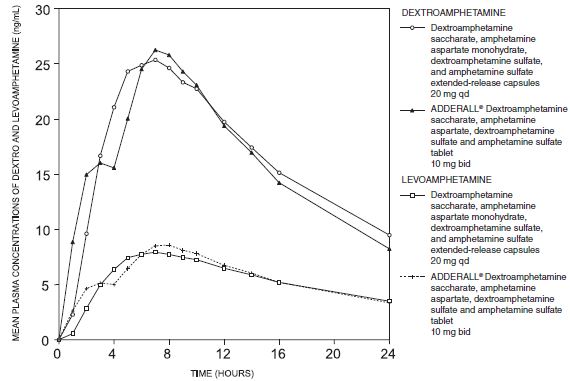
Amphetamine — Central Nervous System Stimulant [EPC]. INDICATIONS AND USAGE Amphetamine sulfate tablets, USP 5 mg and 10 mg are indicated for: 1. Narcolepsy 2. Attention Deficit Disorder with…
Boxed warning
WARNING: ABUSE, MISUSE, AND ADDICTION Amphetamine extended-release orally disintegrating tablets have a high potential for abuse and misuse, which can lead to the development of a substance use disorder, including addiction. Misuse and abuse of CNS stimulants, including amphetamine extended-release orally disintegrating tablets, can result in overdose and death [see Overdosage ( 10) ] , and this risk is increased with higher doses or unapproved methods of administration, such as snorting or injection. Before prescribing amphetamine extended-release orally disintegrating tablets, assess each patient’s risk for abuse, misuse, and addiction. Educate patients and their families about these risks, proper storage of the drug, and proper disposal of any unused drug. Throughout amphetamine extended-release orally disintegrating tablets treatment, reassess each patient’s risk of abuse, misuse, and addiction and frequently monitor for signs and symptoms of abuse, misuse, and addiction [see Warnings and Precautions ( 5.1 ), Drug Abuse and Dependence ( 9.2 )] . WARNING: ABUSE, MISUSE AND ADDICTION See full prescribing information for complete boxed warning. Amphetamine extended-release orally disintegrating tablets have a high potential for abuse and misuse, which can lead to the development of a substance use disorder, including addiction. Misuse and abuse of CNS stimulants, including amphetamine extended-release orally disintegrating tablets, can result in overdose and death ( 5.1 , 9.2 , 10 ): Before prescribing amphetamine extended-release orally disintegrating tablets, assess each patient’s risk for abuse, misuse, and addiction. Educate patients and their families about these risks, proper storage of the drug, and proper disposal of any unused drug. Throughout treatment, reassess each patient’s risk and frequently monitor for signs and symptoms of abuse, misuse, and addiction.
INDICATIONS AND USAGE Amphetamine sulfate tablets, USP 5 mg and 10 mg are indicated for: 1. Narcolepsy 2. Attention Deficit Disorder with Hyperactivity as an integral part of a total treatment program which typically includes other remedial measures (psychological, educational, social) for a stabilizing effect in children with behavioral syndrome characterized by the following group of developmentally inappropriate symptoms: moderate to severe distractibility, short attention span, hyperactivity, emotional lability, and impulsivity. The diagnosis of the syndrome should not be made with finality when these symptoms are only of comparatively recent origin. Nonlocalizing (soft) neurological signs, learning disability, and abnormal EEG may or may not be present, and a diagnosis of central nervous system dysfunction may or not be warranted. 3. Exogenous Obesity as a short term (a few weeks) adjunct in a regimen of weight reduction based on caloric restriction for patients refractory to alternative therapy, e.g., repeated diets, group programs, and other drugs. The limited usefulness of amphetamines (see CLINICAL PHARMACOLOGY ) should be weighed against possible risks inherent in use of the drug, such as those described below.
Dosage
DOSAGE AND ADMINISTRATION May be taken with or without food. Allow tablet to disintegrate in saliva then swallow. ( 2.2 ) Pediatric patients (ages 6 to 17 years): Starting dose is 6.3 mg once daily in the morning. Maximum dose is 18.8 mg once daily for patients 6 to 12 years, and 12.5 mg once daily for patients 13 to 17 years. ( 2.3 ) Adults: 12.5 mg once daily in the morning. ( 2.4 ) To avoid substitution errors and overdosage, do not substitute for other amphetamine products on a milligram-per-milligram basis because of different amphetamine base compositions and differing pharmacokinetic profiles. ( 2.5 , 5.7 ) 2.1 Pre-treatment Screening Prior to treating patients with amphetamine extended-release orally disintegrating tablets, assess: for the presence of cardiac disease (i.e., perform a careful history, family history of sudden death or ventricular arrhythmia, and physical exam) [see Warnings and Precautions ( 5.2 ) ] . the family history and clinically evaluate patients for motor or verbal tics or Tourette’s syndrome before initiating amphetamine extended-release orally disintegrating tablets [see Warnings and Precautions ( 5.9 )] . 2.2 General Administration Information Amphetamine extended-release orally disintegrating tablets may be taken orally with or without food. Individualize the dosage according to the therapeutic needs and response of the patient. Amphetamine extended-release orally disintegrating tablets should be taken as follows: The tablet should remain in the blister pack until the patient is ready to take it. The patient or caregiver should use dry hands to open the blister. Tear along the perforation, bend the blister where indicated and peel back the blister’s labeled backing to take out the tablet. The tablet should not be pushed through the foil. As soon as the blister is opened, the tablet should be removed and placed on the patient’s tongue. The whole tablet should be placed on the tongue and allowed to disintegrate without chewing or crushing. The tablet will disintegrate in saliva so that it can be swallowed. 2.3 Dosage Recommendations in Pediatric Patients The recommended starting dosage is 6.3 mg once daily in the morning. Increase in increments of 3.1 mg or 6.3 mg at weekly intervals. The maximum recommended dose is 18.8 mg daily for patients 6 to 12 years, and 12.5 mg daily for patients 13 to 17 years [see Use in Specific Populations ( 8.3 ) , Clinical Studies ( 14 ) ] . 2.4 Dosage Recommendations in Adults The recommended dose is amphetamine extended-release orally disintegrating tablets 12.5 mg daily. 2.5 Switching from Other Amphetamine Products Patients taking dextroamphetamine sulfate, dextroamphetamine saccharate, amphetamine aspartate monohydrate, and amphetamine sulfate extended-release capsules may be switched to amphetamine extended-release orally disintegrating tablets at the equivalent dose taken once daily [see Clinical Pharmacology ( 12.3 )] . Refer to Table 1 for equivalent doses of amphetamine extended-release orally disintegrating tablets and dextroamphetamine sulfate, dextroamphetamine saccharate, amphetamine aspartate monohydrate, and amphetamine sulfate extended-release capsules. Dextroamphetamine sulfate, dextroamphetamine saccharate, amphetamine aspartate monohydrate, and amphetamine sulfate extended-release capsules are also referred to as mixed salts of a single-entity amphetamine product extended-release capsules (MAS ER). Table 1: Equivalent Doses of Amphetamine Extended-Release Orally Disintegrating Tablets and Dextroamphetamine Sulfate, Dextroamphetamine Saccharate, Amphetamine Aspartate Monohydrate, and Amphetamine Sulfate (Mixed Salts of a Single-Entity Amphetamine Product) Extended-Release Capsules Amphetamine extended-release orally disintegrating tablets 3.1 mg 6.3 mg 9.4 mg 12.5 mg 15.7 mg 18.8 mg Dextroamphetamine sulfate, dextroamphetamine saccharate, amphetamine aspartate monohydrate, and amphetamine sulfate extended-release capsules Mixed salts of a single-entity amphetamine product extended-release capsules (MAS ER) 5 mg 10 mg 15 mg 20 mg 25 mg 30 mg If switching from any other amphetamine products, discontinue that treatment, and titrate with amphetamine extended-release orally disintegrating tablets using the titration schedule [see Dosage and Administration ( 2.3 ) , ( 2.4 ) ] . Do not substitute for other amphetamine products on a milligram-per-milligram basis because of different amphetamine base compositions and differing pharmacokinetic profiles [see Warnings and Precautions ( 5.9 )] . 2.6 Dosage Modifications Due to Drug Interactions Agents that alter urinary pH can impact urinary excretion and alter blood levels of amphetamine. Acidifying agents (e.g., ascorbic acid) decrease blood levels, while alkalinizing agents (e.g., sodium bicarbonate) increase blood levels. Adjust amphetamine extended-release orally disintegrating tablets dosage accordingly [see Drug Interactions ( 7.1 )] .
Warnings
WARNING Serious Cardiovascular Events Sudden Death and Pre-Existing Structural Cardiac Abnormalities or Other Serious Heart Problems Children and Adolescents Sudden death has been reported in association with CNS stimulant treatment at usual doses in children and adolescents with structural cardiac abnormalities or other serious heart problems. Although some serious heart problems alone carry an increased risk of sudden death, stimulant products generally should not be used in children or adolescents with known serious structural cardiac abnormalities, cardiomyopathy, serious heart rhythm abnormalities, or other serious cardiac problems that may place them at increased vulnerability to the sympathomimetic effects of a stimulant drug (see CONTRAINDICATIONS ). Adults Sudden deaths, stroke, and myocardial infarction have been reported in adults taking stimulant drugs at usual doses for ADHD. Although the role of stimulants in these adult cases is also unknown, adults have a greater likelihood than children of having serious structural cardiac abnormalities, cardiomyopathy, serious heart rhythm abnormalities, coronary artery disease, or other serious cardiac problems. Adults with such abnormalities should also generally not be treated with stimulant drugs (see CONTRAINDICATIONS ). Hypertension and other Cardiovascular Conditions Stimulant medications cause a modest increase in average blood pressure (about 2 to 4 mmHg) and average heart rate (about 3 to 6 bpm), and individuals may have larger increases. While the mean changes alone would not be expected to have short-term consequences, all patients should be monitored for larger changes in heart rate and blood pressure. Caution is indicated in treating patients whose underlying medical conditions might be compromised by increases in blood pressure or heart rate, e.g., those with pre-existing hypertension, heart failure, recent myocardial infarction, or ventricular arrhythmia (see CONTRAINDICATIONS ). Assessing Cardiovascular Status in Patients being Treated with Stimulant Medications Children, adolescents, or adults who are being considered for treatment with stimulant medications should have a careful history (including assessment for a family history of sudden death or ventricular arrhythmia) and physical exam to assess for the presence of cardiac disease, and should receive further cardiac evaluation if findings suggest such disease (e.g., electrocardiogram and echocardiogram). Patients who develop symptoms such as exertional chest pain, unexplained syncope, or other symptoms suggestive of cardiac disease during stimulant treatment should undergo a prompt cardiac evaluation. Psychiatric Adverse Events Pre-Existing Psychosis Administration of stimulants may exacerbate symptoms of behavior disturbance and thought disorder in patients with a pre-existing psychotic disorder. Bipolar Illness Particular care should be taken in using stimulants to treat ADHD in patients with comorbid bipolar disorder because of concern for possible induction of a mixed/manic episode in such patients. Prior to initiating treatment with a stimulant, patients with comorbid depressive symptoms should be adequately screened to determine if they are at risk for bipolar disorder; such screening should include a detailed psychiatric history, including a family history of suicide, bipolar disorder, and depression. Emergence of New Psychotic or Manic Symptoms Treatment emergent psychotic or manic symptoms, e.g., hallucinations, delusional thinking, or mania in children and adolescents without a prior history of psychotic illness or mania can be caused by stimulants at usual doses. If such symptoms occur, consideration should be given to a possible causal role of the stimulant, and discontinuation of treatment may be appropriate. In a pooled analysis of multiple short-term, placebo-controlled studies, such symptoms occurred in about 0.1% (4 patients with events out of 3482 exposed to methylphenidate or amphetamine for several weeks at usual doses) of stimulant-treated patients compared to 0 in placebo-treated patients. Aggression Aggressive behavior or hostility is often observed in children and adolescents with ADHD, and has been reported in clinical trials and the postmarketing experience of some medications indicated for the treatment of ADHD. Although there is no systematic evidence that stimulants cause aggressive behavior or hostility, patients beginning treatment for ADHD should be monitored for the appearance of or worsening of aggressive behavior or hostility. Long-Term Suppression of Growth Careful follow-up of weight and height in children ages 7 to 10 years who were randomized to either methylphenidate or non-medication treatment groups over 14 months, as well as in naturalistic subgroups of newly methylphenidate-treated and non-medication treated children over 36 months (to the ages of 10 to 13 years), suggests that consistently medicated children (i.e., treatment for 7 days per week throughout the year) have a temporary slowing in growth rate (on average, a total of about 2 cm less growth in height and 2.7 kg less growth in weight over 3 years), without evidence of growth rebound during this period of development. Published data are inadequate to determine whether chronic use of amphetamines may cause a similar suppression of growth, however, it is anticipated that they likely have this effect as well. Therefore, growth should be monitored during treatment with stimulants, and patients who are not growing or gaining height or weight as expected may need to have their treatment interrupted. Seizures There is some clinical evidence that stimulants may lower the convulsive threshold in patients with prior history of seizures, in patients with prior EEG abnormalities in absence of seizures, and, very rarely, in patients without a history of seizures and no prior EEG evidence of seizures. In the presence of seizures, the drug should be discontinued. Peripheral Vasculopathy, including Raynaud's phenomenon Stimulants, including Amphetamine Sulfate Tablets, used to treat ADHD are associated with peripheral vasculopathy, including Raynaud's phenomenon. Signs and symptoms are usually intermittent and mild; however, very rare sequelae include digital ulceration and/or soft tissue breakdown. Effects of peripheral vasculopathy, including Raynaud's phenomenon, were observed in post-marketing reports at different times and at therapeutic doses in all age groups throughout the course of treatment. Signs and symptoms generally improve after reduction in dose or discontinuation of drug. Careful observation for digital changes is necessary during treatment with ADHD stimulants. Further clinical evaluation (e.g., rheumatology referral) may be appropriate for certain patients. Serotonin Syndrome Serotonin syndrome, a potentially life-threatening reaction, may occur when amphetamines are used in combination with other drugs that affect the serotonergic neurotransmitter systems such as monoamine oxidase inhibitors (MAOIs), selective serotonin reuptake inhibitors (SSRIs), serotonin norepinephrine reuptake inhibitors (SNRIs), triptans, tricyclic antidepressants, fentanyl, lithium, tramadol, tryptophan, buspirone, and St. John's Wort (see DRUG INTERACTIONS ). Amphetamines and amphetamine derivatives are known to be metabolized, to some degree, by cytochrome P450 2D6 (CYP2D6) and display minor inhibition of CYP2D6 metabolism (see CLINICAL PHARMACOLOGY ). The potential for a pharmacokinetic interaction exists with the co-administration of CYP2D6 inhibitors which may increase the risk with increased exposure to Amphetamine Sulfate Tablets. In these situations, consider an alternative non-serotonergic drug or an alternative drug that does not inhibit CYP2D6 (see DRUG INTERACTIONS ). Serotonin syndrome symptoms may include mental status changes (e.g., agitation, hallucinations, delirium, and coma), autonomic instability (e.g., tachycardia, labile blo
Contraindications
CONTRAINDICATIONS Amphetamine extended-release orally disintegrating tablets are contraindicated: In patients known to be hypersensitive to amphetamine, or other components of amphetamine extended-release orally disintegrating tablets. Hypersensitivity reactions such as angioedema and anaphylactic reactions have been reported in patients treated with other amphetamine products [see Adverse Reactions ( 6.2 )] . Patients taking monoamine oxidase inhibitors (MAOIs), or within 14 days of stopping MAOIs (including MAOIs such as linezolid or intravenous methylene blue), because of an increased risk of hypertensive crisis [see Warnings and Precautions ( 5.7 ), Drug Interactions ( 7.1 )] . Known hypersensitivity to amphetamine products or other ingredients in amphetamine extended-release orally disintegrating tablets. ( 4 ) Use of monoamine oxidase inhibitor (MAOI) or within 14 days of the last MAOI dose. ( 4 )
Drug interactions
Drug Interactions Acidifying agents Gastrointestinal acidifying agents (guanethidine, reserpine, glutamic acid HCl, ascorbic acid, fruit juices, etc.) lower absorption of amphetamines. Urinary acidifying agents (ammonium chloride, sodium acid phosphate, etc.) increase concentration of the ionized species of the amphetamine molecule, thereby increasing urinary excretion. Both groups of agents lower blood levels and efficacy of amphetamines. Adrenergic blockers Adrenergic blockers are inhibited by amphetamines. Alkalinizing agents Gastrointestinal alkalinizing agents (sodium bicarbonate, etc.) increase absorption of amphetamines. Urinary alkalinizing agents (acetazolamide, some thiazides) increase the concentration of the non-ionized species of the amphetamine molecule, thereby decreasing urinary excretion. Both groups of agents increase blood levels and therefore potentiate the action of amphetamines. Antidepressants tricyclic Amphetamines may enhance the activity of tricyclic or sympathomimetic agents; d-amphetamine with desipramine or protriptyline and possibly other tricyclics cause striking and sustained increases in the concentration of d- amphetamine in the brain; cardiovascular effects can be potentiated. CYP2D6 Inhibitors The concomitant use of amphetamine sulfate and CYP2D6 inhibitors may increase the exposure of amphetamine sulfate compared to the use of the drug alone and increase the risk of serotonin syndrome. Initiate with lower doses and monitor patients for signs and symptoms of serotonin syndrome particularly during amphetamine sulfate initiation and after a dosage increase. If serotonin syndrome occurs, discontinue amphetamine sulfate and the CYP2D6 inhibitor (see WARNING , OVERDOSAGE ). Examples of CYP2D6 Inhibitors include paroxetine and fluoxetine (also serotonergic drugs), quinidine, ritonavir. Serotonergic Drugs The concomitant use of amphetamine sulfate and serotonergic drugs increases the risk of serotonin syndrome. Initiate with lower doses and monitor patients for signs and symptoms of serotonin syndrome, particularly during amphetamine sulfate initiation or dosage increase. If serotonin syndrome occurs, discontinue amphetamine sulfate and the concomitant serotonergic drug(s) (see WARNING and PRECAUTIONS ). Examples of serotonergic drugs include selective serotonin reuptake inhibitors (SSRI), serotonin norepinephrine reuptake inhibitors (SNRI), triptans, tricyclic antidepressants, fentanyl, lithium, tramadol, tryptophan, buspirone, St. John's Wort. MAO inhibitors MAOI antidepressants, as well as a metabolic of furazolidone, slow amphetamine metabolism. This slowing potentiates amphetamines, increasing their affect on the release of norepinephrine and other monoamines from adrenergic nerve endings; this can cause headaches and other signs of hypertensive crisis. A variety of neurological toxic effects and malignant hyperpyrexia can occur, sometimes with fatal results. Antihistamines Amphetamines may counteract the sedative effect of antihistamines. Antihypertensives Amphetamines may antagonize the hypotensive effects of antihypertensives. Chlorpromazine Chlorpromazine blocks dopamine and norepinephrine reuptake, thus inhibiting the central stimulant effects of amphetamine, and can be used to treat amphetamine poisoning. Ethosuximide Amphetamines may delay intestinal absorption of ethosuximide. Haloperidol Haloperidol blocks dopamine and norepinephrine reuptake, thus inhibiting the central stimulant affects of amphetamines. Lithium carbonate The antiobesity and stimulatory effects of amphetamines may be inhibited by lithium carbonate. Meperidine Amphetamines potentiate the analgesic effect of meperidine. Methenamine therapy Urinary excretion of amphetamines is increased, and efficacy is reduced by acidifying agents used in methenamine therapy. Norepinephrine Amphetamines enhance the adrenergic effect of norepinephrine. Phenobarbital Amphetamines may delay intestinal absorption of Phenobarbital. Co- administration of phenobarbital may produce a synergistic anticonvulsant action. Phenytoin Amphetamines may delay intestinal absorption of phenytoin; co- administration of phenytoin may produce a synergistic anticonvulsant action. Propoxyphene In cases of propoxyphene overdosage, amphetamine CNS stimulation is potentiated and fatal convulsions can occur. Veratrum alkaloids Amphetamines inhibit the hypotensive effect of veratrum alkaloids. Drug/Laboratory Test interactions Amphetamines can cause a significant elevation in plasma corticosteroid levels. This increase is greatest in the evening. Amphetamines may interfere with urinary steroid determinations. Carcinogenesis/Mutagenesis Mutagenicity studies and long term studies in animals to determine the carcinogenic potential of amphetamine sulfate have not been performed. Pregnancy Teratogenic Effects Dextroamphetamine sulfate has been shown to have embryotoxic and teratogenic effects when administered to A/Jax mice and C57BL mice in doses approximately 41 times the maximum human dose. Embryotoxic effects were not seen in New Zealand white rabbits given the drug in doses 7 times the human dose nor in rats given 12.5 times the maximum human dose. There are no adequate and well-controlled studies in pregnant women. Amphetamine sulfate should be used during pregnancy only if the potential benefit justifies the potential risk to the fetus. Nonteratogenic Effects Infants born to mothers dependent on amphetamines have an increased risk of premature delivery and low birth weight. Also, these infants may experience symptoms of withdrawal as demonstrated by dysphoria, including agitation, and significant lassitude. Nursing Mothers Amphetamines are excreted in human milk. Mothers taking amphetamines should be advised to refrain from nursing. Pediatric Use Long-term effects of amphetamines in children have not been well established. Amphetamines are not recommended for use as anorectic agents in children under 12 years of age, or in children under 3 years of age with Attention Deficit Disorder with Hyperactivity described under INDICATIONS AND USAGE . Clinical experience suggests that in psychotic children, administration of amphetamines may exacerbate symptoms of behavior disturbance and thought disorder. Amphetamines have been reported to exacerbate motor and phonic tics and Tourette's syndrome. Therefore clinical evaluation for tics and Tourette's syndrome in children and their families should precede use of stimulant medications. Data is inadequate to determine whether chronic administration of amphetamines may be associated with growth inhibition; therefore growth should be monitored during treatment. Drug Treatment is not indicated in all cases of Attention Deficit Disorder with Hyperactivity and should be considered only in light of the complete history and evaluation of the child. The decision to prescribe amphetamines should depend on the physician's assessment of the chronicity and severity of the child's symptoms and their appropriateness for his/her age. Prescription should not depend solely on the presence of one or more of the behavioral characteristics. When these symptoms are associated with acute stress reactions, treatment with amphetamines is usually not indicated.
Adverse reactions
ADVERSE REACTIONS The following adverse reactions are discussed in greater detail in other sections of the labeling: Abuse, Misuse, and Addiction [see Boxed Warning, Warnings and Precautions ( 5.1 ), and Drug Abuse and Dependence ( 9.2 , 9.3 )] Hypersensitivity to amphetamine, or other components of amphetamine extended-release orally disintegrating tablets [see Contraindications ( 4 )] Hypertensive Crisis When Used Concomitantly with Monoamine Oxidase Inhibitors [see Contraindications ( 4 ) and Drug Interactions ( 7.1 )] Risks to Patients with Serious Cardiac Disease [see Warnings and Precautions ( 5.2 )] Increased Blood Pressure and Heart Rate [see Warnings and Precautions ( 5.3 )] Psychiatric Adverse Reactions [see Warnings and Precautions ( 5.4 )] Long-Term Suppression of Growth in Pediatric Patients [see Warnings and Precautions ( 5.5 )] Peripheral Vasculopathy, including Raynaud’s phenomenon [see Warnings and Precautions ( 5.6 )] Serotonin Syndrome [see Warnings and Precautions ( 5.7 )] Motor and Verbal Tics, and Worsening of Tourette’s Syndrome [see Warnings and Precautions ( 5.8 )] Pediatric patients ages 6 to 12 years: Most common adverse reactions (≥5% and with a higher incidence than on placebo) were loss of appetite, insomnia, abdominal pain, emotional lability, vomiting, nervousness, nausea, and fever. ( 6.1 ) Pediatric patients ages 13 to 17 years: Most common adverse reactions (≥5% and with a higher incidence than on placebo) were loss of appetite, insomnia, abdominal pain, weight loss, and nervousness. ( 6.1 ) Adults: Most common adverse reactions ≥5% and with a higher incidence than on placebo were dry mouth, loss of appetite, insomnia, headache, weight loss, nausea, anxiety, agitation, dizziness, tachycardia, diarrhea, asthenia, and urinary tract infections. ( 6.1 ) To report SUSPECTED ADVERSE REACTIONS, contact Teva at 1-888-838-2872 or FDA at 1-800-FDA-1088 or www.fda.gov/medwatch . 6.1 Clinical Trials Experience Because clinical trials are conducted under widely varying conditions, adverse reaction rates observed in the clinical trials of a drug cannot be directly compared to rates in the clinical trials of another drug and may not reflect the rates observed in clinical practice. The safety of amphetamine extended-release orally disintegrating tablets has been established from adequate and well-controlled studies of single-entity amphetamine product extended-release (MAS ER) capsules [see Clinical Studies ( 14 )] . The adverse reactions of MAS ER capsules in these adequate and well-controlled studies are described below. The premarketing development program for MAS ER included exposures in a total of 1,315 participants in clinical trials (635 pediatric patients, 350 adolescent patients, 248 adult patients, and 82 healthy adult subjects). Of these, 635 patients (ages 6 to 12 years) were evaluated in two controlled clinical studies, one open-label clinical study, and two single-dose clinical pharmacology studies (N=40). Adverse Reactions Leading to Discontinuation of Treatment The most frequent adverse reactions leading to discontinuation of MAS ER in controlled and uncontrolled, multiple-dose clinical trials of pediatric patients ages 6 to 12 years (N=595) were anorexia (loss of appetite) (2.9%), insomnia (1.5%), weight loss (1.2%), emotional lability (1%), and depression (0.7%). In a separate placebo-controlled 4-week study in pediatric patients ages 13 to 17 years with ADHD, five patients (2.1%) discontinued treatment due to adverse events among MAS ER-treated patients (N=233) compared to 0% who received placebo (N=54). The most frequent adverse event leading to discontinuation and considered to be drug-related (i.e., leading to discontinuation in at least 1% of MAS ER-treated patients and at a rate at least twice that of placebo) was insomnia (1.3%, n=3). In one placebo-controlled 4-week study among adults with ADHD with doses 20 mg to 60 mg, 23 patients (12.0%) discontinued treatment due to adverse events among MAS ER-treated patients (N=191) compared to one patient (1.6%) who received placebo (N=64). The most frequent adverse events leading to discontinuation and considered to be drug-related (i.e., leading to discontinuation in at least 1% of MAS ER-treated patients and at a rate at least twice that of placebo) were insomnia (5.2%, n=10), anxiety (2.1%, n=4), nervousness (1.6%, n=3), dry mouth (1.6%, n=3), anorexia (1.6%, n=3), tachycardia (1.6%, n=3), headache (1.6%, n=3), and asthenia (1.0%, n=2). Adverse Reactions Occurring in Clinical Trials Adverse reactions reported in a 3-week clinical trial of pediatric patients 6 to 12 years of age and a 4-week clinical trial in pediatric patients 13 to 17 years of age and adults, respectively, treated with MAS ER or placebo are presented in the tables below. Table 2: Adverse Reactions Reported by 2% or More of Pediatric Patients (6 to 12 years old) Receiving MAS ER with Higher Incidence than on Placebo in a 584-Patient Clinical Study Body System Adverse Reaction MAS ER (n=374) Placebo (n=210) General Abdominal Pain (stomachache) Fever Infection Accidental Injury Asthenia (fatigue) 14% 5% 4% 3% 2% 10% 2% 2% 2% 0% Digestive System Loss of Appetite Vomiting Nausea Dyspepsia 22% 7% 5% 2% 2% 4% 3% 1% Nervous System Insomnia Emotional Lability Nervousness Dizziness 17% 9% 6% 2% 2% 2% 2% 0% Metabolic/Nutritional Weight Loss 4% 0% Table 3: Adverse Reactions Reported by 5% or More of Pediatric Patients (13 to 17 Years Old) Weighing ≤ 75kg Receiving MAS ER with Higher Incidence than Placebo in a 287 Patient Clinical Forced Weekly-Dose Titration Study* Body System Preferred Term MAS ER (n=233) Placebo (n=54) General Abdominal Pain (stomachache) 11% 2% Digestive System Loss of Appetite a 36% 2% Nervous System Insomnia a 12% 4% Metabolic/Nutritional Weight Loss a 9% 0% * Included doses up to 40 mg a Dose-related adverse reactions Note: The following reactions did not meet the criterion for inclusion in Table 3 but were reported by 2% to 4% of adolescent patients receiving MAS ER with a higher incidence than patients receiving placebo in this study: accidental injury, asthenia (fatigue), dry mouth, dyspepsia, emotional lability, nausea, somnolence, and vomiting. Table 4: Adverse Reactions Reported by 5% or More of Adults Receiving MAS ER with Higher Incidence Than Placebo in a 255 Patient Clinical Forced Weekly-Dose Titration Study* Body System Preferred Term MAS ER (n=191) Placebo ( n=64) General Headache Asthenia 26% 6% 13% 5% Digestive System Dry Mouth Loss of Appetite Nausea Diarrhea 35% 33% 8% 6% 5% 3% 3% 0% Nervous System Insomnia Agitation Anxiety Dizziness 27% 8% 8% 7% 13% 5% 5% 0% Cardiovascular System Tachycardia 6% 3% Metabolic/Nutritional Weight Loss 10% 0% Urogenital System Urinary Tract Infection 5% 0% * Included doses up to 60 mg. Note: The following reactions did not meet the criterion for inclusion in Table 4 but were reported by 2% to 4% of adult patients receiving MAS ER with a higher incidence than patients receiving placebo in this study: infection, photosensitivity reaction, constipation, tooth disorder (e.g., teeth clenching, tooth infection), emotional lability, libido decreased, somnolence, speech disorder (e.g., stuttering, excessive speech), palpitation, twitching, dyspnea, sweating, dysmenorrhea, and impotence. 6.2 Adverse Reactions from Clinical Trials and Spontaneous Postmarketing Reports of Other Amphetamine Products The following adverse reactions are from clinical trials and spontaneous postmarketing reports of other amphetamine products in pediatric patients and adults with ADHD. Because some of these reactions were reported voluntarily from a population of uncertain size, it is not always possible to estimate their frequency reliably or to establish a causal relationship to drug exposure. Cardiovascular: Palpitations, sudden death, myocardial infarction. There have been isolated reports of cardiomyopathy associated with chronic amphetamine use. Central Nervou
Mechanism of action
CLINICAL PHARMACOLOGY Amphetamines are non-catecholamine, sympathomimetic amines with CNS stimulant activity. Peripheral actions include elevations of systolic and diastolic blood pressures, and weak bronchodilator, and respiratory stimulant action. Amphetamine, as the racemic form, differs from dextroamphetamine in a number of ways. The l-isomer is more potent than the d-isomer in cardiovascular activity, but much less potent in causing CNS excitatory effects. The racemic mixture also is less effective as an appetite suppressant when compared to dextroamphetamine. There is neither specific evidence which clearly establishes the mechanism whereby amphetamines produce mental and behavioral effects in children, nor conclusive evidence regarding how those effects relate to the condition of the central nervous system. Drugs in this class used in obesity are commonly known as "anorectics" or "anorexigenics." It has not been established, however, that the action of such drugs in treating obesity is primarily one of appetite suppression. Other central nervous system actions or metabolic effects, may be involved, for example. Adult obese subjects instructed in dietary management and treated with "anorectic" drugs lose more weight on the average than these treated with placebo and diet, as determined in relatively short- term clinical trials. The magnitude of increased weight loss of drug-treated patients over placebo-treated patients is only a fraction of a pound a week. The rate of weight loss is greatest in the first weeks of therapy for both drug and placebo subjects and tends to decrease in succeeding weeks. The origins of the increased weight loss due to the various possible drug effects are not established. The amount of weight loss associated with the use of an "anorectic" drug varies from trial to trial, and the increased weight loss appears to be related in part to variables other than the drug prescribed, such as the physician-investigator, the population treated, and the diet prescribed. Studies do not permit conclusions as to the relative importance of the drug and nondrug factors on weight loss. The natural history of obesity is measured in years, whereas the studies cited are restricted to few weeks duration; thus, the total impact of drug-induced weight loss over that of diet alone must be considered clinically limited.
A drug lookup is just the start. Eleplan keeps the whole care plan in one place.
Medications, diagnoses, documents, appointments, and the whole care team — organized and always in sync, with Ellie, your AI care assistant, on top of it. Free to start.