Atezolizumab and Hyaluronidase-tqjs
Managing this medication for someone you care for? Eleplan keeps diagnoses, medications and appointments in one plan.
Start free with EleplanMedication reference
Atezolizumab and Hyaluronidase-tqjs
Programmed Death Receptor-1 Blocking Antibody [EPC] — SUBCUTANEOUS
Atezolizumab and Hyaluronidase-tqjs — Programmed Death Receptor-1 Blocking Antibody [EPC]. INDICATIONS AND USAGE TECENTRIQ HYBREZA is a combination of atezolizumab, a programmed death-ligand 1 (PD-L1) blocking antibody, and hyaluronidase…
Brand names
Tecentriq Hybreza
Active ingredients
ATEZOLIZUMABHYALURONIDASE (HUMAN RECOMBINANT)
Indications
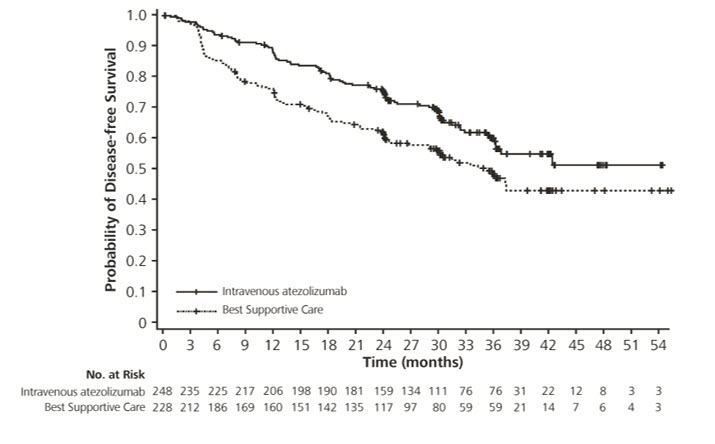
INDICATIONS AND USAGE TECENTRIQ HYBREZA is a combination of atezolizumab, a programmed death-ligand 1 (PD-L1) blocking antibody, and hyaluronidase, an endoglycosidase indicated: Non-Small Cell Lung Cancer (NSCLC) as adjuvant treatment following resection and platinum-based chemotherapy for adult patients with Stage II to IIIA NSCLC whose tumors have PD-L1 expression on ≥ 1% of tumor cells, as determined by an FDA-authorized test. ( 1.1 ) for the first-line treatment of adult patients with metastatic NSCLC whose tumors have high PD-L1 expression (PD-L1 stained ≥ 50% of tumor cells [TC ≥ 50%] or PD-L1 stained tumor-infiltrating immune cells [IC] covering ≥ 10% of the tumor area [IC ≥ 10%]), as determined by an FDA-authorized test, with no EGFR or ALK genomic tumor aberrations. ( 1.1 ) in combination with bevacizumab, paclitaxel, and carboplatin, for the first-line treatment of adult patients with metastatic non-squamous NSCLC with no EGFR or ALK genomic tumor aberrations. ( 1.1 ) in combination with paclitaxel protein-bound and carboplatin for the first-line treatment of adult patients with metastatic non-squamous NSCLC with no EGFR or ALK genomic tumor aberrations. ( 1.1 ) for the treatment of adult patients with metastatic NSCLC who have disease progression during or following platinum-containing chemotherapy. Patients with EGFR or ALK genomic tumor aberrations should have disease progression on FDA-approved therapy for NSCLC harboring these aberrations prior to receiving TECENTRIQ HYBREZA. ( 1.1 ) Small Cell Lung Cancer (SCLC) in combination with carboplatin and etoposide, for the first-line treatment of adult patients with extensive-stage small cell lung cancer (ES-SCLC). ( 1.2 ) in combination with lurbinectedin, for the maintenance treatment of adult patients with ES-SCLC whose disease has not progressed after first-line induction therapy with TECENTRIQ HYBREZA or intravenous atezolizumab, and carboplatin plus etoposide. ( 1.2 ) Hepatocellular Carcinoma (HCC) in combination with bevacizumab for the treatment of adult patients with unresectable or metastatic HCC who have not received prior systemic therapy. ( 1.3 ) Melanoma in combination with cobimetinib and vemurafenib for the treatment of adult patients with BRAF V600 mutation-positive unresectable or metastatic melanoma as determined by an FDA-approved test. ( 1.4 ) Alveolar Soft Part Sarcoma (ASPS) for the treatment of adult patients and pediatric patients (12 years of age and older who weigh 40 kg or greater) with unresectable or metastatic ASPS. ( 1.5 ) Muscle Invasive Bladder Cancer (MIBC) as adjuvant treatment of adult patients with MIBC after cystectomy who have circulating tumor DNA molecular residual disease (ctDNA MRD) as determined by an FDA-authorized test. ( 1.6 ) 1.1 Non-Small Cell Lung Cancer TECENTRIQ HYBREZA, as monotherapy, is indicated as adjuvant treatment following resection and platinum-based chemotherapy for adult patients with stage II to IIIA [see Clinical Studies (14.1) ] non-small cell lung cancer (NSCLC) whose tumors have PD-L1 expression on ≥ 1% of tumor cells, as determined by an FDA- authorized test [see Dosage and Administration (2.1) ]. TECENTRIQ HYBREZA, as monotherapy, is indicated for the first-line treatment of adult patients with metastatic non-small cell lung cancer (NSCLC) whose tumors have high PD-L1 expression (PD-L1 stained ≥ 50% of tumor cells [TC ≥ 50%] or PD-L1 stained tumor-infiltrating immune cells [IC] covering ≥ 10% of the tumor area [IC ≥ 10%]) , as determined by an FDA- authorized test, with no EGFR or ALK genomic tumor aberrations [see Dosage and Administration (2.1) ]. TECENTRIQ HYBREZA, in combination with bevacizumab, paclitaxel, and carboplatin, is indicated for the first-line treatment of adult patients with metastatic non-squamous NSCLC with no EGFR or ALK genomic tumor aberrations. TECENTRIQ HYBREZA, in combination with paclitaxel protein-bound and carboplatin, is indicated for the first-line treatment of adult patients with metastatic non-squamous NSCLC with no EGFR or ALK genomic tumor aberrations. TECENTRIQ HYBREZA, as monotherapy, is indicated for the treatment of adult patients with metastatic NSCLC who have disease progression during or following platinum-containing chemotherapy. Patients with EGFR or ALK genomic tumor aberrations should have disease progression on FDA-approved therapy for NSCLC harboring these aberrations prior to receiving TECENTRIQ HYBREZA. 1.2 Small Cell Lung Cancer TECENTRIQ HYBREZA, in combination with carboplatin and etoposide, is indicated for the first-line treatment of adult patients with extensive-stage small cell lung cancer (ES-SCLC). TECENTRIQ HYBREZA, in combination with lurbinectedin, is indicated for the maintenance treatment of adult patients with ES-SCLC whose disease has not progressed after first-line induction therapy with TECENTRIQ HYBREZA or intravenous atezolizumab, carboplatin and etoposide. 1.3 Hepatocellular Carcinoma TECENTRIQ HYBREZA, in combination with bevacizumab, is indicated for the treatment of adult patients with unresectable or metastatic hepatocellular carcinoma (HCC) who have not received prior systemic therapy. 1.4 Melanoma TECENTRIQ HYBREZA, in combination with cobimetinib and vemurafenib, is indicated for the treatment of adult patients with BRAF V600 mutation-positive unresectable or metastatic melanoma as determined by an FDA-approved test [see Dosage and Administration (2.1) ] . 1.5 Alveolar Soft Part Sarcoma TECENTRIQ HYBREZA, as monotherapy, is indicated for the treatment of adult patients and pediatric patients (12 years of age and older who weigh 40 kg or greater) with unresectable or metastatic alveolar soft part sarcoma (ASPS). 1.6 Muscle Invasive Bladder Cancer TECENTRIQ HYBREZA, as monotherapy, is indicated as adjuvant treatment of adult patients with muscle invasive bladder cancer (MIBC) after cystectomy who have circulating tumor DNA molecular residual disease (ctDNA MRD) as determined by an FDA-authorized test [see Dosage and Administration (2.1) ] .
Dosage
DOSAGE AND ADMINISTRATION TECENTRIQ HYBREZA has different recommended dosage and administration than intravenous atezolizumab products. ( 2.2 ) TECENTRIQ HYBREZA is for subcutaneous use in the thigh only. ( 2.2 ) Do not administer TECENTRIQ HYBREZA intravenously. ( 2.2 ) The recommended dosage for adult patients and pediatric patients (12 years and older who weigh 40 kg or greater) is: TECENTRIQ HYBREZA 15 mL (1,875 mg atezolizumab and 30,000 units hyaluronidase) subcutaneously into the thigh over approximately 7 minutes every 3 weeks. ( 2.2 ) TECENTRIQ HYBREZA must be administered by a healthcare professional. ( 2.2 ) NSCLC Dosage In the adjuvant setting , administer TECENTRIQ HYBREZA following resection and up to 4 cycles of platinum-based chemotherapy every 3 weeks for up to 1 year. ( 2.3 ) In the metastatic setting , administer TECENTRIQ HYBREZA every 3 weeks. ( 2.3 ) When administering with chemotherapy with or without bevacizumab, administer TECENTRIQ HYBREZA prior to chemotherapy and bevacizumab when given on the same day. ( 2.3 ) SCLC Dosage Administer TECENTRIQ HYBREZA every 3 weeks. Administer TECENTRIQ HYBREZA prior to chemotherapy when given on the same day. ( 2.3 ) HCC Dosage Administer TECENTRIQ HYBREZA every 3 weeks. Administer TECENTRIQ HYBREZA prior to bevacizumab when given on the same day. Bevacizumab is administered intravenously at 15 mg/kg every 3 weeks. ( 2.3 ) Melanoma Dosage Following completion of a 28-day cycle of cobimetinib and vemurafenib, administer TECENTRIQ HYBREZA every 3 weeks with cobimetinib 60 mg orally once daily (21 days on /7 days off) and vemurafenib 720 mg orally twice daily. ( 2.3 ) ASPS Dosage Administer TECENTRIQ HYBREZA every 3 weeks. ( 2.3 ) MIBC Dosage Administer TECENTRIQ HYBREZA after cystectomy every 3 weeks for up to 1 year. ( 2.3 ) 2.1 Patient Selection for Treatment of Non-Small Cell Lung Cancer, Melanoma and Muscle Invasive Bladder Cancer Select adult patients with: Stage II to IIIA NSCLC for adjuvant treatment with TECENTRIQ HYBREZA as a monotherapy (following tumor resection and platinum-based chemotherapy) based on PD-L1 expression on tumor cells [see Clinical Studies (14.1) ]. Metastatic NSCLC for first-line treatment with TECENTRIQ HYBREZA as monotherapy based on the PD-L1 expression on tumor cells or on tumor-infiltrating immune cells [see Clinical Studies (14.1) ]. Unresectable or metastatic melanoma for treatment with TECENTRIQ HYBREZA in combination with cobimetinib and vemurafenib after confirming the presence of a BRAF V600 mutation [see Clinical Studies (14.4) ]. MIBC for treatment with TECENTRIQ HYBREZA, as a monotherapy based on detection of ctDNA MRD in plasma via serial testing between six weeks and one year after cystectomy [see Clinical Studies (14.6) ]. Information on FDA-authorized tests for the determination of PD-L1 expression in metastatic NSCLC, for detection of BRAF V600 mutations in melanoma, or for the determination of ctDNA MRD status in MIBC is available at: http://www.fda.gov/CompanionDiagnostics. 2.2 Important Dosage and Administration Information TECENTRIQ HYBREZA has different recommended dosage and administration than intravenous atezolizumab products. To reduce the risk of medication errors, prior to administration, check the vial labels to ensure that the drug being prepared is subcutaneously administered TECENTRIQ HYBREZA and not intravenously administered atezolizumab. Do not substitute TECENTRIQ HYBREZA for or with intravenous atezolizumab products because they have different recommended dosages. Adult patients who are treated with intravenous atezolizumab can switch to subcutaneous TECENTRIQ HYBREZA at their next scheduled dose. Adult patients who are treated with TECENTRIQ HYBREZA can switch to intravenous atezolizumab at their next scheduled dose. Pediatric patients 12 years of age and older who weigh 40 kg or greater and are treated with intravenous atezolizumab can switch to subcutaneous TECENTRIQ HYBREZA at their next scheduled dose [see Indications and Usage (1.5) ]. Pediatric patients who are treated with TECENTRIQ HYBREZA can switch to intravenous atezolizumab at their next scheduled dose. TECENTRIQ HYBREZA is for subcutaneous use in the thigh only. Administer over approximately 7 minutes. Inject in healthy skin and never into areas where the skin is red, bruised, tender, or hard. When possible, alternate injections between the left and right thigh. Ensure the injection site is at least 2.5 cm from the previous site. Do not administer TECENTRIQ HYBREZA intravenously. TECENTRIQ HYBREZA must be administered by a healthcare professional. Do not administer the remaining volume in the tubing to the patient. If using concomitant subcutaneous drugs, administer at sites other than the thighs. 2.3 Recommended Dosage and Administration Instructions The recommended dosage of TECENTRIQ HYBREZA in adult patients and pediatric patients (12 years of age and older who weigh 40 kg or greater) is one 15 mL injection (containing 1,875 mg of atezolizumab and 30,000 units of hyaluronidase, referred to as TECENTRIQ HYBREZA) administered subcutaneously in the thigh over approximately 7 minutes every 3 weeks. The recommended dosage for pediatric patients 12 years of age and older who weigh less than 40 kg has not been established [see Use in Specific Populations (8.4) , Clinical Pharmacology (12.3) ]. Administration instructions for TECENTRIQ HYBREZA as monotherapy and in combination with other therapeutic agents are presented in Table 1 . For the recommended dosage of each therapeutic agent administered in combination with TECENTRIQ HYBREZA refer to the product's respective Prescribing Information. Table 1: TECENTRIQ HYBREZA Administration Instructions and Duration of Therapy Indication Administration Instructions for TECENTRIQ HYBREZA Duration of Therapy Adjuvant Treatment of Non-Small Cell Lung Cancer Administer TECENTRIQ HYBREZA as monotherapy Up to one year, unless there is disease recurrence or unacceptable toxicity Metastatic Non-Small Cell Lung Cancer Until disease progression or unacceptable toxicity Non-Small Cell Lung Cancer Administer TECENTRIQ HYBREZA prior to chemotherapy and bevacizumab when given on the same day. Until disease progression or unacceptable toxicity Small Cell Lung Cancer Administer TECENTRIQ HYBREZA prior to chemotherapy when given on the same day. Hepatocellular Carcinoma Administer TECENTRIQ HYBREZA prior to bevacizumab when given on the same day. Bevacizumab is administered intravenously at 15 mg/kg every 3 weeks. Melanoma Prior to initiating TECENTRIQ HYBREZA, patients should receive the following 28-day treatment cycle of cobimetinib and vemurafenib: Days 1 to 21: cobimetinib 60 mg orally once daily in combination with 960 mg of oral vemurafenib twice daily Days 22 to 28: withhold cobimetinib and administer vemurafenib 720 mg orally twice daily Alveolar Soft Part Sarcoma Administer TECENTRIQ HYBREZA as monotherapy Until disease progression or unacceptable toxicity Muscle Invasive Bladder Cancer Administer TECENTRIQ HYBREZA as monotherapy Up to one year, unless there is disease recurrence or unacceptable toxicity 2.4 Dosage Modifications for Adverse Reactions No dose reduction for TECENTRIQ HYBREZA is recommended. In general, withhold TECENTRIQ HYBREZA for severe (Grade 3) immune-mediated adverse reactions. Permanently discontinue TECENTRIQ HYBREZA for life-threatening (Grade 4) immune-mediated adverse reactions, recurrent severe (Grade 3) immune-mediated reactions that require systemic immunosuppressive treatment, or an inability to reduce the daily corticosteroid dosage to 10 mg or less of prednisone or equivalent corticosteroid dosage within 12 weeks of initiating corticosteroids. Dosage modifications for TECENTRIQ HYBREZA for adverse reactions that require management different from these general guidelines are summarized in Table 2 . Table 2: Recommended Dosage Modifications for Adverse Reactions Adverse Reaction Severity Based on
Warnings
WARNINGS AND PRECAUTIONS Immune-Mediated Adverse Reactions Immune-mediated adverse reactions, which may be severe or fatal, can occur in any organ system or tissue, including the following: immune-mediated pneumonitis, immune-mediated colitis, immune-mediated hepatitis, immune-mediated endocrinopathies, immune-mediated dermatologic adverse reactions, immune-mediated nephritis and renal dysfunction, and solid organ transplant rejection. ( 5.1 ) Monitor for early identification and management. Evaluate liver enzymes, creatinine, and thyroid function at baseline and periodically during treatment. Withhold or permanently discontinue based on severity and type of reaction. Infusion-Related Reactions : Pause or slow the rate of injection, or permanently discontinue based on severity of the reaction. ( 5.2 ) Complications of Allogeneic HSCT: Fatal and other serious complications can occur in patients who receive allogeneic HSCT before or after being treated with a PD-1/PD-L1 blocking antibody. Follow patients closely for evidence of transplant-related complications and intervene promptly. ( 5.3 ) Embryo-Fetal Toxicity : Can cause fetal harm. Advise females of reproductive potential of the potential risk to a fetus and use of effective contraception. ( 5.4 , 8.1 , 8.3 ) 5.1 Severe and Fatal Immune-Mediated Adverse Reactions TECENTRIQ HYBREZA is a monoclonal antibody that belongs to a class of drugs that bind to either the programmed death-receptor 1 (PD-1) or the PD-ligand 1 (PD-L1), blocking the PD-1/PD-L1 pathway, thereby removing inhibition of the immune response, potentially breaking peripheral tolerance and inducing immune-mediated adverse reactions. Important immune-mediated adverse reactions listed under Warnings and Precautions may not include all possible severe and fatal immune-mediated reactions. Immune-mediated adverse reactions, which may be severe or fatal, can occur in any organ system or tissue. Immune-mediated adverse reactions can occur at any time after starting a PD-1/PD-L1 blocking antibody. While immune-mediated adverse reactions usually manifest during treatment with PD-1/PD-L1 blocking antibodies, immune-mediated adverse reactions can also manifest after discontinuation of PD-1/PD-L1 blocking antibodies. Early identification and management of immune-mediated adverse reactions are essential to ensure safe use of PD-1/PD-L1 blocking antibodies. Monitor patients closely for symptoms and signs that may be clinical manifestations of underlying immune-mediated adverse reactions. Evaluate liver enzymes, creatinine, and thyroid function at baseline and periodically during treatment. In cases of suspected immune-mediated adverse reactions, initiate appropriate workup to exclude alternative etiologies, including infection. Institute medical management promptly, including specialty consultation as appropriate. Withhold or permanently discontinue TECENTRIQ HYBREZA depending on severity [see Dosage and Administration (2.3) ]. In general, if TECENTRIQ HYBREZA requires interruption or discontinuation, administer systemic corticosteroid therapy (1 to 2 mg/kg/day prednisone or equivalent) until improvement to Grade 1 or less. Upon improvement to Grade 1 or less, initiate corticosteroid taper and continue to taper over at least 1 month. Consider administration of other systemic immunosuppressants in patients whose immune-mediated adverse reactions are not controlled with corticosteroid therapy. Toxicity management guidelines for adverse reactions that do not necessarily require systemic steroids (e.g., endocrinopathies and dermatologic reactions) are discussed below. Immune-Mediated Pneumonitis TECENTRIQ HYBREZA can cause immune-mediated pneumonitis, including fatal adverse reactions. The incidence of pneumonitis is higher in patients who have received prior thoracic radiation. Immune-mediated pneumonitis occurred in 2% (5/247) of patients with locally advanced or metastatic NSCLC receiving TECENTRIQ HYBREZA as monotherapy in the IMscin001 trial [see Adverse Reactions (6.1) ] , including Grade 2 (0.8%), and Grade 1 (1.2%) events. Pneumonitis led to the withholding of TECENTRIQ HYBREZA in one patient. Systemic corticosteroids were required in 40% (2/5) patients with pneumonitis who received TECENTRIQ HYBREZA as monotherapy. Pneumonitis resolved in both patients. The single patient in whom TECENTRIQ HYBREZA was withheld for pneumonitis reinitiated TECENTRIQ HYBREZA after symptom improvement. Intravenous Atezolizumab in Combination with Cobimetinib and Vemurafenib: Immune-mediated pneumonitis occurred in 13% (29/230) of patients receiving intravenous atezolizumab in combination with cobimetinib and vemurafenib in the IMspire150 trial [see Adverse Reactions (6.1) ], including Grade 3 (1.3%) and Grade 2 (7%) adverse reactions. Pneumonitis led to permanent discontinuation of intravenous atezolizumab in 2.6% of patients and withholding of intravenous atezolizumab in 7.4% of patients. Systemic corticosteroids were required in 55% (16/29) of patients with pneumonitis. Pneumonitis resolved in 97% of the 29 patients. Of the 17 patients in whom intravenous atezolizumab was withheld for pneumonitis, 10 reinitiated intravenous atezolizumab after symptom improvement; of these, 50% had recurrence of pneumonitis. Immune-Mediated Colitis TECENTRIQ HYBREZA can cause immune-mediated colitis, including Grade 3 adverse reactions. Colitis can present with diarrhea, abdominal pain, and lower gastrointestinal bleeding. Cytomegalovirus (CMV) infection/reactivation has been reported in patients with corticosteroid-refractory immune-mediated colitis. In cases of corticosteroid-refractory colitis, consider repeating infectious workup to exclude alternative etiologies. Immune-Mediated Hepatitis TECENTRIQ HYBREZA can cause immune-mediated hepatitis, including fatal adverse reactions. Immune-mediated hepatitis occurred in 1.2% (3/247) of patients with locally advanced or metastatic NSCLC receiving TECENTRIQ HYBREZA as monotherapy in the IMscin001 trial [see Adverse Reactions (6.1) ] , including Grade 1 (0.4%) and Grade 3 (0.8%) events. Hepatitis led to the withholding of TECENTRIQ HYBREZA in 0.4% of patients. Systemic corticosteroids were required in 67% (2/3) of patients with hepatitis who received TECENTRIQ HYBREZA as monotherapy. Hepatitis resolved in 1 of the 3 patients. Intravenous Atezolizumab in Combination with Cobimetinib and Vemurafenib: Immune-mediated hepatitis occurred in 6.1% (14/230) of patients receiving intravenous atezolizumab in combination with cobimetinib and vemurafenib in the IMspire150 trial [see Adverse Reactions (6.1) ], including Grade 4 (1.3%), Grade 3 (1.7%) and Grade 2 (1.3%) adverse reactions. Hepatitis led to permanent discontinuation of intravenous atezolizumab in 2.2% and withholding of intravenous atezolizumab in 1.7% of patients. Systemic corticosteroids were required in 50% (7/14) of patients with hepatitis. Hepatitis resolved in 93% of the 14 patients. Of the 4 patients in whom intravenous atezolizumab was withheld for hepatitis, 3 reinitiated intravenous atezolizumab after symptom improvement; of these, 33% had recurrence of hepatitis. Immune-Mediated Endocrinopathies Adrenal Insufficiency: TECENTRIQ HYBREZA can cause primary or secondary adrenal insufficiency, including Grade 3 adverse reactions. For Grade 2 or higher adrenal insufficiency, initiate symptomatic treatment, including hormone replacement as clinically indicated. Withhold or permanently discontinue TECENTRIQ HYBREZA depending on severity [see Dosage and Administration (2.3) ] . Immune-mediated adrenal insufficiency occurred in 0.8% (2/247) of patients with locally advanced or metastatic NSCLC receiving TECENTRIQ HYBREZA as monotherapy in the IMscin001 trial [see Adverse Reactions (6.1) ] , including Grade 2 (0.4%) adverse reactions. Adrenal insufficiency led to the withholding of TECENTRIQ HYBREZA in both patients. Systemic corticosteroids were required in 50% (1/2) of patients w
Contraindications
CONTRAINDICATIONS TECENTRIQ HYBREZA is contraindicated in patients with known hypersensitivity to hyaluronidase or to any of its excipients. TECENTRIQ HYBREZA is contraindicated in patients with known hypersensitivity to hyaluronidase or any of its excipients. ( 4 )
Adverse reactions
ADVERSE REACTIONS The following clinically significant adverse reactions are described elsewhere in the labeling: Severe and Fatal Immune-Mediated Adverse Reactions [see Warnings and Precautions (5.1) ] Infusion-Related Reactions [see Warnings and Precautions (5.2) ] Complications of Allogeneic HSCT after PD-1/PD-L1 Inhibitors [see Warnings and Precautions (5.3) ] Most common adverse reactions (AR) (≥ 10%) with TECENTRIQ HYBREZA as monotherapy in patients with NSCLC were fatigue, musculoskeletal pain, cough, dyspnea, and decreased appetite. ( 6.1 ) Safety of TECENTRIQ HYBREZA for the approved NSCLC, EC-SCLC, HCC, melanoma, ASPS, and MIBC indications is based on safety of intravenous atezolizumab in these populations. Most common AR with intravenous atezolizumab are presented below by indication and regimen ( 6.1 ): Most common AR (≥ 20%) as monotherapy were: First-line NSCLC : fatigue/asthenia. Metastatic NSCLC : fatigue/asthenia, cough, decreased appetite, dyspnea, and myalgia/pain. ASPS : musculoskeletal pain, fatigue, rash, cough, headache, nausea, hypertension, vomiting, constipation, dyspnea, dizziness, hemorrhage, diarrhea, insomnia, abdominal pain hypothyroidism, pyrexia, anxiety, arrhythmia and decreased appetite. MIBC: urinary tract infection. Most common AR (≥ 20%) in combination with other antineoplastic drugs were: NSCLC (with bevacizumab, paclitaxel, and carboplatin): neuropathy fatigue/asthenia, alopecia, myalgia, nausea, diarrhea, constipation, decreased appetite, arthralgia, hypertension, rash, cough. Non-squamous NSCLC (with paclitaxel protein-bound and carboplatin): fatigue/asthenia, nausea, diarrhea, myalgia/pain, constipation, neuropathy, alopecia, dyspnea, decreased appetite, cough, vomiting and rash. SCLC (with chemotherapy): fatigue/asthenia, nausea, alopecia, decreased appetite, constipation and vomiting. HCC (with bevacizumab): hypertension, fatigue and proteinuria. Melanoma (with cobimetinib and vemurafenib): rash, musculoskeletal pain, fatigue, hepatotoxicity, pyrexia, nausea, pruritus, edema, stomatitis, hypothyroidism, and photosensitivity reaction. To report SUSPECTED ADVERSE REACTIONS, contact Genentech at 1-888-835-2555 or FDA at 1-800-FDA-1088 or www.fda.gov/medwatch . 6.1 Clinical Trials Experience Because clinical trials are conducted under widely varying conditions, adverse reaction rates observed in the clinical trials of a drug cannot be directly compared to rates in the clinical trials of another drug and may not reflect the rates observed in practice. Adverse Reactions of TECENTRIQ HYBREZA in Adult Patients with NSCLC The safety of TECENTRIQ HYBREZA was evaluated in IMscin001, open-label, multi-center, international, randomized trial for patients with locally advanced or metastatic NSCLC who have not been exposed to cancer immunotherapy and who have had disease progression on prior platinum-based therapy [see Clinical Studies (14.1) ] . Patients with previously treated metastatic non-small cell lung cancer (NSCLC) either received TECENTRIQ HYBREZA (containing 1,875 mg of atezolizumab and 30,000 units of hyaluronidase) administered subcutaneously into the thigh over approximately 7 minutes every 3 weeks or intravenous atezolizumab every 3 weeks until disease progression or unacceptable toxicity. Among 247 patients who received TECENTRIQ HYBREZA, 32% were exposed for 6 months or longer and 8% were exposed for greater than one year. The median age was 64 years (range: 27 to 85); 69% male; 67% White, 22% Asian, 0.8% Black or African American; 74% were non-Hispanic or Latino; 26% had an Eastern Cooperative Oncology Group (ECOG) performance status (PS) of 0, 74% had an ECOG PS of 1; and 70% of patients were current or previous smokers. Serious adverse reactions occurred in 19% of patients who received TECENTRIQ HYBREZA. Serious adverse reactions (> 1%) included pneumonia, myocardial infarction, and pleural effusion. Fatal adverse reactions occurred in 6% of patients who received TECENTRIQ HYBREZA, including pneumonia (2.4%), myocardial infarction (1.2%), head injury (0.4%), ischemic stroke (0.4%), pleural effusion (0.4%), pulmonary embolism (0.4%), respiratory tract infection (0.4%), sepsis (0.4%), and toxic epidermal necrolysis (0.4%). Permanent discontinuation of TECENTRIQ HYBREZA due to an adverse reaction occurred in 3.6% of patients. Adverse reactions which resulted in permanent discontinuation of TECENTRIQ HYBREZA in > 1% of patients included pneumonia (2%). Dosage interruptions of TECENTRIQ HYBREZA due to an adverse reaction occurred in 32% of patients. Adverse reactions which required dosage interruption in > 1% of patients were COVID-19 (4.9%), increased aspartate aminotransferase (2.8%), increased alanine aminotransferase (2.4%), pneumonia (2.4%), anemia (1.6%), dyspnea (1.6%), fatigue (1.2%), and viral respiratory tract infection (1.2%). The most common adverse reactions of any grade (occurring in ≥ 10% of patients) were fatigue (19%), musculoskeletal pain (15%), cough (13%), dyspnea (12%), and decreased appetite (11%). Tables 3 and 4 summarize adverse reactions and selected laboratory abnormalities, respectively in TECENTRIQ HYBREZA-treated patients in IMscin001. Table 3: Adverse Reactions (≥ 10%) in Adult Patients with Locally Advanced or Metastatic NSCLC Who Received TECENTRIQ HYBREZA in IMscin001 Adverse Reaction Graded per NCI CTCAE v5.0 TECENTRIQ HYBREZA n = 247 Intravenous Atezolizumab n = 124 All Grades (%) Grades 3–4 (%) All Grades (%) Grades 3–4 (%) General Disorder and Administration Site Conditions Fatigue Composite term includes fatigue, asthenia 19 0.8 18 0 Musculoskeletal and Connective Tissue disorders Musculoskeletal Pain Composite term includes back pain, myalgia, bone pain, musculoskeletal chest pain, neck pain, spinal pain, non-cardiac chest pain 15 0.4 13 3.2 Respiratory, Thoracic and Mediastinal Cough Composite term includes cough, productive cough 13 0 7 0 Dyspnea Composite term includes dyspnea, dyspnea at rest, dyspnea exertional 12 1.2 15 1.6 Metabolism and Nutrition Disorders Decreased appetite 11 0 11 0 Clinically relevant adverse reactions in < 10% of patients who received TECENTRIQ HYBREZA were local injection site reactions (4.5%) and pyrexia (1.2%). Table 4: Select Laboratory Abnormalities (≥ 20%) That Worsened from Baseline in Adult Patients with Advanced or Metastatic NSCLC Who Received TECENTRIQ HYBREZA in IMscin001 Laboratory Abnormality Graded per NCI CTCAE v5.0 TECENTRIQ HYBREZA (n = 247) Intravenous Atezolizumab (n = 124) All Grades (%) Grades 3–4 (%) All Grades (%) Grades 3–4 (%) Each test incidence is based on the number of patients who had both baseline and at least one on-study laboratory measurement available: TECENTRIQ HYBREZA (48-233) and intravenous atezolizumab (19-117) Hematology Decreased Hemoglobin 67 6 63 5 Decreased lymphocytes 37 9 45 15 Chemistry Decreased Sodium 46 3.9 47 5 Decreased Albumin 34 2.2 27 0 Increased Alkaline Phosphatase 33 1.3 27 0 Increased AST 28 2.6 32 2.6 Increased ALT 28 2.6 23 1.7 Decreased calcium 22 2.6 23 0.9 Increased calcium 20 2.6 24 1.7 Increased potassium 21 1.7 22 1.7 Increased INR 20 2 23 0 Increased Creatinine 19 1.7 26 0.9 Adverse Reactions in Adult Patients with NSCLC Treated with Intravenous Atezolizumab The safety of TECENTRIQ HYBREZA for its approved NSCLC indications [see Indications and Usage (1.1) ] has been established in adequate and well-controlled studies of intravenous atezolizumab for the: adjuvant treatment (following tumor resection and platinum-based chemotherapy) in adult patients with stage II to IIIA NSCLC whose tumors have PD-L1 expression on ≥ 1% of tumor cells (IMpower010 study). first-line treatment of adult patients with metastatic NSCLC whose tumors have high PD-L1 expression (PD-L1 stained ≥ 50% of tumor cells [TC ≥ 50%] or PD-L1 stained tumor-infiltrating immune cells [IC] covering ≥ 10% of the tumor area [IC ≥ 10%]), with no EGFR or ALK genomic tumor aberrations (IMpower110 study). first-li
Mechanism of action
Mechanism of Action PD-L1 may be expressed on tumor cells and/or tumor infiltrating immune cells and can contribute to the inhibition of the anti-tumor immune response in the tumor microenvironment. Binding of PD-L1 to the PD-1 and B7.1 receptors found on T-cells and antigen presenting cells suppresses cytotoxic T-cell activity, T-cell proliferation and cytokine production. Atezolizumab is a monoclonal antibody that binds to PD-L1 and blocks its interactions with both PD-1 and B7.1 receptors. This releases the PD-L1/PD-1 mediated inhibition of the immune response, including activation of the anti-tumor immune response without inducing antibody-dependent cellular cytotoxicity. In syngeneic mouse tumor models, blocking PD-L1 activity resulted in decreased tumor growth. In mouse models of cancer, dual inhibition of the PD-1/PD-L1 and MAPK pathways suppresses tumor growth and improves tumor immunogenicity through increased antigen presentation and T-cell infiltration and activation compared to targeted therapy alone. Hyaluronan is a polysaccharide found in the extracellular matrix of the subcutaneous tissue. It is depolymerized by the naturally occurring enzyme hyaluronidase. Unlike the stable structural components of the interstitial matrix, hyaluronan has a half-life of approximately 0.5 days. Hyaluronidase increases permeability of the subcutaneous tissue by depolymerizing hyaluronan. In the doses administered, hyaluronidase in TECENTRIQ HYBREZA acts transiently and locally. The effects of hyaluronidase are reversible and permeability of the subcutaneous tissue is restored within 24 to 48 hours.
NDC examples
50242-933
Treats these conditions
Source: openFDA + RxNorm · 2026
Look up another medication